


This post was updated on March 10, 2026. Download the full eBook here.
Mexico remains one of the most strategic destinations for manufacturers expanding in North America. But in 2026, doing business in Mexico is no longer just a question of labor cost or geographic proximity. For serious manufacturers, it is a structural decision about how to build a more resilient, compliant, and competitive North American operation.
Today, companies evaluating Mexico must think beyond startup costs alone. They must consider trade volatility, the approaching USMCA 2026 review, evolving labor expectations, site selection complexity, real estate strategy, tax structuring, and ongoing regulatory discipline. In other words, success in Mexico now depends on how well a company can launch and govern its operation over time.
Prodensa's Mexico manufacturing guide is a structured framework that helps foreign manufacturers evaluate, establish, and operate production facilities in Mexico—with realistic timelines and expectations. It covers business formation, site selection, labor, tax, customs, IMMEX, USMCA compliance, industrial real estate, and long-term operational governance.
That is why Prodens'a methodology for launching operations in Mexico, called The Mexico Journey®, is organized into five practical stages:
-
understanding the environment,
-
validating the strategy,
-
selecting the right location,
-
launching the operation, and
-
maximizing long-term performance through compliance and operational excellence.
This guide explains every major stage of manufacturing in Mexico, including business planning, legal setup, site selection, industrial real estate, workforce strategy, IMMEX, tax considerations, compliance requirements, and operational optimization.
Mexico Manufacturing Guide: at a glance
Updated for 2026:
- Why manufacturers choose Mexico
- How long setup takes
- Main legal structures
- IMMEX overview
- Site selection process
- Labor considerations
- Tax considerations
- USMCA implications
- Compliance best practices

Why do manufacturers choose Mexico in 2026?
Mexico continues to play a dominant role in the global manufacturing ecosystem. The country’s manufacturing sector accounts for around 20% of GDP, and manufacturing remains one of the strongest magnets for foreign direct investment. More than half of total investment is shown flowing into manufacturing, reinforcing Mexico’s role as a production platform under USMCA.
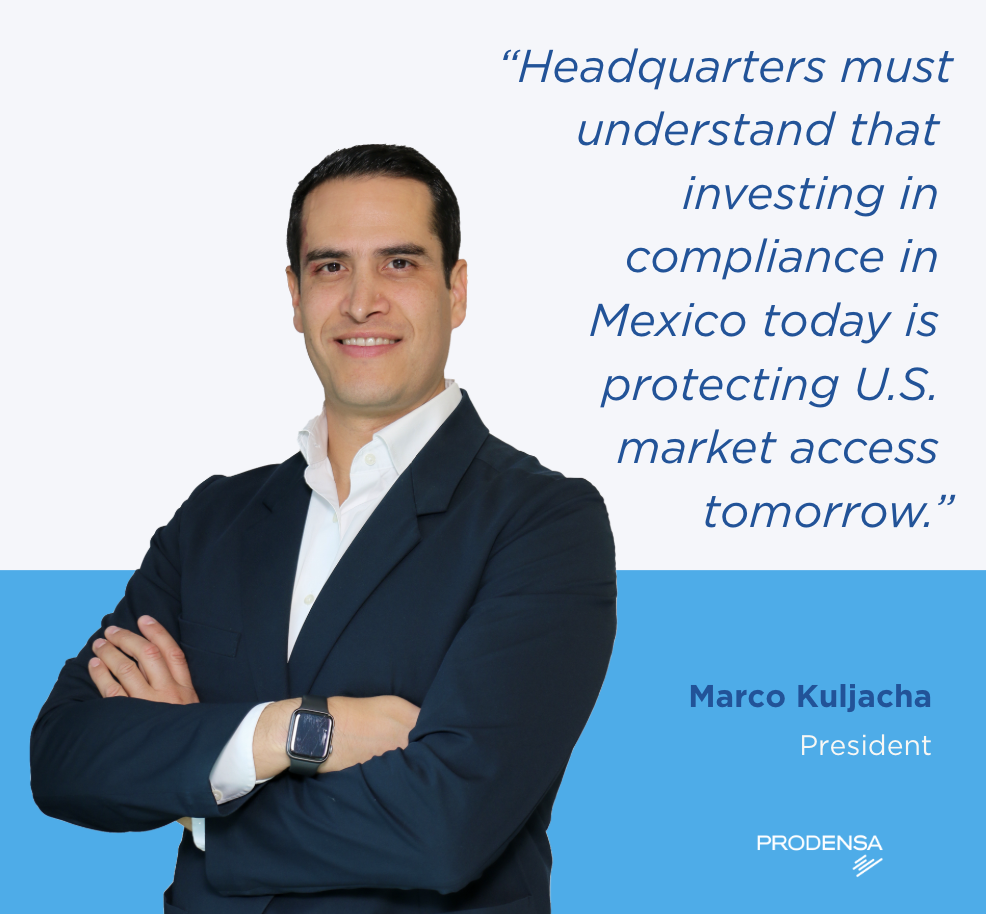
But the strongest reason to choose Mexico in 2026 is not cost alone. It is the ability to build a more resilient regional operation with better control over lead times, cross-border coordination, and long-term market access. The companies that succeed are increasingly the ones that treat compliance, documentation, and traceability as strategic infrastructure from day one.
What has changed about doing business in Mexico in 2026?
The 2026 environment is more opportunity-rich, but also more demanding.
Mexico’s business environment is being shaped by four major dynamics: industrial expansion and nearshoring momentum, institutional and regulatory reform, security and rule-of-law pressures, and the USMCA 2026 review together with broader trade volatility.
That means foreign investors need to evaluate Mexico with a more complete lens. Market entry in 2026 is not just about where to operate. It is about whether the operating model, customs structure, labor strategy, and compliance systems are strong enough to withstand scrutiny and adapt over time.
Understanding Mexico's Manufacturing and Business Environment
Before launching operations, manufacturers need to understand that Mexico’s legal and regulatory framework is formal, highly structured, and constantly evolving. The Mexican Constitution sits at the top of a system supported by thousands of federal, state, and local laws and regulations. Mexico operates under a civil law system, and many corporate and legal acts require formal documentation and notarial procedures.
Foreign investors can own 100% of a Mexican corporation in many sectors, though restrictions may apply in certain industries. Common entity types include structures similar to U.S. corporations and LLCs, but the best fit depends on the company’s operating model, financing needs, ownership preferences, and commercial strategy.
How to Validate a Manufacturing Business Case in Mexico
A strong Mexico entry strategy starts with validation, not real estate tours.
Prodensa's framework emphasizes defining the project, analyzing the market, organizing major cost buckets, identifying risks, and ranking the project’s “musts” and “wants” before moving into execution. The objective is to validate the business case with data and local context before committing capital.
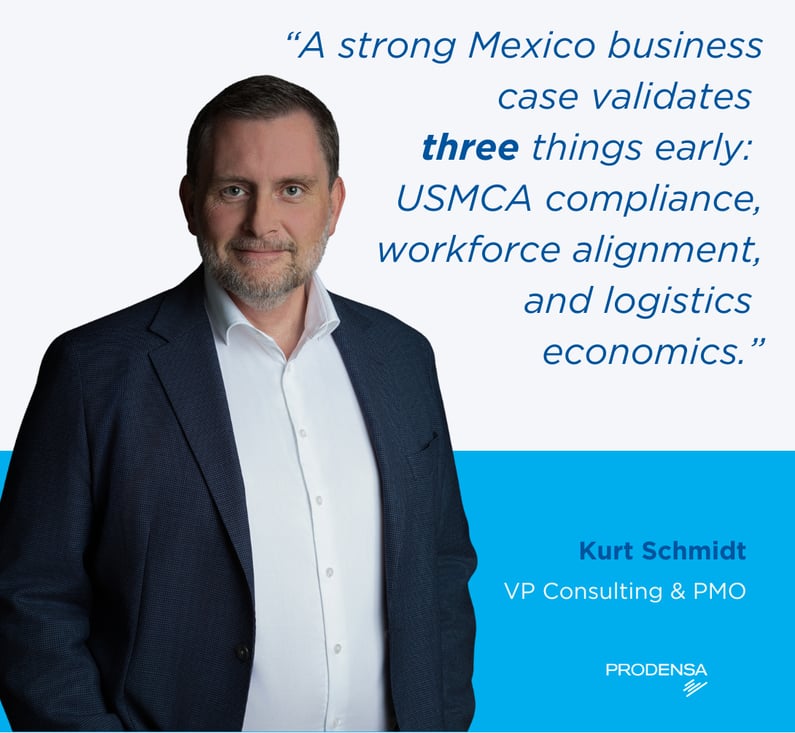
In practice, that means evaluating:
- Trade structure and rules of origin exposure
- Workforce availability, wage pressure, and skill depth by region
- Logistics economics and proximity to suppliers, customers, ports, and border crossings
- Regulatory and political risk factors
- Site-specific infrastructure conditions
- The full operating cost picture, not just one variable such as labor or rent
This is especially important under USMCA. The origin analysis is no longer a backward-looking paperwork exercise. It is a forward-looking planning tool that shapes sourcing decisions, supplier development, tariff strategy, and investment design.
In 2026, the first level of validation should be USMCA compliance.
It's that important.




Site Selection in Mexico: more than finding a building
Choosing where to manufacture in Mexico requires much more than comparing lease rates. A modern site selection process must weigh operational costs, labor conditions, infrastructure, logistics, quality of life, safety, and broader economic indicators. Real estate should influence the decision, but not drive it by itself.

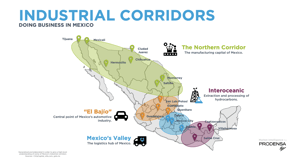
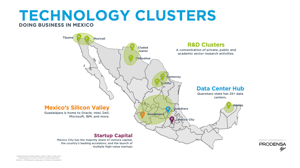
Mexico’s industrial ecosystem is spread across major corridors and specialized clusters. The Doing Business in Mexico eBook points to four key industrial corridors and a growing network of innovation hubs, from northern manufacturing centers and El Bajío to Guadalajara’s technology cluster and Querétaro’s data center and advanced-industry positioning.
Mapping Mexico's Industrial Ecosystem
Manufacturers also need to evaluate the type of facility strategy they want to pursue. In general, foreign companies tend to consider three main paths:
- Leasing an existing Class A industrial facility
- Building to suit inside an industrial park
- Developing on purchased land
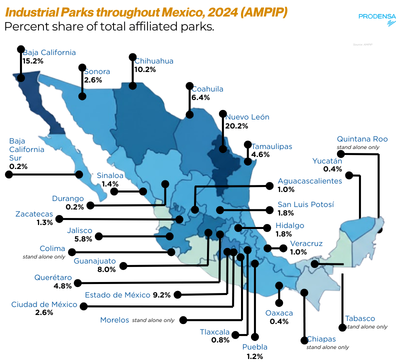
Mexico has more than 400 industrial parks, with high concentrations in Baja California, Nuevo León, and the State of Mexico. These parks can offer utilities, security, and infrastructure that support faster operational readiness.
How long does it take to set up a manufacturing facility in Mexico?
There is no one-size-fits-all timeline.
Startup time can range from about three months to well over a year depending on the operating structure, entity requirements, permitting needs, real estate readiness, and compliance complexity. If entity incorporation is required, companies should allow significant lead time as part of the broader launch process.
Book a Free Advisory Session
To see the updated operations timeline.
The main launch milestones usually include:
- Defining the operating structure
- Incorporating the entity if needed
- Securing permits and registrations
- Preparing labor, trade, tax, EHS, and finance compliance processes
- Aligning operational readiness with the production ramp-up plan
For some companies, a shelter structure can accelerate speed to market by allowing the manufacturer to operate under an established legal and compliance framework while focusing on production, customers, and performance.
What permits and programs should manufacturers evaluate in Mexico?
Manufacturers in Mexico may need a combination of corporate, trade, land-use, environmental, municipal, labor, and industry-specific permits depending on the type of project. The Doing Business in Mexico eBook highlights business registration, RFC tax registration, environmental and land-use permits, operating licenses, health and safety requirements, energy coordination, importer registry considerations, and trade-related authorizations such as IMMEX, PROSEC, VAT Certification, and AEO-type programs.
One of the most relevant programs for export manufacturers is IMMEX.
.png?width=1200&height=1200&name=IMMEX%20Blog%20(3).png)
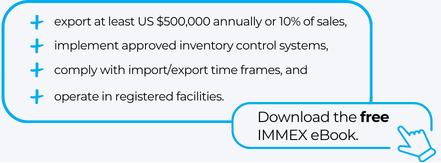
IMMEX allows eligible companies to temporarily import raw materials, parts, and components without paying VAT as long as the finished goods are exported.
But it also comes with strict requirements around exports, inventory control systems, timing, and registered facilities.
Labor Compliance for Manufacturers in Mexico in 2026
Labor remains one of the most important operating considerations for foreign manufacturers in Mexico.
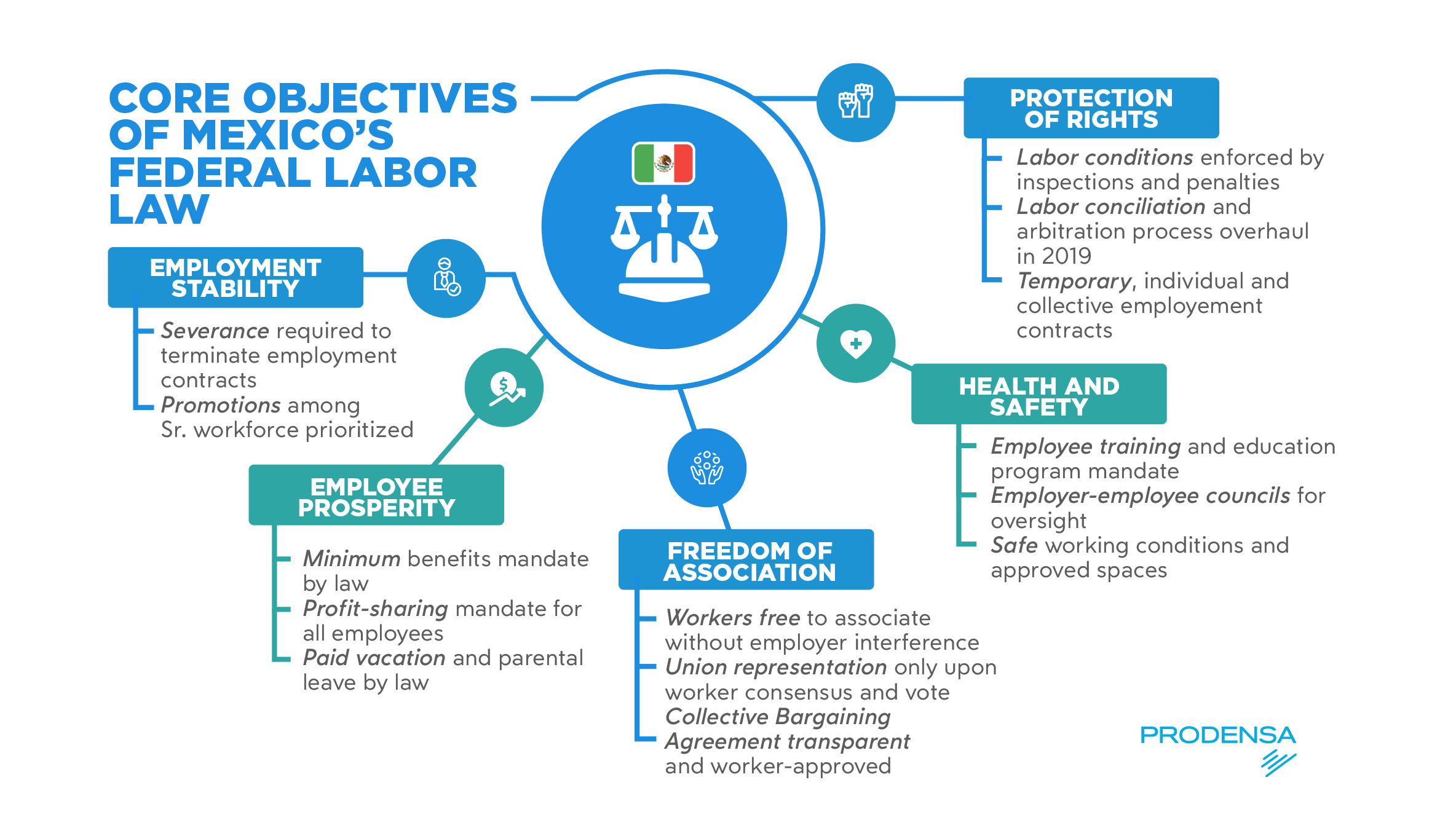
Mexico’s labor system is designed to protect workers while supporting economic growth, and that labor compliance must be integrated into planning from the start. Mexico is currently debating a reform proposal that would reduce the legal maximum workweek from 48 to 40 hours while seeking to preserve wages and statutory benefits.
Today, companies still need to plan around the existing framework, including:
- A standard 48-hour workweek
- Overtime premium obligations
- Mandatory benefits such as Christmas bonus, vacation bonus, profit-sharing, and Sunday premium
- Social security integration and related employer obligations
- A labor environment increasingly shaped by USMCA labor commitments and the broader modernization agenda
.png?width=799&height=443&name=DBIM%20eBook%20(Reduced).png)
Tax and Trade Considerations for Foreign Manufacturers in Mexico
Mexico’s tax structure is one of the most important areas to get right early.
The eBook outlines the main obligations manufacturers should understand, including corporate income tax, VAT, payroll tax, profit-sharing, withholding tax exposures, and property-related taxes. It also explains that exporters may benefit from border-zone incentives and that tax program strategy is closely linked to transfer pricing, certifications, and VAT recovery.

For IMMEX operations, the guide highlights the continued importance of Safe Harbor calculations after the phase-out of APAs, as well as the documentation-heavy nature of VAT Certification and recovery. This is a major reason many foreign manufacturers now invest more seriously in tax and trade compliance controls from the beginning.
Why Compliance is now a Competitive Advantage
Compliance is not just about avoiding penalties. Strong compliance means strong governance. In practical terms, disciplined compliance protects IMMEX authorizations, preserves preferential trade benefits under USMCA, reduces exposure to audits or operational disruptions, and improves transparency and credibility with authorities, customers, and investors.
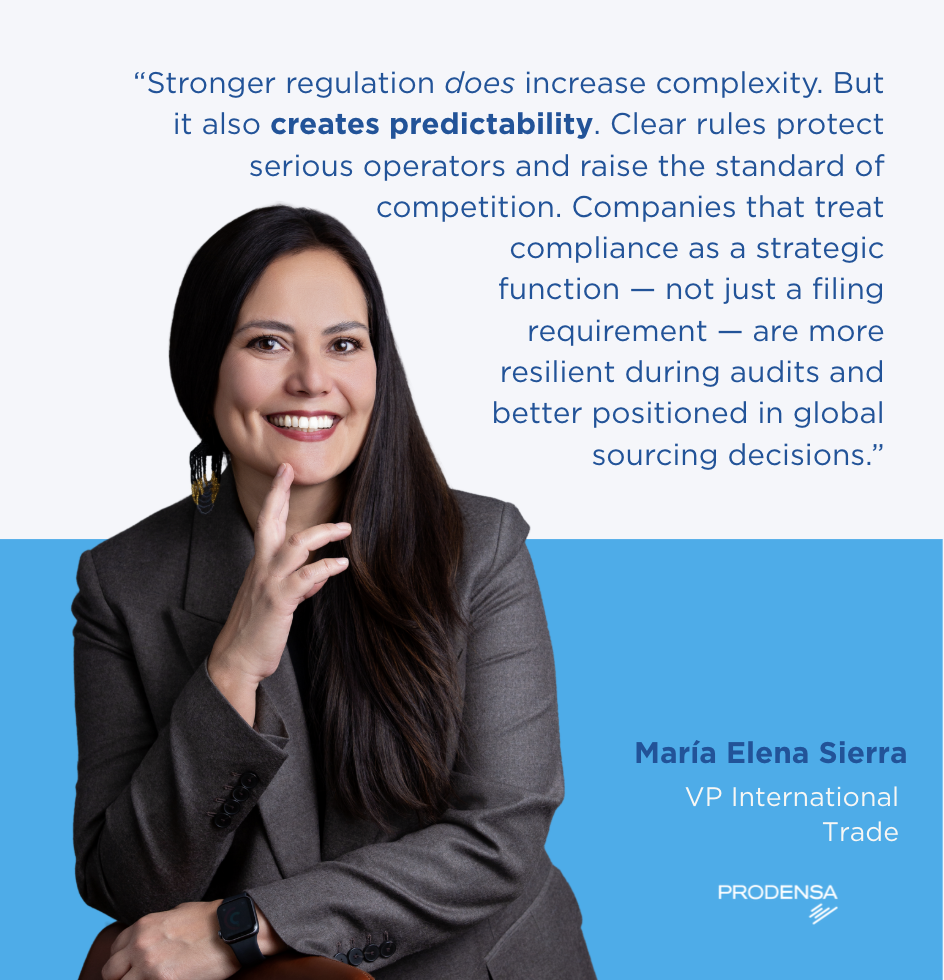
This is especially relevant in a 2026 environment where companies must be prepared for:
- Greater trade and customs scrutiny
- Ongoing labor documentation discipline
- Evolving tax enforcement expectations
- More structured internal controls around permits, filings, and operational obligations
For many companies, the next step is not simply “getting compliant,” but building a more visible and manageable compliance architecture. That is part of the value behind systems like Prodensa’s DMS, a digital platform for complex regulatory frameworks in Mexico.
A Practical Framework: The Mexico Journey®
For manufacturers that want a clearer roadmap, the eBook frames expansion through The Mexico Journey®, Prodensa’s five-step methodology:
- Understand the environment
- Define and validate the strategy
- Select the right location
- Set up and launch the operation
- Maximize operations and thrive
This approach reflects a reality that many companies learn too late: launching in Mexico is not a single transaction. It is a process of strategic design, local adaptation, structured execution, and disciplined long-term management.
-1.png?width=1200&height=400&name=Ebook%20Banners%20(7)-1.png)
Final Thoughts: doing business in Mexico requires strategy, not improvisation
Mexico remains one of the most compelling manufacturing destinations in North America.
And they will treat compliance as part of the operating model, not as an afterthought.
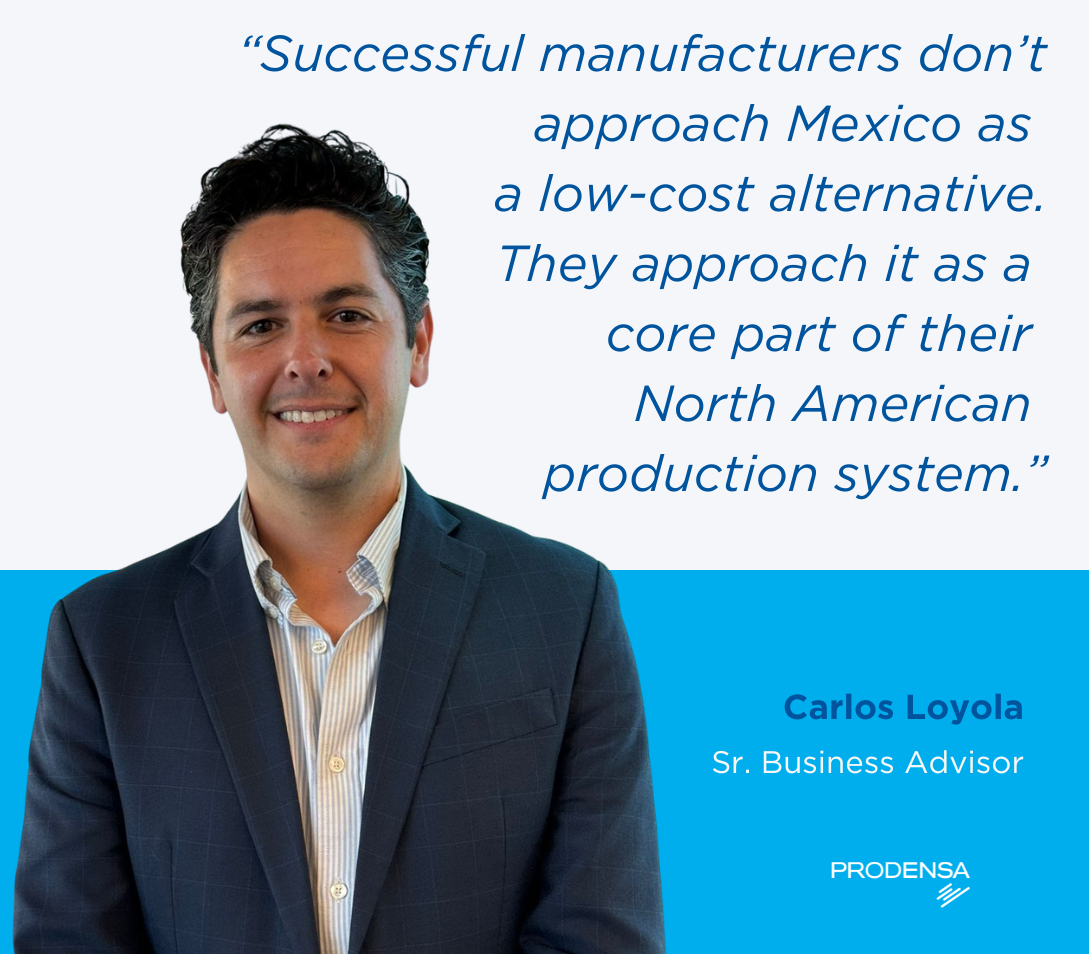
Doing business in Mexico can still create major competitive advantages. The difference is that now, success depends less on simply entering the market — and more on how well the operation is designed to perform, adapt, and endure.

Looking for support to start manufacturing in Mexico? Reach out to us for a free consultation and additional support materials.
Frequently Asked Questions:
How long does it take to set up a manufacturing operation in Mexico?
The timeline depends on the operating model, entity structure, permits, facility readiness, and compliance requirements. Some projects can begin operations in a few months, while more complex manufacturing launches may take over a year to fully structure, permit, and ramp up.
Can a foreign company own a manufacturing operation in Mexico?
Yes. In many sectors, foreign investors can own 100% of a Mexican corporation. However, the right structure depends on the company’s industry, commercial model, tax strategy, labor requirements, and long-term operating plans.
What is IMMEX and why is it important for manufacturers in Mexico?
IMMEX is Mexico’s export manufacturing program. It allows qualified companies to temporarily import raw materials, components, machinery, and equipment without paying VAT, as long as the finished goods are exported. For export-oriented manufacturers, IMMEX can improve cash flow and support more efficient customs operations.
Is a shelter program better than opening a standalone entity in Mexico?
A shelter program can be a strong option for companies that want to enter Mexico faster while operating under an established legal, administrative, and compliance structure. A standalone entity may be better for companies that want full direct control from the beginning. The best model depends on risk tolerance, timeline, investment size, tax structure, and long-term strategy.
What are the most important compliance risks for manufacturers in Mexico?
The most important compliance risks usually involve customs documentation, IMMEX requirements, VAT Certification, labor obligations, environmental permits, tax compliance, transfer pricing, and USMCA origin documentation. These areas should be planned before operations begin, not after production starts.
Why is site selection in Mexico more than finding an industrial building?
Site selection in Mexico requires evaluating labor availability, wage pressure, logistics, supplier proximity, infrastructure, safety, utilities, quality of life, and long-term scalability. Real estate is important, but the best location is the one that supports the full business case.
How does USMCA affect manufacturing in Mexico?
USMCA affects manufacturing in Mexico through rules of origin, labor commitments, customs documentation, regional value content requirements, and preferential tariff access. Manufacturers should evaluate USMCA compliance early because sourcing decisions, supplier development, and production strategy can directly affect eligibility for trade benefits.
What industries are strongest for manufacturing in Mexico?
Mexico has strong manufacturing clusters in automotive, aerospace, electronics, medical devices, machinery, appliances, metalworking, plastics, and advanced manufacturing. The best location and operating model depend on each industry’s labor, logistics, supplier, and compliance needs.
What is the biggest mistake companies make when starting manufacturing in Mexico?
One of the biggest mistakes is treating Mexico as a low-cost location decision instead of a long-term operating strategy. Companies that focus only on labor or rent often underestimate compliance, customs structure, workforce planning, startup timelines, and regulatory obligations.