

-1.png?width=300&name=Ebook%20Banners%20(5)-1.png)
by Prodensa's Fiscal & Trade Compliance Team

In Mexico’s export manufacturing ecosystem, credibility and compliance are strategic assets.
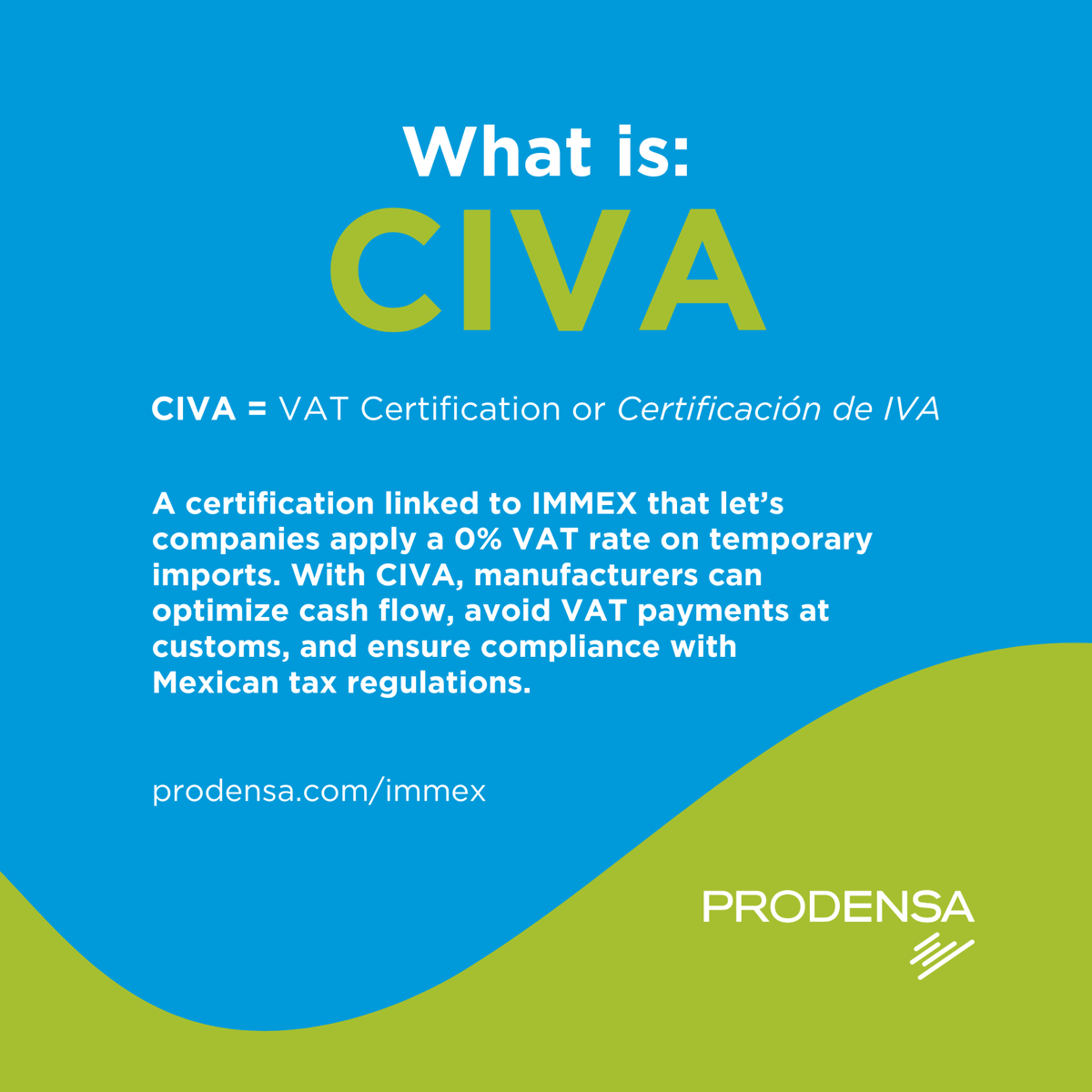
For companies operating under the IMMEX program, one certification stands out as a key to operational efficiency and trust: the VAT and IEPS Certification (CIVA).
CIVA allows international manufacturers to defer tax payments, strengthen cash flow, and demonstrate fiscal integrity to authorities and business partners.
At Prodensa, we combine decades of advisory experience with the insight of former officials, guiding companies to obtain, maintain, and recover certification with precision and confidence.



What is VAT & IEPS Certification (CIVA)?
The Certificación en Materia de IVA e IEPS (CIVA) is a special authorization granted by Mexico’s Tax Administration Service (SAT) within the Integral Certification Scheme.
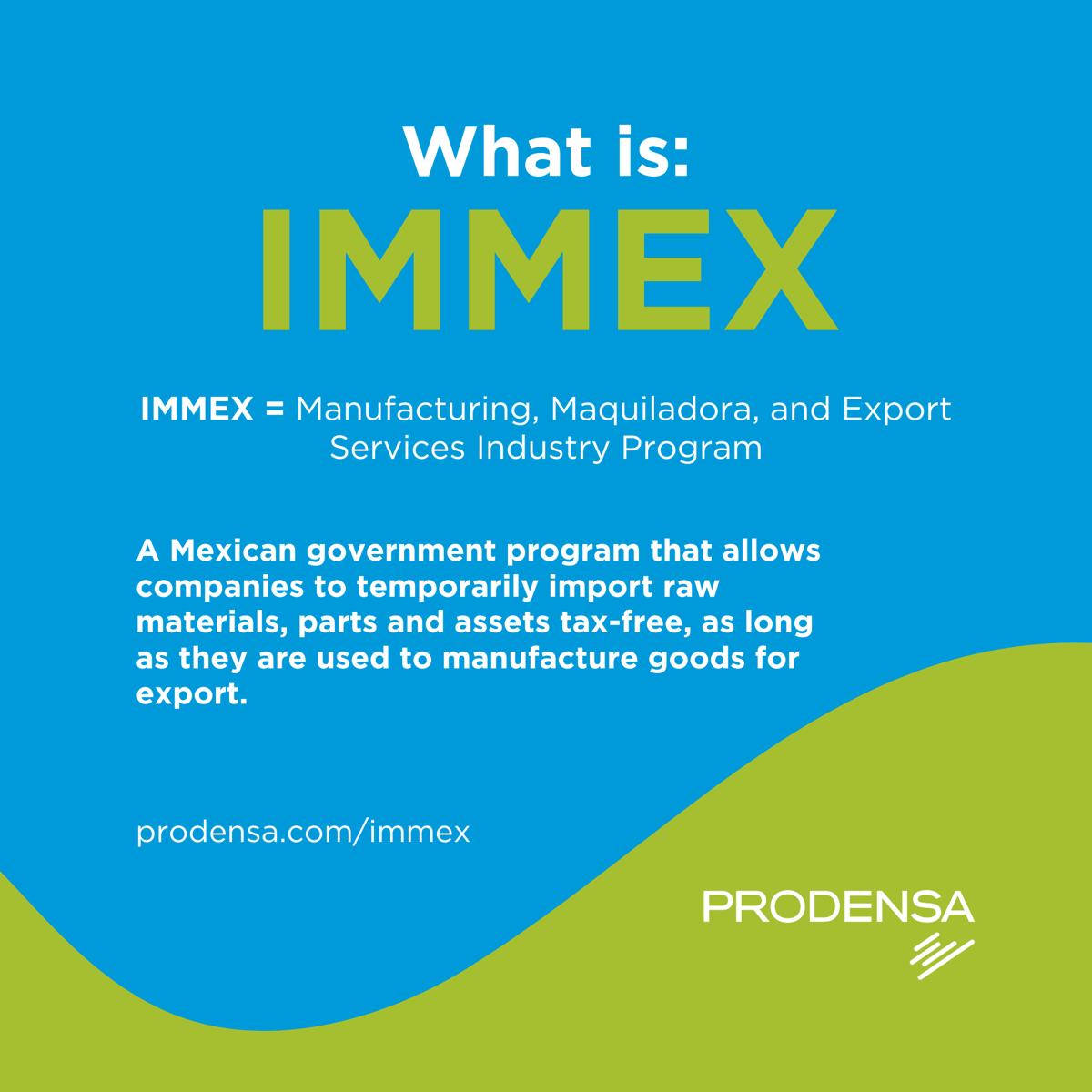
It is designed for companies that import materials or components under an IMMEX authorization for temporary manufacturing, assembly, or transformation before re-exporting finished products.
Read more about the VAT recovery process for manufacturers in this blog.
Legal Framework
-
Value Added Tax Law (Article 28-A)
-
Special Tax on Production and Services Law (Article 15-A)
-
General Foreign Trade Rules (7.1.1 and 7.1.2)
Read more about the IMMEX Framework in this guide.
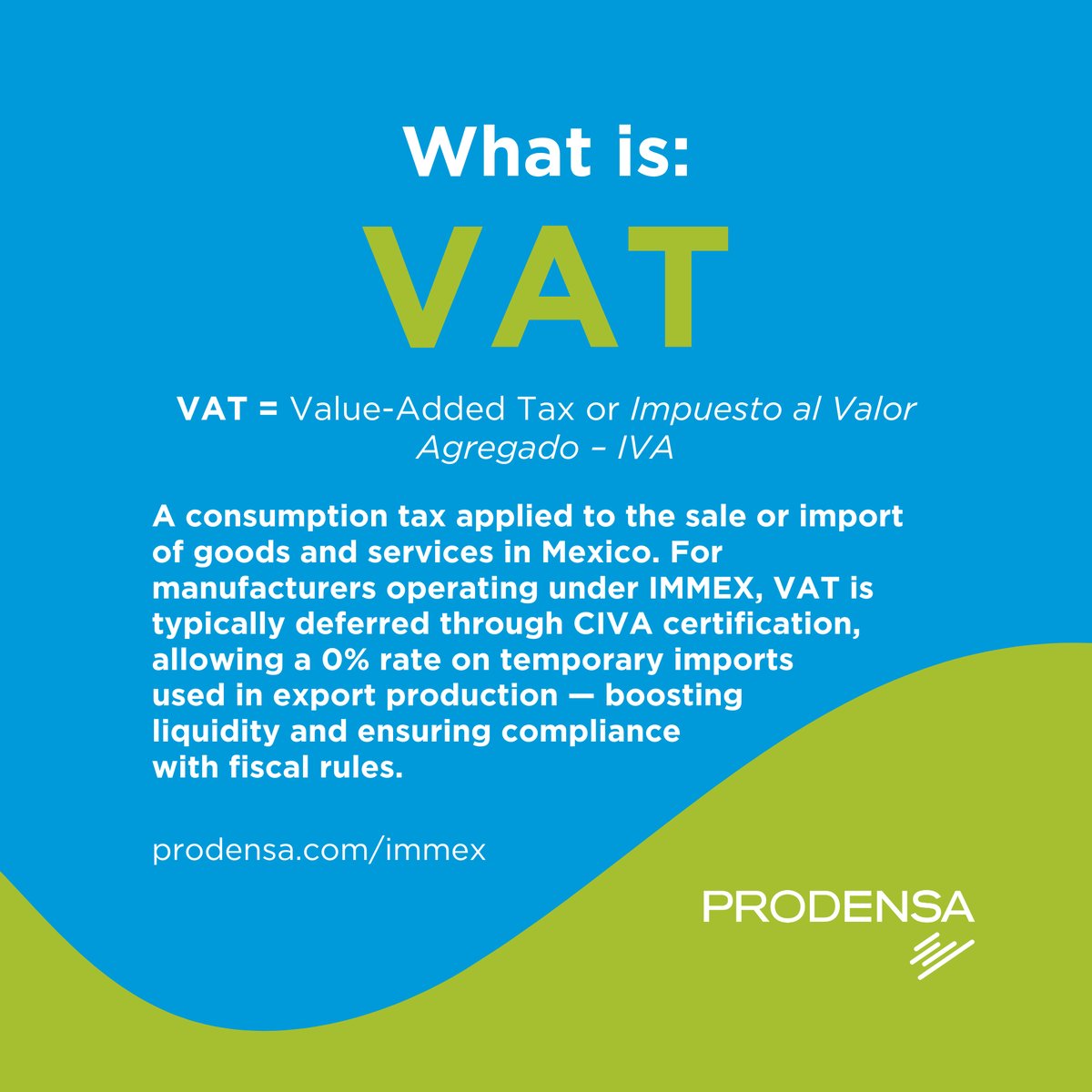
CIVA certification allows qualified companies to avoid paying VAT or IEPS upfront when importing goods temporarily, as long as these are used in export production.
This transforms tax compliance from a cost burden into a cash flow optimization mechanism for global manufacturers.
-1.png?width=1200&height=400&name=Ebook%20Banners%20(3)-1.png)
Key Benefits Beyond Tax Savings
Beyond immediate fiscal relief, certified companies gain operational and strategic advantages, including:
-
The ability to import sensitive goods with special authorization.
-
Streamlined procedures for converting temporary imports into definitive imports.
-
Facilitated customs clearance and reduced administrative friction.
-
Enhanced credibility before authorities, clients, and suppliers.
For many of Mexico’s largest automotive, electronics, and aerospace exporters, maintaining CIVA is a mark of excellence in fiscal discipline.
 How Prodensa Recovered $900 Million Pesos in VAT with a Strategic Reconstruction of the Process


CIVA Certification Levels: A, AA, and AAA
SAT recognizes three levels of certification — each with distinct requirements and validity periods:
| Level | Duration | Main Requirements |
|---|---|---|
| A | 1 year | Basic level: up to date with SAT, at least 10 registered IMSS employees, compliance with fiscal obligations, and proof of investment in Mexico. |
| AA | 2 years | Minimum 4 years operating under IMMEX, or over 1,000 employees, or investment exceeding MXN 50 million in machinery and equipment. |
| AAA | 3 years | At least 7 years of IMMEX experience, over 5,500 employees, or machinery investment above MXN 100 million. |
Each level increases both the duration of validity and the trust granted by authorities, reducing administrative renewals and demonstrating higher operational maturity.
Common Reasons for IMMEX and CIVA Suspension or Cancellation
Based on over 40 years of experience supporting international manufacturers in Mexico, we have observed recurring issues that frequently trigger SAT cancellation procedures or compliance requirements for IMMEX and CIVA holders. These include:
-
Inconsistencies in Registered Information
Missing or outdated records in the Catálogo de Datos Generales—for example, not registering all company addresses linked to IMMEX operations. -
Material Usage Reporting
Failure to declare waste generated in the production process within the Módulo de Materiales Utilizados. -
Outdated Balance Reports
Differences between reported balances and recorded operations due to non-updated Reporte de Saldos. -
Legal Documentation of Assets
Incomplete proof of legal use or possession of machinery, equipment, and infrastructure needed for production. -
Return Ratio Non-Compliance
Not meeting required export return percentages (60% for sensitive goods, 80% for others), often revealed during monthly data validations.
 How Prodensa Mitigates These Risks
To address these challenges, Prodensa’s monitoring service provides proactive compliance oversight, including:
-
Review of IMMEX and CIVA files, plus timely submission of notices to SAT.
-
Ongoing monitoring of IMMEX and CIVA program validity.
-
Tracking of sensitive tariff codes and addition notices (with 30-day anticipation).
-
Monthly review of export return percentages.
-
Verification of suppliers engaged in virtual operations under Article 69 of the CFF.
-
Monitoring of lease agreements to ensure validity.
-
Validation and reconciliation of Annex 30 reports.
-
Review of compliance with electronic accounting obligations.
Request a Proposal for Trade Compliance Support

Maintaining Certification: A Discipline of Trust
CIVA certification is not automatic or permanent. It requires consistent documentation, periodic audits, and transparent communication with authorities. If non-compliance occurs, SAT grants companies 10 business days to present evidence or arguments before formal cancellation. In the event of cancellation, companies must wait two years before reapplying.
Renewals are possible within 30 days prior to expiration, provided all requirements remain in force — making proactive monitoring essential to maintaining uninterrupted certification.
Compliance Today, Competitiveness Tomorrow
In today’s trade environment, compliance is not just a legal obligation — it’s a competitive differentiator. Companies that align operational excellence with fiscal transparency gain access to faster customs clearance, trusted partnerships, and stronger cash flow.
At Prodensa, our Fiscal & Trade Compliance team combines technical depth, regulatory experience, and decades of field knowledge to help clients transform compliance into an operational strength.
Contact our Fiscal & Trade Compliance experts for a CIVA program review or to learn more about our IMMEX & CIVA Monitoring Services.