


What if moving your operations to Mexico didn’t automatically guarantee tariff savings? The strategic relocation of operations to Mexico—better known as nearshoring—has emerged as an effective response to global logistics disruptions, rising costs in Asia, and increasing pressure to establish resilient, regionalized supply chains. However, beyond the logistical or fiscal benefits, one factor plays a decisive role in the profitability of this strategy: the rules of origin under the USMCA. Understanding how origin is determined and how it affects tariff treatment can make the difference between millions in savings and unexpected tax burdens.

Prodensa partnered with experts to provide detailed insights into the importance of origin analysis services—particularly relevant for companies engaged in nearshoring or considering shelter services in Mexico. We would like to thank Adrián González, President of Global Alliance Solutions, for his valuable participation and collaboration.
How Nearshoring Affects the Origin Status of Your Product
Relocating production processes to Mexico does not automatically mean that the final product qualifies as originating under the USMCA. The treaty defines specific criteria for determining origin, including:
-
Tariff shift (Change in Tariff Classification)
-
Regional Value Content (RVC)
-
Specific production processes by sector
Each product has a unique rule of origin outlined in Annex 4-B of the agreement. For instance, in the automotive sector, the minimum RVC is 75%, and certain components must be produced in the region. Additionally, a portion of production must come from facilities paying at least $16 USD/hour.
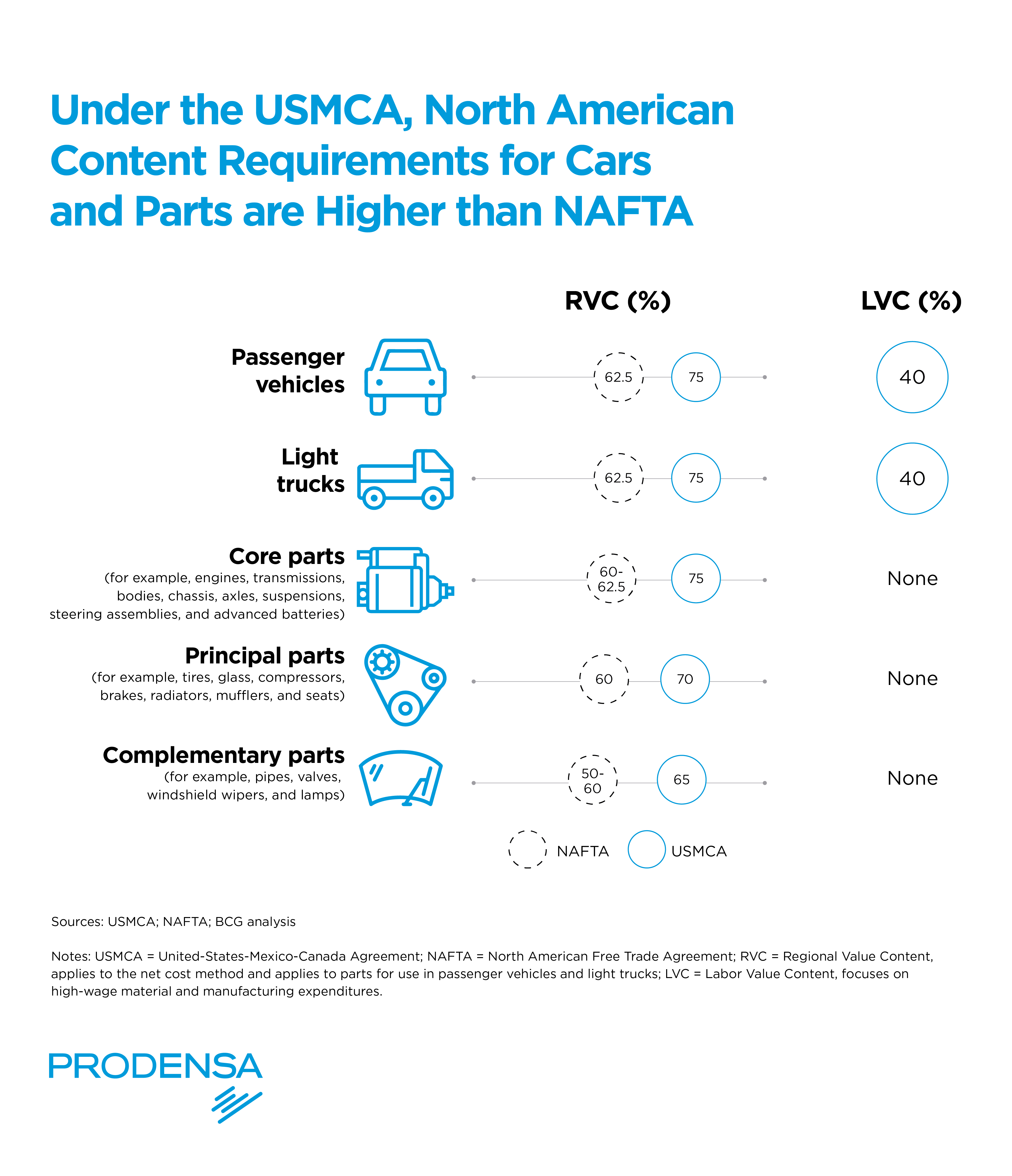
This means that setting up operations in Mexico requires a reassessment of every product component to determine whether its transformation in-country qualifies it as originating under the agreement.
.png?width=940&height=289&name=Yellow%20and%20Blue%20Simple%20Message%20%20(1).png)
Are Imports from China Affecting Your Tariff Benefits?
Many manufacturing operations in Mexico commonly import components from Asia, especially China. However, this strategy can completely cancel out the USMCA benefits if those inputs do not meet origin criteria.

The Mexican government has already warned that, in the USMCA mid-term review, it will propose stricter origin rules to limit the indirect exploitation of tariff benefits by Chinese-sourced inputs.
This introduces two key risks:
1 Loss of preferential tariff treatment if non-originating materials do not undergo sufficient transformation.
2 Retroactive penalties if origin certificates are issued incorrectly.
It is crucial to review your materials’ origin and explore regional alternatives that help meet origin requirements.
How Local Value-Added Can Boost USMCA Compliance and Savings
Value added in Mexico is essential for origin qualification. Under USMCA rules, a product can obtain origin if non-originating materials undergo sufficient transformation—through production processes—to satisfy a tariff shift or meet the required RVC.
Programs like IMMEX and PROSEC allow temporary importation of inputs without paying tariffs or VAT, provided they are transformed or assembled for export. These tools can increase local value-added, improve USMCA compliance, and reduce operational costs.
Additionally, USMCA allows up to a 10% de minimis margin for non-originating materials, provided they do not affect the product’s essential criteria; in practice, reconfiguring your process to include regional inputs or conduct critical operations in Mexico can translate into direct tariff savings.
Common Compliance Pitfalls Under USMCA When Manufacturing in Mexico
Setting up a plant in Mexico does not automatically ensure USMCA compliance. On the contrary, companies often face risks such as:
 Lack of knowledge of product-specific rules of origin
Errors in origin certification
Incomplete or incorrect documentation
Audits and verifications by U.S. or Canadian authorities
Mislabeling a non-originating product can lead to fines, retroactive duties, and loss of tax benefits, while business partners are also increasingly cautious about avoiding “triangulation” or using Mexico merely as an assembly point for goods truly made in Asia. Therefore, any nearshoring strategy must include process design from the outset to ensure origin compliance and strong traceability.
How an Origin Analysis Can Improve Cost Efficiency
Origin analysis is a key tool for companies aiming to benefit from USMCA. This technical process allows you to:


Specialized firms offer validation and origin analysis services to reduce risks, improve traceability, and ensure compliance before exporting.
Final Recommendations for Manufacturers Considering Nearshoring
If your company is considering or has already relocated operations to Mexico, you must take a strategic, preventive approach to USMCA compliance. The Prodensa experts strongly recommend you:
 Involving origin rule specialists during supply chain design
Evaluating the specific rules applicable to your products (HS code, RVC, sector-specific requirements)
Conducting a complete origin analysis before issuing certificates
Training your compliance team on documentation and traceability requirements
Building strong relationships with suppliers to guarantee origin transparency
Remember, tariff benefits under the USMCA are not automatic. Maximizing savings requires a deep understanding and precise application of origin rules.
Conducting a detailed technical analysis, optimizing regional value-added, and maintaining clear documentation are essential steps to fully capitalize on this new phase of manufacturing in Mexico.

 PRODENSA Key Points:
-
Nearshoring to Mexico does not automatically guarantee USMCA tariff benefits.
-
Each product must comply with specific rules of origin such as RVC or tariff shift.
-
Incorrect use of Chinese or non-originating materials can disqualify products from preferential treatment.
-
Programs like IMMEX and PROSEC help boost regional value-added and compliance.
-
Companies face risks like incorrect certification, incomplete documentation, or customs audits.
-
A professional origin analysis can help model cost-saving alternatives and reduce risks.
-
Early integration of origin compliance into the supply chain strategy is essential.
-
Collaborating with trade experts increases transparency, reduces penalties, and ensures long-term savings.