


Are you confident your company is properly proving origin—and not leaving money on the table or risking compliance penalties?
Manufacturing and exporting companies face the ongoing challenge of navigating multiple trade agreements, each with specific requirements for proving the origin of their goods. Proper application of these rules not only ensures regulatory compliance but also represents a strategic opportunity to reduce tariff costs and maintain competitiveness in global markets.
Mismanagement of origin requirements can lead to costly audits, retroactive tariff payments, and, in extreme cases, the loss of preferential benefits. For this reason, Prodensa partnered with experts to provide detailed insights into the importance of origin analysis services and deep understanding of the certification mechanisms under key trade agreements that benefit Mexico.—particularly relevant for companies engaged in nearshoring or considering shelter services in Mexico.
We would like to thank Adrián González, President of Global Alliance Solutions, for his valuable participation and collaboration. For companies pursuing turnkey operations in Mexico, understanding origin rules is a vital step in planning and executing a compliant cost-efficient setup.
From NAFTA to USMCA: What Changed and Why It Matters for Your Compliance Strategy
The United States-Mexico-Canada Agreement (USMCA), which came into effect on July 1, 2020, marked a significant shift in origin regulations across North America. Unlike its predecessor NAFTA, USMCA introduces stricter and more detailed requirements, particularly in strategic sectors such as automotive and textiles.
USMCA eliminates the traditional certificate of origin format, implementing instead a more flexible "certification" system that allows the exporter, producer, or importer to draft their own origin declaration. This apparent simplification comes with increased responsibilities in terms of supporting documentation and supply chain traceability.
Meanwhile, the modernized EU-Mexico Economic Partnership Agreement (updated in 2025) maintains the traditional EUR.1 certificates and EUR.2 invoice declarations, while introducing new verification and control mechanisms that companies must incorporate into their compliance processes.

What are the differences in Origin Requirements Among Trade Agreements?
While the goal is the same, the path to certifying origin varies greatly across different agreements. Understanding these differences is the first step toward effective compliance.

-
Flexibility and Self-Certification: USMCA modernized the process by eliminating NAFTA’s rigid certificate format. Certification can now be issued by the exporter, producer, or importer.
-
No official form: The certification may be included on an invoice or any other commercial document, provided it includes the "minimum data elements" outlined in Annex 5-A of the agreement.
-
Focus on Key Sectors: USMCA introduced stricter rules of origin in key sectors such as automotive, which now require higher Regional Value Content (RVC) and a Labor Value Content (LVC) requiring a percentage of production from facilities paying at least $16 USD per hour.
-
Shared Responsibility: Allowing the importer to certify opens the door to greater collaboration, but also places direct responsibility on the party requesting preferential treatment.
.png?width=1200&height=400&name=Blog%20Banners%202%20(1).png)
-
Structured formats: The agreement primarily uses two documents:
1. Invoice Declaration: For shipments under €6,000, any exporter can include a specific text declaration on the invoice. For higher values, only an "Authorized Exporter" may use this method.
2. EUR.1 Certificate of Circulation: The standard document for exporters without Authorized Exporter status and for shipments exceeding €6,000. Issued and stamped by a competent authority (in Mexico, the Ministry of Economy).
-
Origin Accumulation: The agreement allows bilateral accumulation, meaning EU-originating materials may be treated as Mexican-origin materials in final products, and vice versa.
-
Drawback prohibition: TLCUEM generally prohibits refunding duties (drawback) on non-originating inputs used in final products exported under preferential terms.
The core difference lies in philosophy: USMCA encourages self-regulation and documentation flexibility, while TLCUEM maintains a more formalized system, often requiring government authorization.
Exploring CPTPP and the Pacific Alliance: Digital Tools and Compliance Innovation
The Comprehensive and Progressive Agreement for Trans-Pacific Partnership (CPTPP) introduces innovations like digital origin certification and electronic information exchange between customs authorities. While CPTPP’s rules of origin are generally less restrictive than USMCA’s, they require more detailed documentation of the supply chain.
The Pacific Alliance (Mexico, Colombia, Peru, Chile) has implemented an interoperable single-window system that facilitates issuance and verification of electronic certificates of origin, representing an advanced model of digital trade integration.
Proving Origin: What Documents Do You Really Need to Stay Compliant?
Understanding which documents you need to prove origin under trade agreements like USMCA and the EU-Mexico Agreement is critical. This section outlines the key elements customs authorities expect and how proper documentation can protect your company from costly penalties.
-
Essential Backup Records: What You Need Beyond the Certificate to Prove Origin
-
Regardless of the trade agreement, all origin certifications must be backed by documentation supporting the origin determination. This includes purchase records, technical product specifications, production flowcharts, supplier contracts, and origin declarations for acquired materials.
For manufactured goods, it is essential to maintain detailed records of transformation or processing, including process descriptions, production times, material and labor costs. For agricultural products, documents must show cultivation, harvest, processing, and packaging to confirm geographic origin.
-
How to Build Strong Supplier Declarations for Rules of Origin Compliance
Supplier declarations are a critical link in the origin documentation chain, especially for manufactured goods with multiple sourced components. These documents must be collected from all suppliers and detail the specific origin of each material or component used.
.png?width=114&height=215&name=What%20(1).png)
Effective declarations should include: full supplier identification, detailed material or component descriptions, HS codes, country of origin, applicable origin criterion (if any), and validity period. To maintain compliance, it’s recommended to renew declarations annually or whenever there are significant changes in production processes.
-
Continuous Validation and Risk-Based Origin Verification: What Your Compliance Team Should Know
Importers and exporters must establish procedures to validate supplier declarations, including regular audits, certification verification, and, when feasible, on-site inspections. Implementing supplier management systems with compliance evaluations can significantly reduce risk.
-
How to Prepare for and Respond to Origin Audits Under USMCA
-
Origin audits are among the most complex and high-stakes processes in international trade compliance. Customs authorities in the U.S. (CBP), Canada (CBSA), and Mexico (SAT) have the authority to verify claims of preferential tariff treatment by requesting detailed documentation, visiting exporters or producers, and demanding proof of origin. These audits can last up to 12 months, and importers may continue applying preferential tariffs during that time if proper guarantees are provided.
To effectively prepare for a USMCA audit, you must:
.png?width=154&height=291&name=What%20(2).png) — Maintain organized and complete records for at least five years
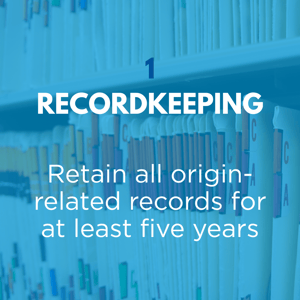
— Maintain organized and complete records for at least five years
— Designate knowledgeable personnel to manage audit responses
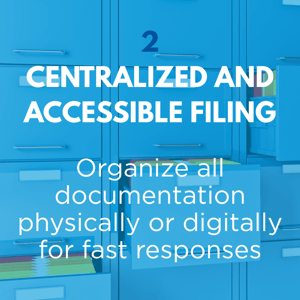
— Standardize internal procedures for compiling and submitting origin documentation
— Conduct preventive internal audits to identify compliance gaps before they become liabilities
-
How Customs Authorities Conduct Origin Audits — And What You Should Expect
Customs authorities in importing countries such as the U.S. (CBP), Canada (CBSA), and Mexico (SAT) have the legal authority to conduct origin audits to verify claims of preferential tariff treatment. These audits may begin with a simple questionnaire or escalate to a full on-site verification visit at the producer’s facilities.
How to Succeed in an Origin Audit: Proven Strategies for Trade Compliance Teams



Are You Ready to Tackle the Most Common Challenges in Calculating RVC?
RVC is one of the most commonly used but complex origin criteria. USMCA allows two main methods:
-
Transaction Value Method: RVC = (Transaction Value - Value of Non-Originating Materials) / Transaction Value
-
Net Cost Method: RVC = (Net Cost - Value of Non-Originating Materials) / Net Cost
You need to beware of some very frequent challenges which might include:
 — Obtaining accurate cost data from suppliers
— Price fluctuations and currency exchange variations
— Complex cost classification (e.g., direct vs. indirect costs, royalties)
— Sector-specific rules in automotive, chemical, or textile industries
Solving these challenges requires robust ERP systems and close collaboration between finance, procurement, logistics, and trade compliance teams.
Why Treating Origin Compliance as a Strategic Investment Can Boost Your Bottom Line
Mastering origin rules demands technical knowledge, rigorous documentation, and a proactive mindset. Companies that view origin certification not as a burden but as a core competency are best positioned to capitalize on trade agreements.
Success relies on a systematic approach: understanding treaty differences, managing documentation, building a transparent supplier network, preparing for audits, and mastering RVC complexity.
Investing in staff training, technology, and expert consulting is not a cost—it’s a safeguard to ensure preferential market access, risk mitigation, and long-term competitiveness.
-1.png?width=940&height=426&name=Yellow%20and%20Blue%20Simple%20Message%20%20(1)-1.png)
 PRODENSA Key Points:
-
Understand and apply the specific rules of origin for each trade agreement (USMCA, EU-Mexico, CPTPP) to reduce duties and ensure compliance.
-
Don’t rely solely on certificates—maintain complete origin documentation and traceable evidence for every component.
-
Strengthen your supply chain by validating supplier declarations regularly and ensuring origin traceability at every step.
-
Stay audit-ready: organize documentation, assign compliance staff, and implement preventive reviews.
-
Navigate RVC calculations accurately by integrating finance, procurement, and compliance teams with data-backed systems.
-
Leverage origin compliance as a competitive advantage for nearshoring, manufacturing in Mexico, and turnkey operations.
-
Incorporate expert guidance early to support seamless execution when doing business in Mexico or under shelter services models.