


A foreign manufacturer can lose a year deciding how to enter Mexico. The companies producing in 2026 are not the ones with the biggest budgets. They are the ones that launched under a shelter while their competitors were still forming a legal entity.
Let's explore five industries where shelter services in Mexico have added value to the US-Mexico co-production under the USMCA, and why.
What a shelter actually does, and why it matters more in 2026:
A shelter lets a foreign manufacturer run a Mexican operation without setting up its own Mexican legal entity. The shelter holds the IMMEX permit (Industria Manufacturera, Maquiladora y de Servicios de Exportación), carries the VAT certification, and runs HR, payroll, accounting, customs, and trade compliance. You run production. When you are ready, you can graduate to your own entity.
For the full primer, see Everything You Need to Know about Shelter Services in Mexico
This is not a back-office convenience. It is a risk position. Three things changed the math in 2026:
-
The 2026 USMCA review. The United States, Mexico, and Canada are required by Article 34.7 to formally review the agreement. Expect tighter scrutiny on rules of origin, Regional Value Content, and Labor Value Content. A shelter partner that already documents origin across your bill of materials is the difference between qualifying and paying full duty.
-
The tariff floor moved. On February 20, 2026, the US Supreme Court ruled in Learning Resources v. Trump that the IEEPA tariffs exceeded presidential authority, and the 25% IEEPA tariffs on Mexico and Canada are no longer in effect. Goods that qualify under USMCA are exempt from the Section 122 surcharge. Translation: USMCA qualification is now worth more than it was a year ago, and Section 232 steel and aluminum duties still apply to goods that do not qualify.
- SAT is auditing harder. Mexico's tax authority (Servicio de Administración Tributaria) has intensified tax audits and origin verification ahead of the review. A compliance miss is no longer a paperwork problem. It is a landed-cost problem.
A shelter absorbs that compliance burden across every industry below. What changes by industry is the specific risk the shelter is buying down.
To compare the shelter route against forming your own subsidiary, see Shelter Services vs. Wholly-Owned Subsidiary in Mexico

Automotive: the industry that cannot afford a compliance gap
The automotive industry is the cornerstone to North American collaboration. Mexico built over 4 million vehicles in 2025 and exported roughly 3.39 million light vehicles, with close to 78% headed to the United States.
Under the USMCA, 75% of a vehicle's content must originate in North America to move tariff-free, and Labor Value Content rules require a share built by workers earning at least $16 USD per hour. The Rapid Response Labor Mechanism lets the three governments open investigations into plants that deny workers' rights. For an OEM or a Tier 1 supplier, a single facility-level finding can halt shipments.
This is where shelter services earn their keep. A shelter aligns your operation with both Mexico’s Federal Labor Law and USMCA labor rules from day one, manages the documentation that survives a SAT origin audit, and keeps your certificates of origin current as input costs shift.
For the full sector picture, see our Mexican Automotive Industry Report. The stake is simple: in automotive, the difference between a qualifying part and a non-qualifying one is a margin event, not a footnote.

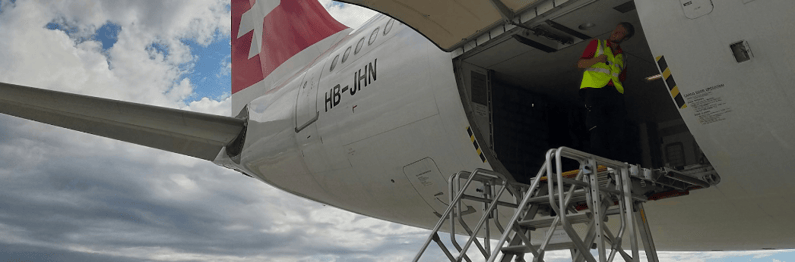
Aerospace: where certification is the barrier to entry
Mexico’s aerospace sector reached roughly $8.3 billion USD in 2025 and is tracking toward about $8.9 billion in 2026. Exports hit nearly $10 billion USD in 2024, and close to 80% serve US and Canadian OEMs. The industry now spans 386 companies across 19 states, with more than 380 specialized plants employing over 60,000 people directly and another 190,000 indirectly. Mexico graduates more than 25,000 aerospace-related engineers and technicians a year.
The hubs are concentrated and deepening: Querétaro, Baja California, Chihuahua, Coahuila, Nuevo León, and Sonora. Safran is expanding LEAP engine production, and GE Aerospace has invested in turbofan component manufacturing in Saltillo. None of this happens without certification. Aerospace lives on AS9100, ITAR controls, and customer-specific qualification.
Shelter services give an aerospace entrant a route through that maze without building a compliance department from scratch. The shelter manages IMMEX and PROSEC (Sectoral Promotion Program) duty treatment on imported materials, keeps trade-compliance records audit-ready, and lets your engineers focus on qualifying the line rather than registering the entity.
For more, see The Aerospace Industry in Mexico. In a sector where certification is the cost of admission, a shelter shortens the runway.
Electronics: Mexico's new top export, and its fastest ramp
Electronics is a top industry using shelter services in Mexico; it's now the headline. Mexico's computer-equipment exports surged about 145% to $85.4 billion USD in 2025, overtaking automotive as the country’s single largest export and making Mexico the world’s third-largest exporter of the category. Roughly 97% of those exports went to just six US states, with Texas alone taking about 67%. The sector employs more than 331,000 workers, and key plants are running at 94% to 99% capacity utilization.
The driver is binational and unmistakable: the US data-center buildout. US data-center investment reached about $102 billion USD in 2025, up nearly 30% year over year, and Mexican plants are absorbing that demand. The constraint is no longer whether the market exists. It is how fast a manufacturer can stand up capacity to capture it.
That is the exact problem a shelter solves. Because the legal entity, IMMEX permit, and VAT certification already exist under a multitenant shelter, a new electronics operation can begin production in roughly 60 to 90 days rather than the 9 to 12 months a standalone entity takes. For small and mid-size manufacturers chasing a contract window, that speed is the whole game.
See Mexico: A Nearshoring Hub for Electronics Manufacturing for the deeper view.

Medical Devices: regulated on both sides of the border
Mexico is the largest medical device exporter in Latin America and ranked sixth worldwide in 2024 at about $19.3 billion USD, with roughly 64% of output going to the United States. The sector employs more than 160,000 people across 9,400-plus companies and grows around 9% a year. Under the federal Plan México industrial strategy, the industry has committed up to $400 million USD in new investment between 2026 and 2030.
Medical device makers carry a double regulatory load. They answer to the US FDA and to COFEPRIS, Mexico’s health regulator. ISO 13485 is the practical quality standard, and NOM-241-SSA1-2025 sets Mexican good-manufacturing requirements. There is a tailwind here: since September 2025, COFEPRIS offers an Abbreviated Regulatory Pathway that recognizes existing FDA and MDSAP approvals and targets a 30-day review. Capturing that advantage still requires the documentation to back it up.
Shelter services provide the regulatory spine. The shelter runs IMMEX compliance, keeps quality-system and import records aligned to both regimes, and manages the customs treatment that keeps temporarily imported components VAT-free. That lets device makers meet FDA, CE, and ISO 13485 expectations while focusing on production and innovation.
See Medical Device Manufacturing in Mexico for the full landscape.

Consumer Goods: speed and proximity over everything
Consumer goods cover appliances, furniture, food, and household products. Mexico’s home-appliance market alone reached about $16.4 billion USD in 2025 and is projected to hit $20.7 billion by 2030. The capital is following: Mabe has committed $668 million USD across 15 plants between 2025 and 2027, Whirlpool added $250 million (with $150 million for its Ramos Arizpe, Coahuila site), and BSH opened a $260 million refrigerator plant in Monterrey.
What defines this sector is supply-chain complexity and short cycles. Whirlpool is targeting 80% regional component integration, with about 70% sourced directly from Mexico. Manufacturers win by keeping suppliers close to the line and reacting to demand fast, all while holding quality and safety standards across high volumes.
Shelter services keep that machine agile. The shelter handles the labor-intensive administrative and logistics load, and helps smaller suppliers plug into a major manufacturer’s ecosystem without standing up their own Mexican entity first. The result is the proximity and responsiveness the sector runs on.
See Consumer Goods Manufacturing in Mexico.

The decisions a shelter makes faster than you can:
Across the top industries using shelter services in Mexico, the same three decisions slow entrants down. A shelter partner compresses each one.
1. Site selection
Mexico is vast, and the right location depends on logistics, workforce availability, power and water, and proximity to your market and suppliers. A shelter brings on-the-ground data instead of a spreadsheet built from a distance, or generic numbers from ChatGPT that your competitors are also using.
2. Feasibility and incentives
Operating models differ in tax impact, speed, and control. Federal and state incentives are real but conditional. Foreign direct investment into Mexico reached about $40.9 billion USD through the third quarter of 2025, which means competitors are committing capital now. A shelter helps you model the true cost before you sign.
3. Government and institutional relations
A shelter sits inside the conversation with SAT, INDEX, and state economic-development offices, and acts as the intermediary that keeps approvals moving. To see how the broader 2026 trade environment shapes these choices, read USMCA 2026: Mexico’s Strategic Opportunity to Lead Nearshoring.
The takeaway for executives evaluating Mexico in 2026:
Shelter services are not an industry-specific trick. They are a structural advantage that shows up differently in each sector: labor and origin compliance in automotive, certification speed in aerospace, ramp speed in electronics, dual-regime quality in medical devices, and supply-chain agility in consumer goods. The common thread is time and risk. A shelter buys both down.
Key takeaways:
-
Automotive: shelter services keep operations aligned with USMCA Regional Value Content, Labor Value Content, and Rapid Response Labor Mechanism rules, where one facility-level finding can stop shipments.
-
Aerospace: shelter services route entrants through AS9100, ITAR, and PROSEC requirements without building a compliance department first, in a sector exporting nearly $10 billion USD a year.
-
Electronics: with exports up 145% to $85.4 billion USD in 2025, shelter services let manufacturers begin production in 60 to 90 days to capture data-center-driven demand.
-
Medical devices: shelter services manage the FDA-plus-COFEPRIS double load and keep documentation ready to use COFEPRIS’s 30-day Abbreviated Regulatory Pathway.
-
Consumer goods: shelter services keep complex, high-volume supply chains agile and help smaller suppliers join a major manufacturer’s ecosystem fast.
Ready to see where your industry fits?
Book a 30-minute working session with our Advisory team. No pitch. We pressure-test whether a shelter is the right structure for your operation.
Frequently Asked Questions:
Which industries use shelter services in Mexico?
The five industries that rely most on shelter services in Mexico are automotive, aerospace, electronics, medical devices, and consumer goods. Each uses a shelter to buy down a specific risk: USMCA labor and origin compliance in automotive, certification speed in aerospace, fast capacity ramp in electronics, FDA-and-COFEPRIS quality compliance in medical devices, and supply-chain agility in consumer goods.
What is a shelter service in Mexico?
A shelter service lets a foreign manufacturer operate in Mexico without forming its own Mexican legal entity. The shelter holds the IMMEX permit and VAT certification and runs HR, payroll, accounting, customs, and trade compliance, while the manufacturer controls production. When ready, the company can graduate to its own subsidiary.
How fast can a manufacturer start producing under a shelter in Mexico?
Under a multitenant shelter, production can begin in roughly 60 to 90 days because the legal entity, IMMEX permit, and VAT certification already exist. Forming a standalone Mexican entity typically takes 9 to 12 months. That speed is why fast-moving sectors like electronics favor the shelter route, but must be compared to shared risks.
Do shelter services help with USMCA and tariff compliance?
Yes. A shelter helps you maintain certificates of origin, document Regional Value Content and Labor Value Content across the bill of materials, and keeps records audit-ready for SAT. With the 2026 USMCA review and ongoing Section 232 duties, USMCA qualification directly affects landed cost, so this compliance work has real financial value.
Are shelter services only for large manufacturers?
No. Shelter services are often most valuable to small and mid-size manufacturers and to suppliers that need to join a larger manufacturer’s ecosystem quickly. The model spreads administrative overhead and removes the need to build a Mexican entity and compliance team before producing.
Is a shelter still the right choice in Mexico in 2026?
For most foreign manufacturers entering or expanding in Mexico, yes, and arguably more so. The 2026 USMCA review, a more audit-intensive SAT, and a shifting tariff environment raise the cost of a compliance gap. A shelter absorbs that burden and lets the manufacturer focus on production.