

Trade between Mexico and the United States continues to surge, driven by nearshoring, friendshoring, and new investments reshaping North American supply chains. Today, Mexico exports to the U.S. have reached record highs under the USMCA, making efficiency and compliance more important than ever.
Explore more: Mexico's Export Boom
But even in this era of regionalization, trade delays remain one of the biggest obstacles for manufacturers, logistics providers, and exporters. Each delay translates into higher costs, reduced customer satisfaction, and lost competitive edge.
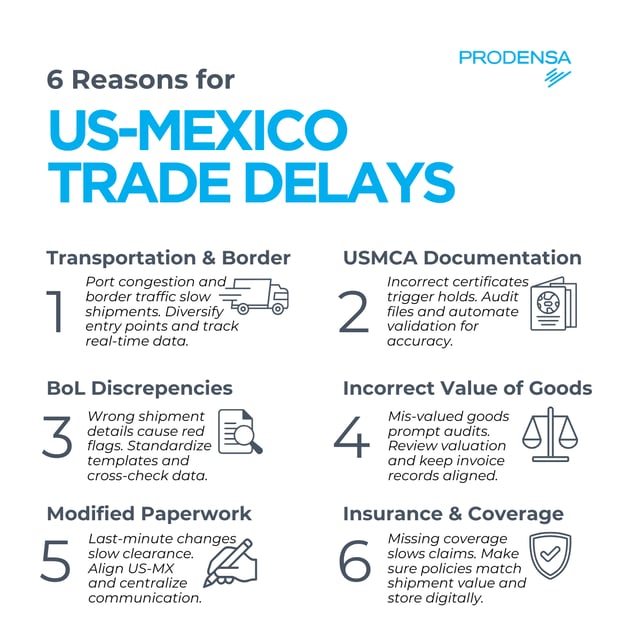
Below, we highlight six causes of trade delays in Mexico-U.S. exports—and how proactive companies can fix them.
1. Transportation and Border Delays
From congested ports to crowded border crossings, transportation delays are the most common barrier to smooth trade. Weather events, infrastructure constraints, or port congestion can stall shipments for days.
For exporters in a nearshoring environment, even a short delay can disrupt just-in-time production schedules. Mitigation strategies include:
-
Diversifying entry points (e.g., Laredo, El Paso, Tijuana)
-
Tracking real-time border data
-
Working with logistics partners experienced in Mexico customs rules
2. Documentation Errors and USMCA Certificates
Proper documentation (especially the USMCA certificate of origin) is crucial for tariff-free trade. Missing or inaccurate paperwork can cause customs holds or even denial of preferential duty treatment.
To avoid delays:
-
Audit export documents before submission
-
Train teams in Mexico trade compliance procedures
-
Use digital systems to automate form validation and recordkeeping
Even minor inconsistencies between invoices and certificates can lead to costly inspections or fines.
Request a Proposal: USMCA Certification Analysis
3. Bill of Lading (BOL) Discrepancies
The Bill of Lading is both a receipt and a contract. Incomplete or incorrect data, like weight, consignee details, or cargo description can trigger red flags at customs.
Companies should:
-
Standardize BOL templates
-
Automate data entry where possible
-
Cross-check shipping data with customs declarations before release
Accurate, consistent documentation helps maintain trust with both carriers and border authorities.
4. Declaring the Wrong Goods’ Value
Errors in declared value can cause one of the most time-consuming types of delays. Whether under- or overvalued, discrepancies can prompt audits or reclassification.
Exporters can mitigate risk by:
-
Reviewing valuation methodologies
-
Keeping clear records of commercial invoices, Incoterms, and freight charges
-
Conducting internal audits aligned with Mexico customs rules
Consistent valuation also safeguards against penalties and supports a company’s long-term credibility with authorities.
Explore more: Everything you Need to know about Mexican Customs
5. Modifying Paperwork After Submission
Last-minute corrections or updates (like adjusting an HS code or address) can slow customs release if communication between parties is fragmented.
To minimize impact:
-
Maintain up-to-date contact lists for brokers, carriers, and importers
-
Use centralized communication tools across teams in Mexico and the U.S.
-
Establish escalation protocols for urgent document changes
For nearshore outsourcing operations, having aligned binational teams can make these updates seamless.
6. Insurance and Coverage Gaps
While insurance doesn’t typically cause direct delays, missing or incomplete documentation can create barriers when claiming damages or resolving disputes.
Make sure policies are:
-
Updated for each new shipping route
-
Matched to the value and risk profile of goods
-
Stored digitally for instant retrieval
A proactive insurance review ensures smoother claim processing if shipments are delayed or damaged in transit.
Bonus - Packaging That Obscures Identification Data
Something as simple as tape covering a barcode can lead to extra handling time and verification delays. Poorly labeled or mispacked goods can slow customs clearance and warehouse processing.
Follow these best practices:
-
Ensure all external labels remain visible
-
Use internationally compliant packaging materials
-
Include redundant shipment identification where possible
Clear labeling supports fast, traceable movement of goods from Mexican facilities to U.S. distribution centers.


The Bigger Picture: Building a Resilient Trade Strategy
The ramifications of customs mistakes can be costly. Fines for documentation errors can accumulate rapidly, sometimes amounting to eight times the original value of duties owed. Even for items that are not subject to taxes, penalties can range from 20% to 80% of the declared value.
Beyond the immediate financial implications, trade delays can result in lost productivity and potential trade bans, leading to hidden costs that can affect a company's bottom line. By understanding and addressing the root causes of trade delays, businesses can not only enhance their operational efficiency but also improve their relationships with customers and partners worldwide.
A Proactive Approach
Preventing trade delays isn’t just about compliance—it’s a core part of building a stronger North American supply chain. Companies that master operational details gain the advantages of nearshoring: lower costs, faster response times, and stronger Mexico and United States relations through dependable cross-border performance.
By identifying and addressing these common delay factors, exporters can strengthen their reputation as reliable Mexico trade partners, reduce costs, and maximize the benefits of regional integration under the USMCA.
The first step? Speak to one of our Advisors.