



Nearshore outsourcing is evolving. Once associated primarily with cost-saving measures like call centers or back-office processing, today’s nearshore partnerships are at the forefront of innovation, enabled by advanced technologies like artificial intelligence (AI), automation, and machine learning. As reshoring and friendshoring reshape global supply chains and talent strategies, companies are turning to nearshore outsourcing talent not just for savings, but for scalability, quality, and technological alignment.
In this post, we:
- explore how AI is transforming nearshore outsourcing and ushering in a new era: Nearshore 2.0
- examine how high-value, knowledge-based work is moving closer to home
- why the Mexico and United States relationship, bolstered by the USMCA certificate and regional integration, is central to this trend.
The Rise of Nearshore Outsourcing in a Post-Offshoring World
The traditional model of offshore outsourcing—sending IT or business processes to distant locations in Asia—is being re-evaluated. Rising labor costs in Asia, global disruptions like the pandemic, and geopolitical tensions have revealed the vulnerabilities of long, fragile supply chains. As a result, companies are embracing reshoring and friendshoring strategies, shifting critical operations closer to home.
Nearshoring offers proximity, cultural compatibility, and time-zone alignment, especially for U.S. companies partnering with Latin America. Among these, Mexico has become a key player, offering deep trade integration through the USMCA, favorable customs rules, and a growing pool of skilled professionals.
Explore the software engineering industry in Mexico - free download.
AI Impulsing Nearshoring High-Value Work
Artificial intelligence is transforming the nature of work across industries—and nearshore outsourcing is no exception. As companies implement AI to streamline workflows, analyze data, and power customer engagement, they are also demanding higher-level capabilities from their outsourcing partners.
This shift has repositioned many nearshore destinations from low-cost support centers to strategic hubs for high-value knowledge work. In Mexico, for instance, engineering graduates are contributing to AI model training, algorithm development, and even the implementation of robotic process automation (RPA) for global clients. The evolution of nearshore outsourcing reflects a broader digital transformation that relies on collaborative, tech-savvy talent.
Nearshore 2.0: Moving Up the Value Chain
In the Nearshore 2.0 model, companies are outsourcing:
-
AI development and integration: From NLP to computer vision
-
Data analytics and business intelligence: Real-time dashboards and predictive modeling
-
Cybersecurity: Threat detection, response automation, and risk analytics
-
Software development: Agile teams co-developing SaaS, mobile, and enterprise applications
This work requires not just technical proficiency, but domain knowledge, innovation capacity, and collaboration—attributes that nearshore partners in Mexico, Colombia, and Costa Rica are increasingly known for. Proximity enables better integration with internal teams, reducing the communication lags that often hamper offshore projects.
Mexico's Competitive Advantage in AI-Enabled Nearshoring
Mexico’s value proposition as a nearshore destination is growing stronger. With over 120,000 engineering graduates annually and a tech-savvy workforce concentrated in cities like Guadalajara, Monterrey, and Mexico City, the country is ready for the AI revolution.
Furthermore, favorable regulations and government investment in innovation ecosystems make it easier for companies to engage in long-term partnerships. Mexico’s trade ties with the U.S.—underpinned by the USMCA certificate—also reduce operational and regulatory friction, allowing for easier cross-border collaboration.
The benefits of this proximity go beyond labor. With simplified Mexico customs rules and deep integration into North American value chains, companies are also seeing gains in speed-to-market and compliance. These advantages are attracting a wide range of industries to shift to nearshoring talent models, from fintech and healthcare to manufacturing and supply chain tech.
Tech-Driven Nearshore Ecosystems Are Expanding
Many of Mexico’s trade partners are also investing in regional R&D, boosting the long-term sustainability of nearshoring. Tech parks, innovation hubs, and university partnerships are springing up in cities like Queretaro and Aguascalientes, creating robust ecosystems around AI, robotics, and advanced manufacturing.
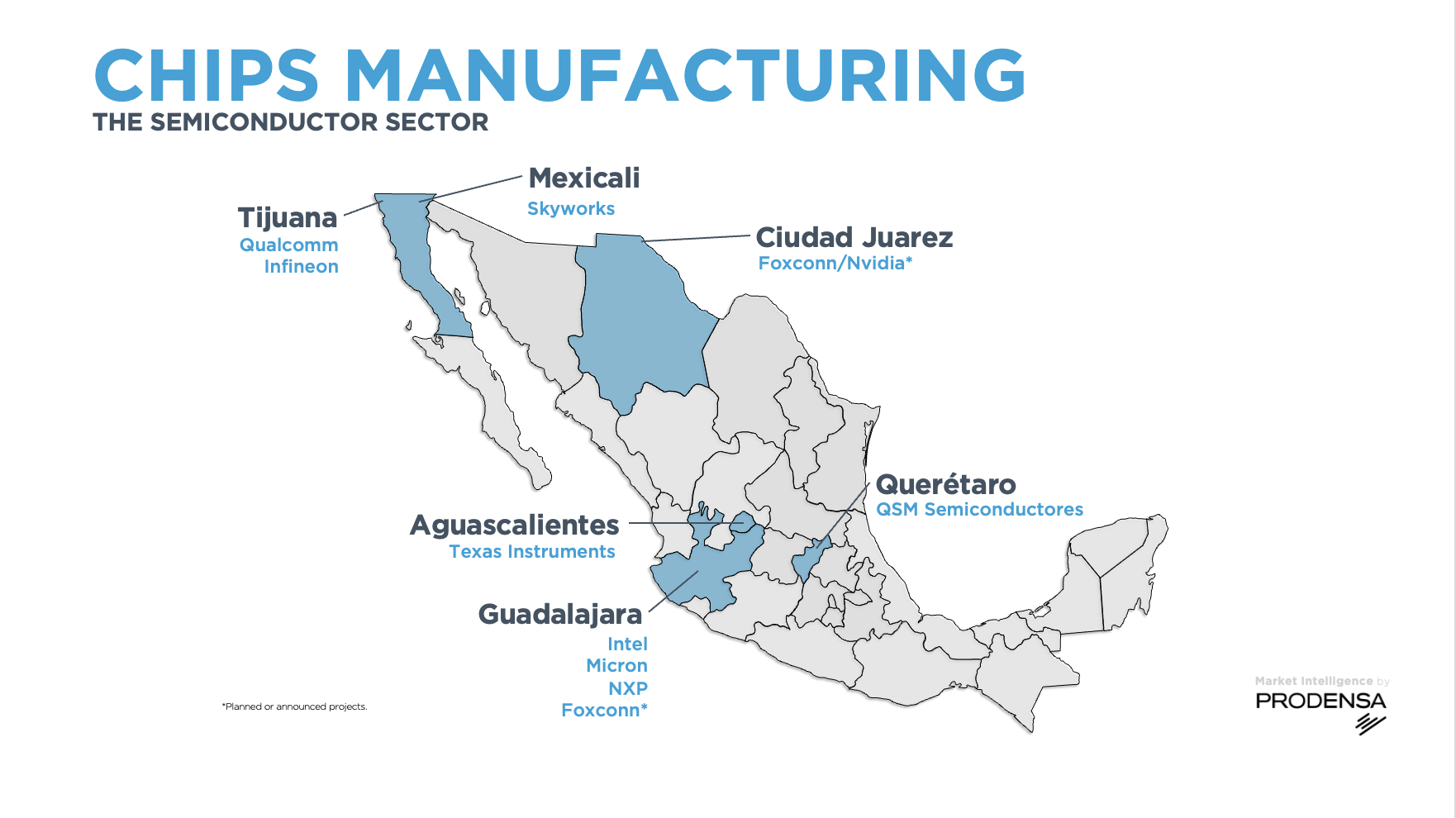
This trend aligns with broader efforts to deepen Mexico exports to the U.S., particularly in tech-enabled services. As North America moves toward greater digital integration, nearshoring is no longer just a workaround to global disruptions—it’s a core part of strategic growth.
Explore the benefits of building a nearshore service hub in Mexico.
Key Benefits of AI-Enhanced Nearshore Outsourcing
-
Scalability: Flexible access to growing AI/ML talent pools
-
Speed: Time-zone compatibility supports agile delivery cycles
-
Security: Stronger alignment with U.S. regulatory frameworks
-
Cost Efficiency: Competitive rates without sacrificing quality
-
Innovation: Exposure to bilingual, cross-trained engineering talent
These benefits are even more pronounced for companies working under trade agreements that ease IP protections, labor mobility, and tax structures—making Mexico a particularly advantageous choice.
Conclusion: Redefining Outsourcing for the AI Era
As industries undergo digital transformation, the role of nearshore outsourcing is evolving from peripheral support to core innovation enabler. AI is not just changing how companies operate—it’s changing where they operate. By leveraging nearshore talent in Mexico and other key LATAM regions, U.S. companies can innovate faster, scale smarter, and compete globally.
In the era of Nearshore 2.0, geography, technology, and trust converge—and the U.S.-Mexico corridor is proving to be a winning formula.
HIRE TECH TALENT IN MEXICO
Via Mindfacturing®, a binational EOR with IMMEX service export incentives.
Explore more about related topics:
-
Advantages of nearshoring
-
Mexico and United States relations
-
Mexico exports to US
-
Mexico customs rules
