


The deeply integrated U.S.–Mexico automotive corridor, vital to regional manufacturers, faces renewed pressures today. Steel, auto, and security-linked tariffs—rooted in Section 232 and IEEPA—are systematically reshaping cost structures, trade flows, investments and North American manufacturing strategy.
The Complex Tariff Landscape for the Automotive Industry in Mexico
Mexico manufacturers and automakers now navigate three overlapping tariff regimes:
Steel & Aluminum - 50%
Effective June 4, 2025, the Section 232 tariff on metal content doubled to 50%, applying across almost all steel and aluminum imports—including those from Mexico. Only the U.K. retains a 25% rate. Metal-content valuation remains strictly based on material weight and composition.
Autos & Auto Parts - 25% on non-U.S. Content, Adjustable Mechanisms
Implemented on April 2/May 3 (2025), these Section 232 tariffs impose:
- 25% on disassembled vehicles
- 25% on noncompliant auto parts
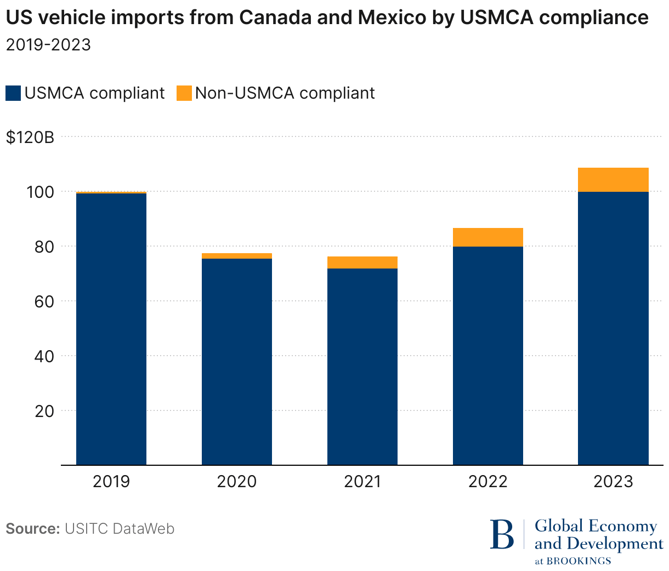
However, vehicles and parts meeting USMCA rules are either exempted or only taxed on their non-North American content. Current practices indicate 92% of Mexican manufactured parts qualify under USMCA.
Border Security / IEEPA Tariffs - 25%
Initiated on March 4, 2025, these tariffs aim to deter illicit drug flows like fentanyl and illicit migration. Though covering ~30% of Mexican exports, they do not stack with Section 232; only the highest applicable rate applies. Their legality remains pending judicial review.
On April 29th, an executive order eliminated the compounding of tariffs—auto and auto parts tariffs no longer stack with steel/aluminum duties or border security IEEPA tariffs.
U.S. Measures for the U.S. Manufacturing Auto Industry
Simultaneously, U.S. automakers assembling vehicles within the United States will receive:
- A 3.75% MSRP tax credit on imported parts (valid April 3, 2025 thru April 30, 2026)
- Reduced to 2.5% during the second year (thru April 30, 2027)
- Offset benefits apply only to U.S.-assembled vehicles, not those built in Mexico or Canada
A Strategic Shift Toward U.S. Content
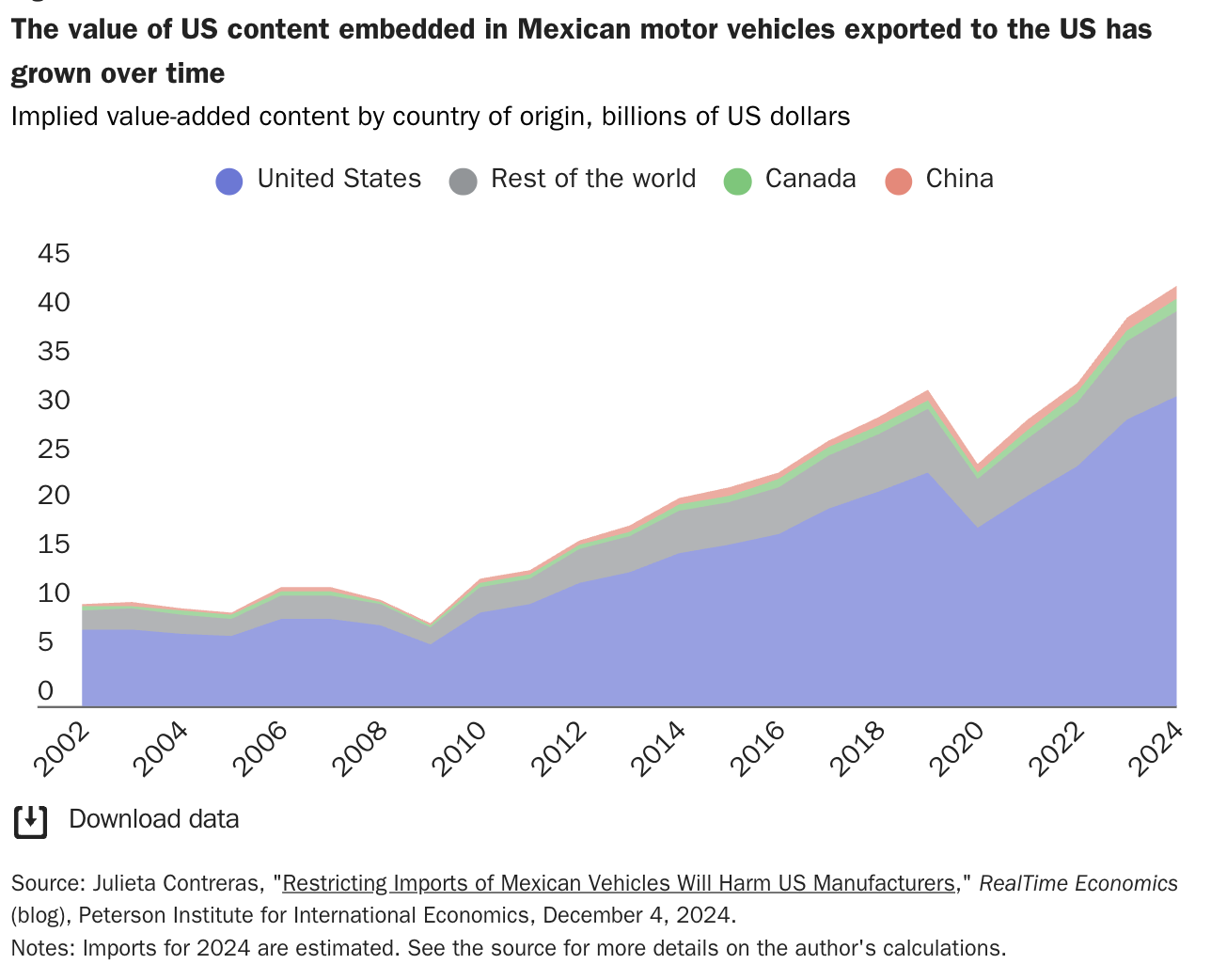
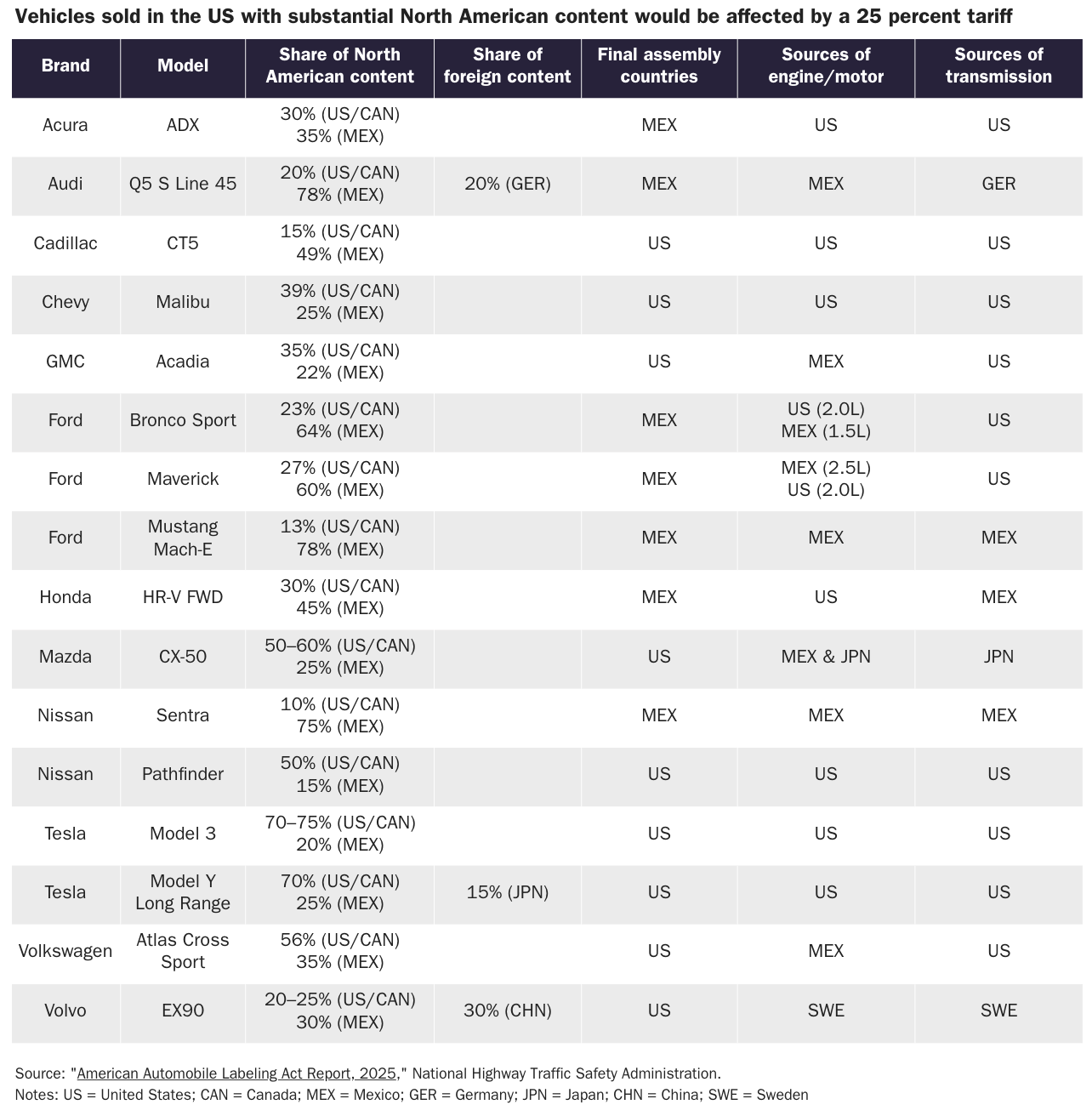
Tariffs on non-U.S. automotive content are deliberately engineered to recalibrate supply chains and penalize vehicles that technically meet USMCA, but fail to maximize U.S.-based content. The U.S. has introduced tariffs on 25% on non-U.S. value even with compliance USMCA vehicles--transforming tariff policy into a lever for deeper domestic supply reshaping.
Mexico's Automotive Sector Data [2025]
Industry metrics reveal the tangible strain of tariffs on the Mexico manufacturing landscape:
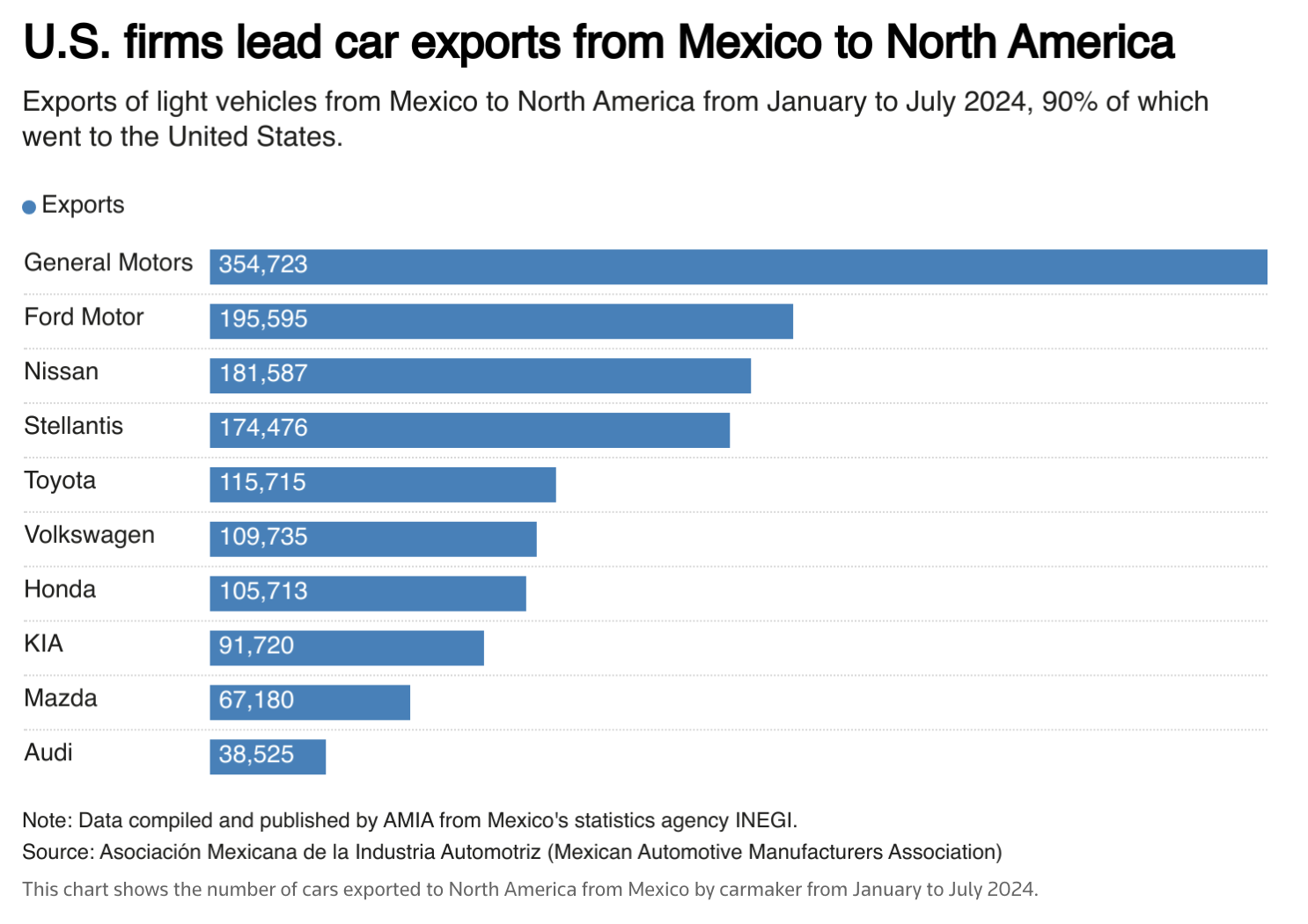
- Vehicle production in Mexico (Jan–May 2025): 1.64 million units, down 5% compared to the same period in 2024. SUVs and pickups now represent 76.6% of production—highlighting the concentration of high-value segments most affected by U.S. content scrutiny.
- Exports of light vehicles (Jan–May 2025): 1.33 million units, an annual drop of 6.3%, with over 80% bound for the U.S.—confirming the sector’s high exposure to shifting U.S. trade policy.
- Heavy vehicle production dropped nearly 20% YoY, driven largely by falling exports and raw material uncertainty due to the new 50% steel tariff.
- Auto parts manufacturing reached $30 billion USD in Q1 2025, with leading categories including body parts, engine components, lighting systems, and brake assemblies—all heavily exposed to both material tariffs and compliance-based origin claims.
These figures reflect not only softening demand but also increasing compliance and cost pressures stemming directly from U.S. tariff policy, raw material inflation, and cross-border procedural changes. Source: ANAPS Automotive Report June 2025
Impacts on Mexico's Automotive Manufacturing Ecosystem
- Compliance is more complex: Suppliers must maintain granular tracking of U.S. vs non-U.S. content to ensure tariffs are limited; inaccurate origin claims invite sweeping retrospective penalties.
- Part classification matters: The ongoing 90-day review may lead to additional affected part lines; manufacturers must stay vigilant and provide input.
- North American incentive imbalance: Offsets isolate U.S. assembly benefits, leaving Mexican exporters unable to capture the credits and potentially facing higher comparative tariff burdens.
- Operational recalibration underway: GM’s recent $4 billion shift in production to the U.S. reflects these evolving cost and incentive structures.
Recommendations for Mexican OEMs and Suppliers
- Enhance origin documentation — ensure segregation of U.S./Mexican/Canadian content with full traceability, especially for metal-intensive parts.
- Prepare for proactive engagement — submit tariff expansion petitions during the 90-day review window to influence part selection processes.
- Monitor classification shifts — coordinate with customs brokers on HTS updates (effective May 16, 2025) to avoid mismatches.
- Advocate in trilateral dialogues — emphasize equitable treatment under USMCA, especially regarding import offsets and tariff application symmetry.
- Model cross-border investment scenarios — evaluate whether proximity to U.S. assembly facilities may unlock offset participation vs production cost.
Policy Logic Behind the Tariffs
Insights from Prodensa's Institutional Relations team:
- Monica Lugo - Director, USMCA Negotiator
- Emilio García - Leader
The tariffs on automobiles and auto parts, implemented by President Trump, are grounded in a strategic effort to protect national security and revitalize the U.S. auto industry. By invoking Section 232 of the Trade Expansion Act of 1962, the administration has justified these measures as a response to the perceived threat posed by excessive imports to the domestic industrial base and supply chains.
The policy emphasizes that a strong auto industry is vital for national security, ensuring the U.S. can independently produce vehicles and components critical for military and civilian applications. This includes maintaining the capability to manufacture vehicles for defense purposes, reducing dependence on foreign suppliers, particularly from nations like China.
The tariffs, set at 25% on imported passenger vehicles and key auto parts like engines and transmissions, align with the broader "America First" trade agenda, which prioritizes reducing trade deficits and protecting American manufacturing jobs from foreign competition. Additionally, the tariffs aim to counter trade practices deemed harmful to U.S. economic interests, reinforcing domestic production capabilities.
Operational Reactions from OEMs
Original Equipment Manufacturers have adopted varied strategies to mitigate the impact of these tariffs.
- General Motors has invested significantly, with a reported $4 billion shift of production to the U.S., aligning with the push for domestic manufacturing.
- Stellantis, facing supply chain disruptions, temporarily halted production in Mexico and Canada, resulting in 900 layoffs in Michigan and Indiana.
- In contrast, Hyundai reported record sales without immediate price increases, maintaining competitiveness through cost absorption until at least June 2025.
- Toyota similarly delayed price hikes, benefiting from a sales surge in March due to increased consumer demand.
- Ferrari announced a 10% price increase for most models, exempting select vehicles, while BMW committed to covering tariff costs for Mexican-built 3 Series sedans through May.
- Ford launched its "From America, For America" campaign, offering employee pricing to boost sales. These diverse responses highlight the strategic adjustments OEMs are making based on their production locations, supply chain dependencies, and market positioning.
Challenges and Strategic Advantages of Manufacturing in Mexico
The tariffs present significant challenges for OEMs operating in Mexico, including complex USMCA compliance requirements, such as ensuring 75% regional vehicle content and 40% core parts sourcing, which vary by automaker and model.
Non-compliance risks, penalties, and the inability to access U.S. tax credits create an incentive imbalance for Mexican exporters. Trade uncertainty and erratic tariff policies have placed OEMs in a planning gridlock, with potential production drops of up to 20,000 units per day according to S&P Ratings.
Relocating production to the U.S. is challenging due to higher labor costs and shortages, leaving underutilized plants in Mexico. Despite these hurdles, contract manufacturing in mexico remains a strategic hub for OEMs due to its proximity to the U.S., the world’s largest automotive market, reducing transportation costs and delivery times.
Mexico’s skilled workforce and favorable business environment, supported by over 14 trade agreements, including the USMCA, enhance its competitiveness. As the fourth-largest vehicle exporter and autoparts producer globally, Mexico produced 3.9 million vehicles in 2024, with a forecasted 2.7% growth in 2025.
By enhancing origin documentation and engaging in USMCA dialogues, OEMs can leverage maquiladoras in Mexico and established supply chains to offset tariff impacts and maintain a competitive edge in North America.
Our Final Reflections
This wave of tariff measures reveals a targeted U.S. strategy—not just protectionist, but precise in market behavior and sourcing patterns. By distinguishing North American content from the periphery, the U.S. is seeking to reward localized production while safeguarding against global rerouting of critical parts. As a result, identity and traceability are now as valuable as economic scale.
For Mexican automotive stakeholders, navigating this policy labyrinth demands three strategic pillars:
- Transparency in component origin and value flows
- Engagement on policy development windows and classification systems
- Adaptability to shifting incentives and operational footprints
At Prodensa, we are actively supporting clients in navigating these new operational, compliance, and policy landscapes. The key to resilience lies in proactive adaptation, not reacting to tariffs after the fact but positioning for competitiveness regardless of where the next border line falls.

Schedule a consultation with our experts to discuss how your company can strategically respond to these tariff shifts and protect your competitive edge.