

Manufacturing compliance in Mexico is no longer a background function. It is now a board-level concern.
Over the last several years, companies operating under IMMEX programs, export regimes, and multi-entity structures have experienced:
- Increased tax audits
- Greater labor inspections
- Stricter environmental enforcement
- Higher scrutiny over trade compliance
- Expanded documentation requirements
For some executives, this feels like risk. For others, it signals something else. Institutional maturity.
So which is it?
Read the full blog about Mexican Legal Reforms in 2026.
Why Is Compliance Increasing in Mexico?
The rise in business compliance in Mexico is not random. It is the result of structural shifts across trade, labor, and fiscal policy.
Stronger USMCA Enforcement
Under USMCA, rules of origin verification, labor provisions, and cross-border documentation standards have become more rigorous. Export-oriented manufacturers must demonstrate traceability and compliance more consistently.
SAT Digitalization & Modernization
Mexico’s tax authority (SAT) has significantly enhanced digital oversight capabilities. Electronic invoicing, cross-system data validation, and real-time monitoring allow regulators to detect inconsistencies faster than ever.
Labor Reform & Workforce Formalization
Recent labor reforms have strengthened union transparency, collective bargaining requirements, and inspection authority. Documentation and governance practices must now withstand deeper review.
Environmental & Operational Controls
Environmental permits, safety standards, and operational compliance are under tighter enforcement—particularly for large manufacturing facilities.
Global Governance Expectations
International corporations increasingly demand structured governance from their Mexican subsidiaries and suppliers. Compliance is no longer just local—it impacts global supplier eligibility.
2026 Predictions for Manufacturers


Is Increased Regulation a Risk?
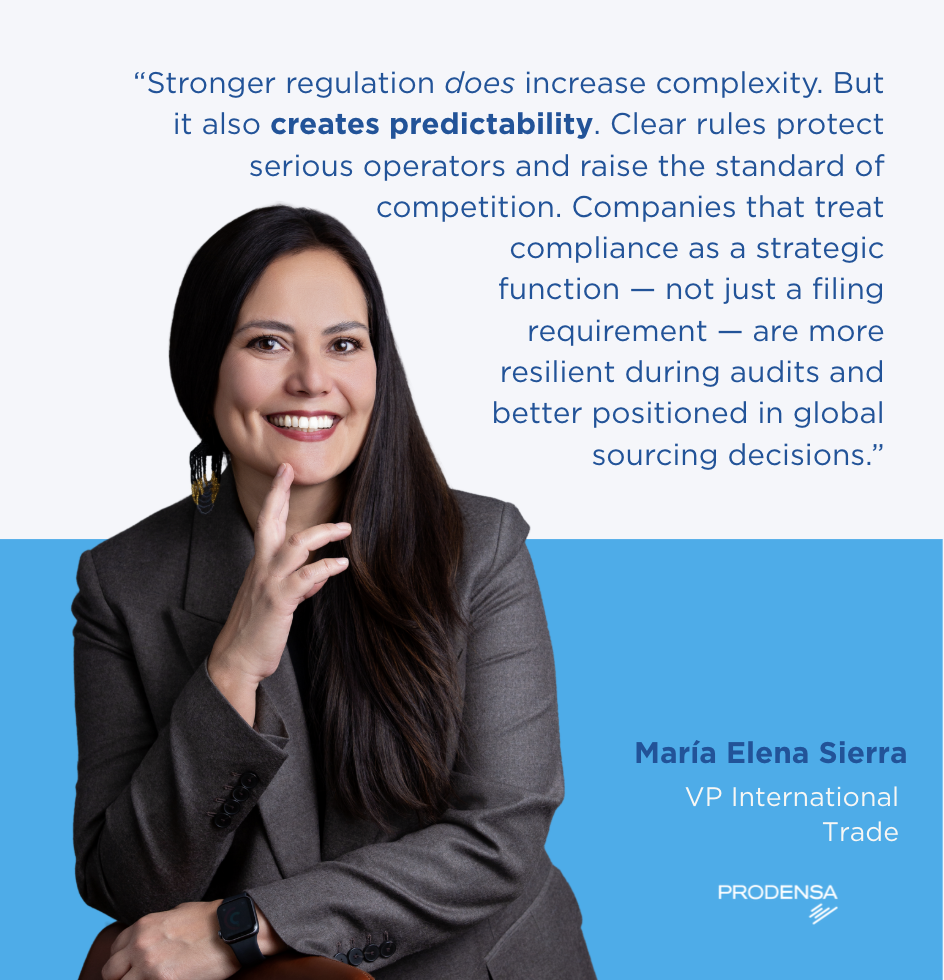
In other words, increased compliance in Mexico is not simply about control. It is about structure.
Serious manufacturing economies require defined rules and consistent enforcement. For long-term investors, predictability creates value.
The Real Risk: Fragmented Compliance Systems
The real exposure is not regulation itself. It is fragmentation. Many manufacturers still manage compliance obligations through:
- Excel trackers
- Email reminders
- Shared folders
- Departmental silos
- Manual reporting
In today’s environment, that model is fragile.
When audits occur, companies scramble to gather documentation. Ownership is unclear. Evidence is incomplete. Deadlines are missed.
Increased scrutiny does not create risk.
Lack of structure does.
From Advisory to Architecture: Why We Opened Our Own Compliance System
For more than 40 years, Prodensa has advised international manufacturers operating in Mexico across:
- IMMEX compliance
- Labor governance
- Tax and fiscal obligations
- Trade compliance
- Environmental and operational regulation
- Multi-entity corporate structures
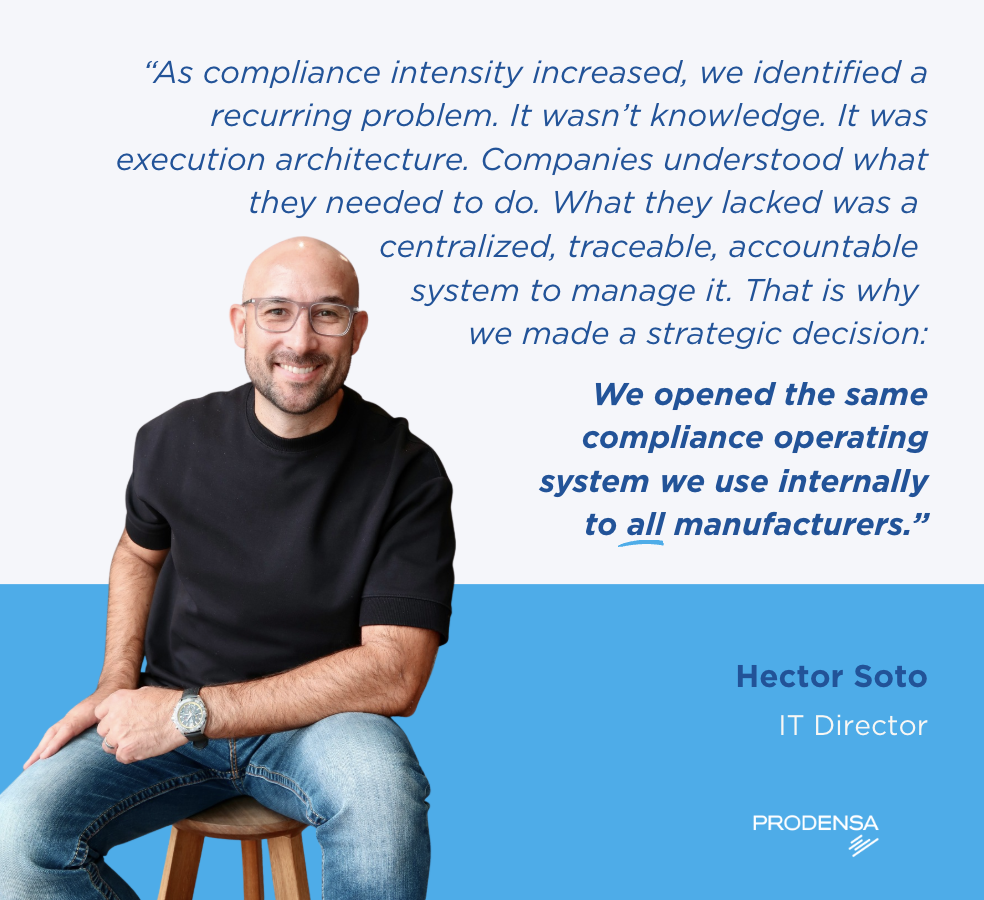
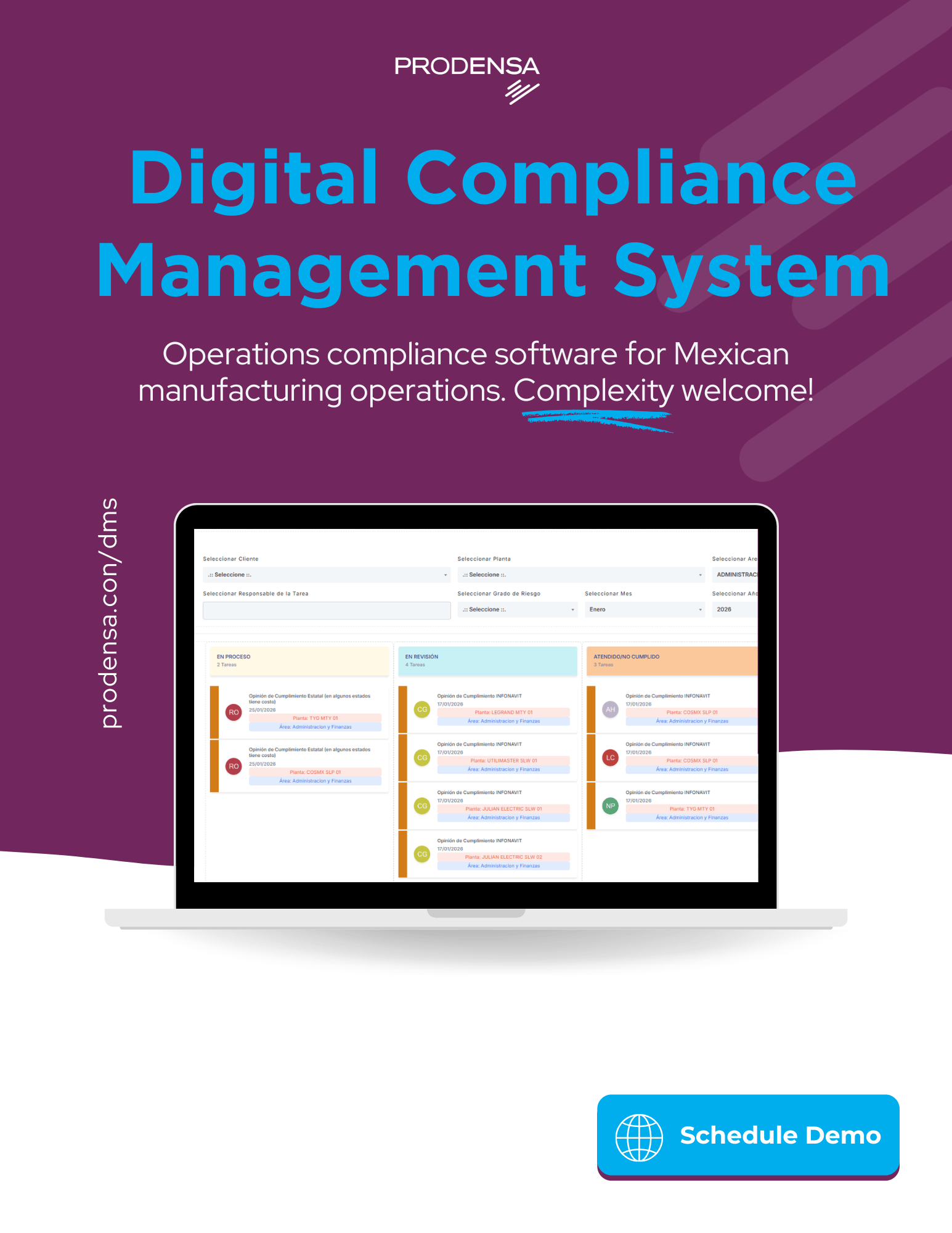
Introducing Prodensa’s Digital Management System (DMS)
Prodensa’s Digital Management System (DMS) is an enterprise-grade compliance platform built specifically for manufacturers operating in Mexico under complex regulatory frameworks.
It centralizes, automates, and monitors all compliance obligations across legal, fiscal, labor, trade, environmental, and corporate areas.
This is not generic compliance software.
It is structured compliance governance — digitized.
What the DMS Centralizes:
Every legal entity operating in Mexico faces hundreds of recurring obligations across departments. The DMS consolidates these into one controlled environment, organized by legal entity, department, regulatory framework, due date, and owner. No more searching through emails or spreadsheets.
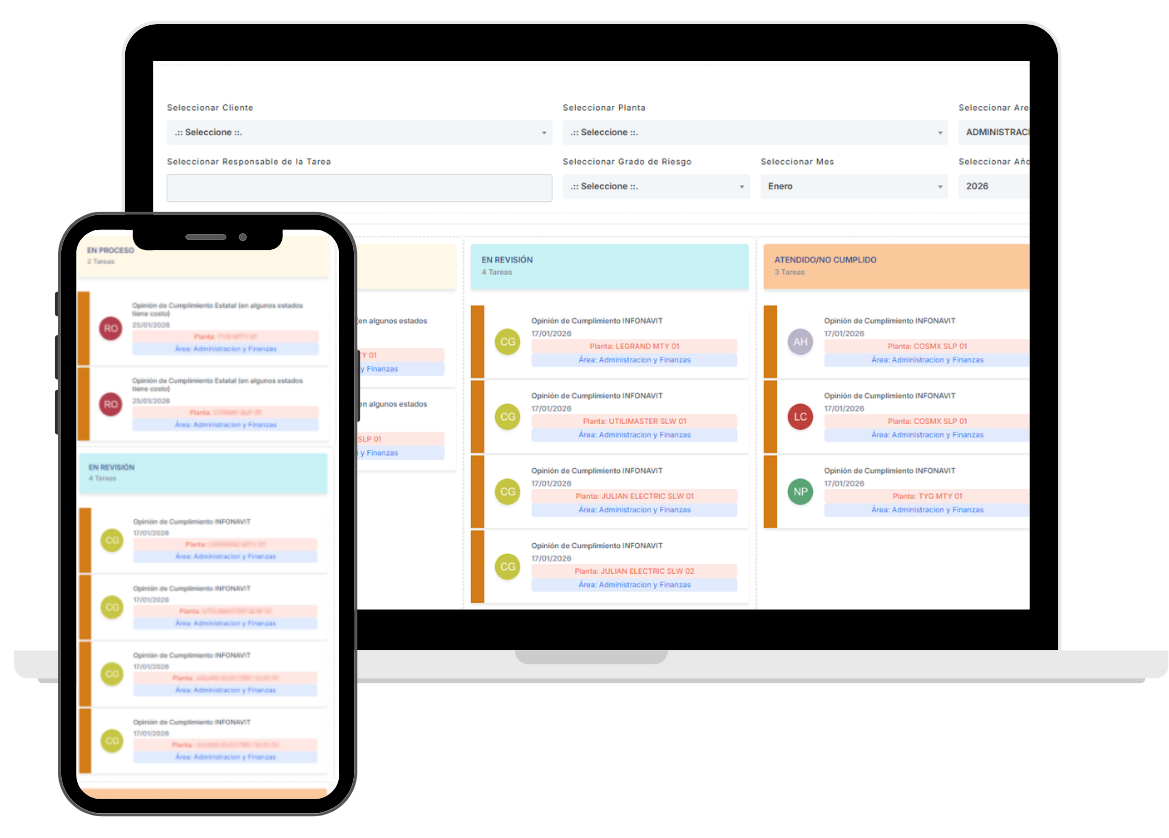
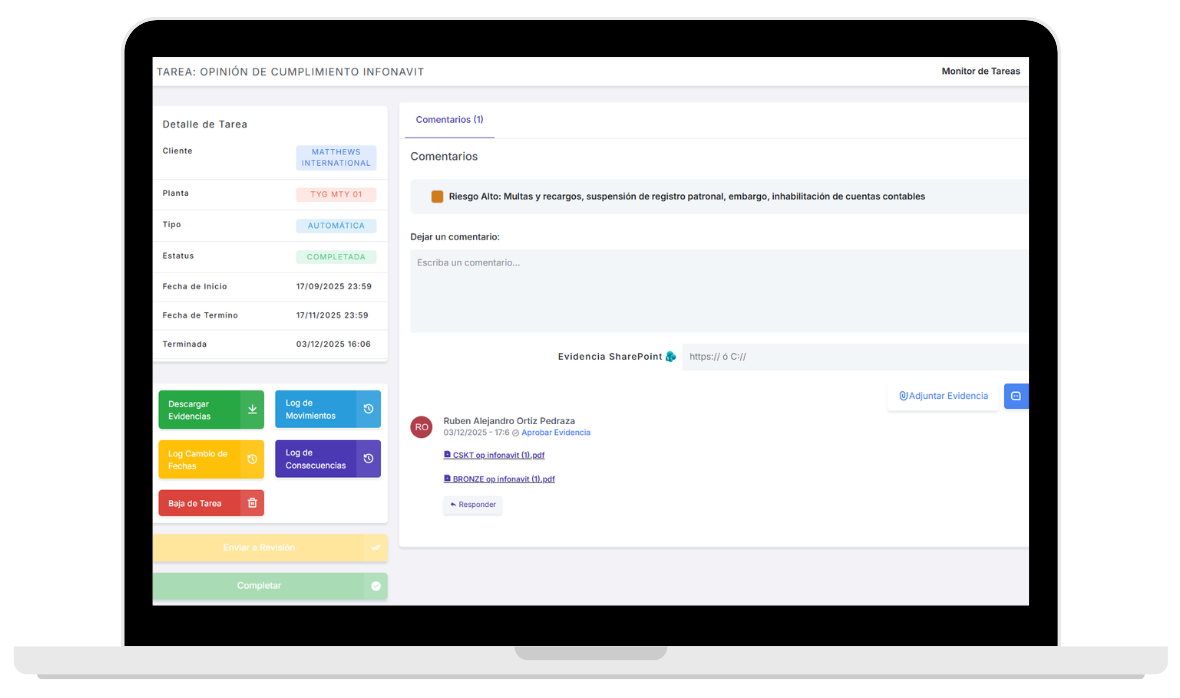
Define Leadership and Evidence
Each obligation inside the DMS includes assigned owner, defined deadline, status tracking, mandatory evidence upload, version control and secure digital storage. This creates a verifiable compliance trail that withstands internal and external audits as well as government inspections. Compliance becomes measurable, not assumed.
Automate Alerts and Escalations
The system:
- Sends reminders before each expiration
- Escalates overdue activities to supervisors or directors
- Reduces critical loss risks
Compliance no longer depends on memory.
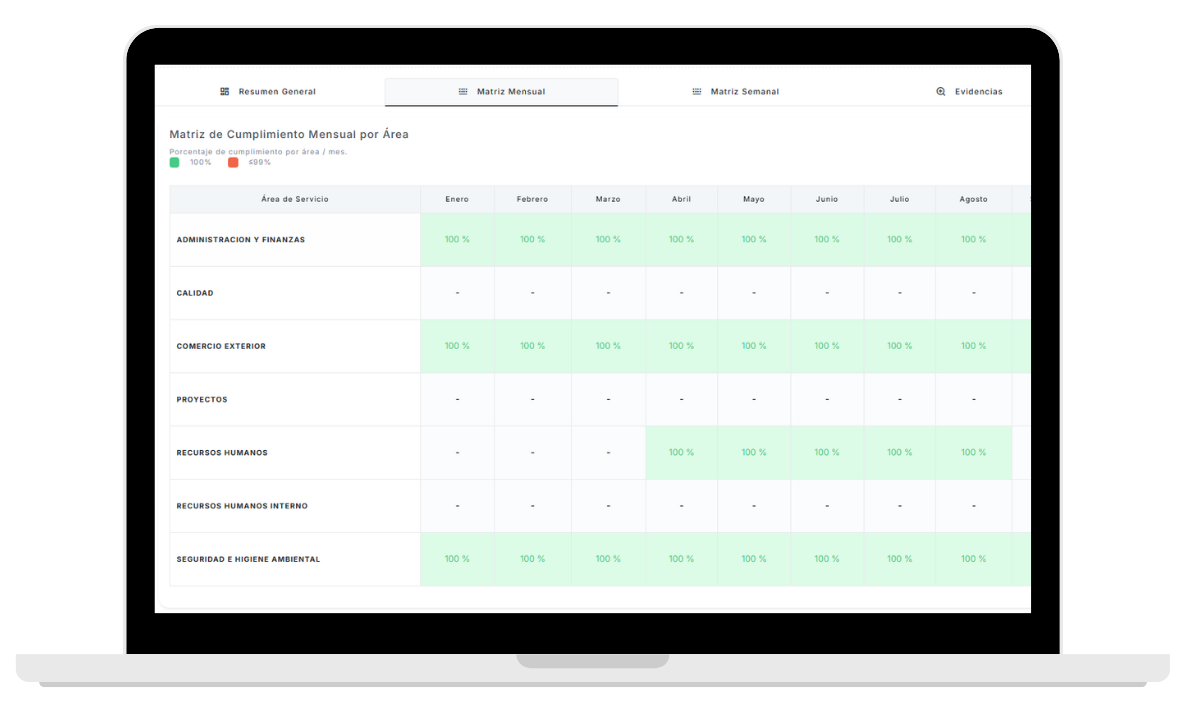
Real-Time Dashboards and Audit-Ready Reporting
Manufacturing leaders can instantly view compliance percentage by entity, high-risk overdue items, evidence completeness and monthly and quarterly performance. During audits, the DMS generates complete compliance packages — including documentation, timestamps, and responsible parties — within seconds. Audit preparation becomes systematic.
Designed for Complex Structures
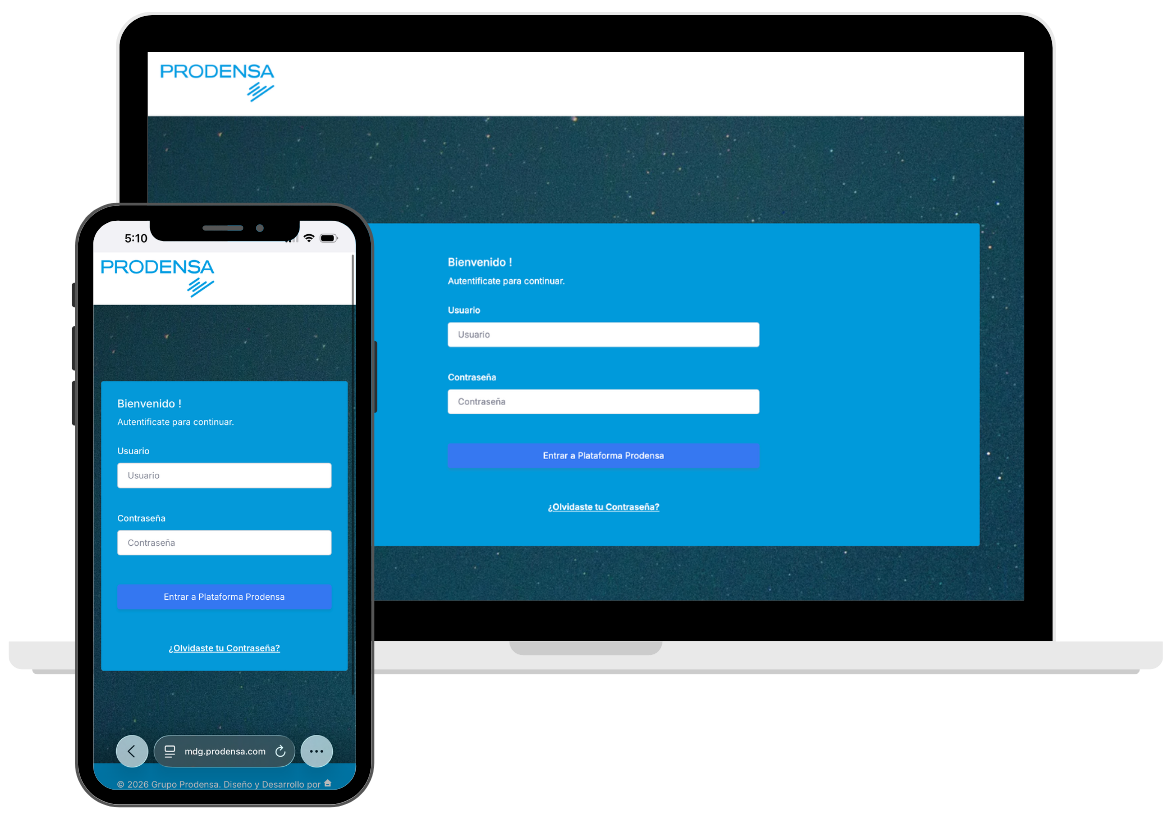
Ideal for multi-entity groups, multi-plant operations, shelter models or BPO, and multifunctional teams. Each user only sees what corresponds to them while the directors have visibility of everything.
Built on Real-World Compliance Experience
The DMS reflects decades of real-world enforcement patterns and regulatory experience.
It was built by teams specialized in:
- IMMEX and trade compliance
- Labor and governance
- Tax and fiscal risk
- Regulatory audit management
It mirrors the operational model Prodensa has refined over four decades advising international manufacturers.
This is compliance intelligence embedded into software.
Turning Compliance into Competitive Advantage
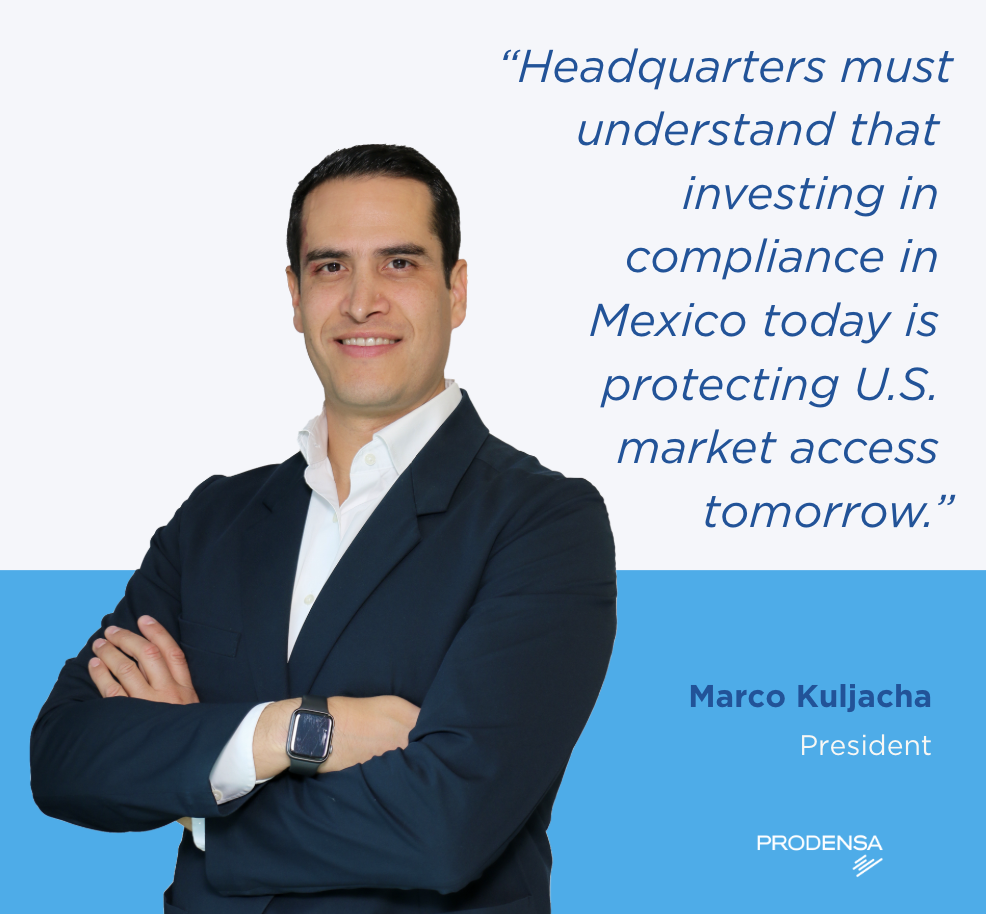
Increased compliance in Mexico reflects institutional strengthening. Stronger oversight does not weaken the business environment.
It professionalizes it.
Manufacturers that invest in structured compliance systems today will:
- Reduce operational risk
- Improve audit outcomes
- Strengthen governance
- Increase global sourcing eligibility
- Protect long-term continuity
In a world of transparent supply chains, audit-ready companies win.
Ready to See It in Action?
Compliance in Mexico is increasing.
But risk does not have to.
Schedule a demo of Prodensa’s Digital Management System (DMS) and see how your organization can centralize, automate, and control every compliance obligation across every legal entity.
Turn compliance from reactive pressure into strategic control.