


Global manufacturers are rethinking their supply chains. Rising costs in Asia, the need for faster delivery times, and the desire to reduce geopolitical risks have pushed many companies to explore new destinations for production. For U.S. and international firms, Mexico has emerged as one of the most attractive alternatives.
Building a factory in Mexico not only brings production closer to the North American market, but also provides access to skilled labor, cost efficiencies, and the trade advantages of the USMCA agreement. In this guide, we’ll explore why Mexico is such a strong option, where to build your factory, the compliance essentials you need to know, and the steps to get started.
Why Build a Factory in Mexico?
☑️ Proximity to the U.S. Market
One of the biggest advantages of opening a factory in Mexico is its geographic location. Border cities such as Tijuana, Ciudad Juárez, and Reynosa allow companies to ship products across to the U.S. in hours, not weeks. This shortens lead times, reduces inventory costs, and improves responsiveness to customer demand.
☑️ Cost Competitiveness
While wages in Mexico are rising, they remain significantly lower than in the United States, and often more competitive than Asia when considering logistics costs, tariffs, and supply chain resilience. Mexico also offers lower transportation expenses compared to transpacific shipping.
☑️ Trade Advantages
Through the United States–Mexico–Canada Agreement (USMCA), many products manufactured in factory Mexico operations can enter the U.S. and Canada tariff-free, provided they meet regional content requirements. For industries like automotive, aerospace, and electronics, this creates substantial savings and makes Mexico a natural fit for nearshoring strategies.
☑️ Skilled Workforce
Mexico graduates over 120,000 engineers and technicians every year, providing companies with a steady pipeline of talent for advanced manufacturing. The country has also developed strong clusters in automotive, aerospace, medical devices, and electronics, making it easier for new entrants to integrate into established supply chains.
Choosing the Right Location for your Factory in Mexico
Not all regions in Mexico are the same, and the success of your factory depends heavily on selecting the right location. Download the Ultimate Site Selection Guide for additional context.
Key Industrial Regions to Consider:
-
Monterrey (Nuevo León) – Known as the “Industrial Capital of Mexico,” Monterrey offers a highly skilled workforce, world-class infrastructure, and a strong presence of automotive, aerospace, and appliance manufacturing.
-
Bajío Region (Querétaro, Guanajuato, San Luis Potosí, Aguascalientes) – This central region is a hub for automotive, aerospace, and advanced manufacturing. Its strategic location allows access to both northern and central markets.
-
Mexico City & State of Mexico – Ideal for companies focused on consumer goods, logistics, and access to the country’s largest urban market. Excellent air and road connectivity.
-
Mérida & Southeast Mexico – An emerging region with growing industrial parks, government incentives, and increasing connectivity through ports and new infrastructure projects like the Tren Maya.
-
Northern Border States (Tijuana, Ciudad Juárez, Chihuahua, Coahuila, Tamaulipas) – Best suited for companies looking for immediate access to the U.S. market, particularly in sectors like electronics, automotive, and medical devices.
Compliance Essentials for Operating a Factory in Mexico
Building a factory in Mexico requires more than just choosing a site—you need to navigate Mexico’s regulatory framework to stay compliant.
IMMEX Program
The Industria Manufacturera, Maquiladora y de Servicios de Exportación (IMMEX) Program allows foreign companies to temporarily import raw materials, components, and equipment into Mexico without paying VAT, as long as finished products are exported. This program is one of the biggest advantages for manufacturers seeking cost savings.
VAT & IEPS Certification
Companies with IMMEX certification can apply for VAT and IEPS certifications, which exempt them from paying these taxes upfront on temporary imports. This improves cash flow significantly and reduces financial pressure during production ramp-up.
Customs Compliance
Mexico requires strict control of imported goods. Annex 24 (inventory control system) and Annex 31 (tax credits) are mandatory for IMMEX companies. Proper compliance avoids penalties, delays, and potential suspension of program benefits.
Labor Regulations
Mexico has strong labor protections. Employers must comply with requirements for minimum wages, profit-sharing, social security contributions, and benefits packages. Understanding these obligations early is crucial for cost modeling and compliance.
Environmental & Safety Permits
Certain industries—especially automotive, aerospace, and chemical manufacturing—require permits for water use, emissions, and waste management. Proper environmental compliance ensures smooth operations and avoids costly sanctions.
5 Steps to Get Started with your Factory in Mexico: The Mexico Journey®
Prodensa's proprietary methodology, The Mexico Journey®, was built over 40 years of supporting foreign investors launch their manufacturing facilities in Mexico. Being a trusted operations partner and advisor to world-class companies has shaped our process and reputation of doing things right.
1. Define your Business Case
Clarify your production needs, target markets, and financial goals. Run a cost-benefit analysis comparing Mexico to other locations.
2. Select your operating model
Choose between:
-
Shelter services (fast, low-risk market entry)
-
Joint venture with a local partner
-
Standalone entity (full independence, but more compliance responsibility)
3. Select your site
Conduct feasibility studies, evaluate industrial parks, and consider logistics, utilities, and workforce availability.
4. Launch factory in full compliance
Register your entity, secure IMMEX and VAT/IEPS certifications, and implement required systems (Annex 24, Annex 31). Leverage Mexico’s strong technical talent pool, invest in training, and establish competitive compensation and benefits to retain employees.
5. Thrive in Mexico
Strive to become an Employer of Choice and maintain an agile structure, ready to adjust and optimize as the geopolitical and consumer markets shift.
Conclusion: Factory Mexico Setup Guide
Setting up a factory in Mexico is one of the most strategic moves global manufacturers can make today. With cost advantages, a strong talent pool, and unrivaled proximity to the U.S., Mexico offers the ideal environment for companies seeking resilience and growth.
But success depends on making the right decisions early: choosing the best location, navigating compliance requirements like IMMEX and VAT certification, and building a reliable workforce.
If your company is considering expanding manufacturing operations, now is the time to explore Mexico.

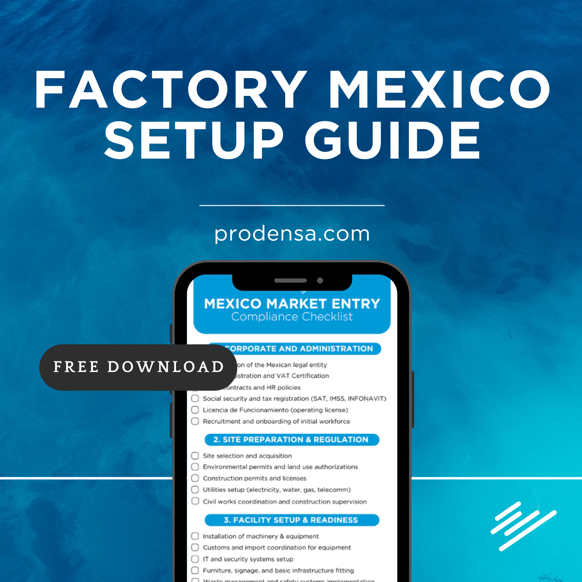
Download the Factory Mexico Setup Guide Checklist for Free
.png?width=616&height=616&name=STEP%20BY%20STEP%20GUIDE%20FOR%20IMPROVING%20YOUR%20BRAND%20(1).png)