


Explore the comprehensive resources of the US-Mexico border economy, trade boom, transportation infrastructure, nearshoring and cross-border collaboration.
The Rise of Cross-Border Manufacturing
The roots of cross-border manufacturing in Mexico trace back to the Maquiladora Program introduced in the 1960s. In 2006, the IMMEX Program consolidated the former Maquila and PITEX schemes, expanding the model beyond assembly to include manufacturing, transformation, repair, and export services.
As of April 2026, Mexico had 6,523 IMMEX establishments employing approximately 3.17 million people. Northern states such as Nuevo León, Chihuahua, Baja California, Coahuila, and Tamaulipas continue to concentrate a significant share of export manufacturing employment.
What began as a border assembly model has evolved into an advanced North American manufacturing network, where competitiveness increasingly depends on traceability, inventory controls, and customs compliance.
👉 Read more about the History of Manufacturing in Mexico.
The US-Mexico-Canada Agreement and Nearshoring Impact
The signing of NAFTA in 1994 accelerated North American economic integration by reducing trade barriers and expanding cross-border trade and investment. In 2020, the United States-Mexico-Canada Agreement (USMCA) replaced NAFTA and introduced updated provisions covering digital trade, labor, environmental protection, and regional content.
Today, the USMCA remains a central framework for cross-border manufacturing and nearshoring. U.S.-Mexico goods trade reached $872.8 billion in 2025, reflecting the scale of the countries’ economic integration. Following the 2026 USMCA joint review, the agreement was not extended for a new 16-year term, but it remains in force while negotiations continue.
For manufacturers, future opportunities will increasingly depend on rules of origin, regional sourcing, traceability, and trade compliance, as North American policy places greater emphasis on regional production and limiting non-market inputs in strategic supply chains.
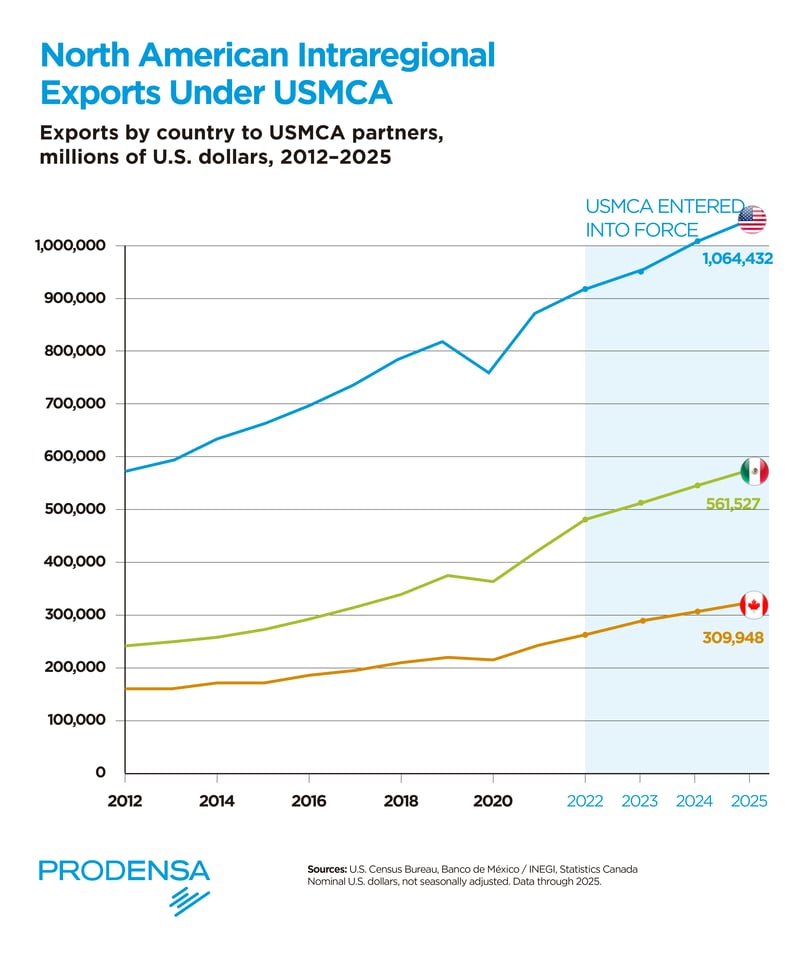
The USMCA continues to provide the legal foundation for North American trade and manufacturing, although the policy environment is evolving through the 2026 review process. Current discussions emphasize economic security, stronger rules of origin, critical minerals, and more resilient regional supply chains, reinforcing North America’s potential in strategic industries and advanced manufacturing.
Key Drivers to Cross-Border Manufacturing
The growth of U.S.-Mexico cross-border manufacturing has been supported by trade agreements, the IMMEX Program, geographic proximity, integrated supplier networks, skilled labor, and continued investment in border infrastructure. From January through May 2026, Mexico ranked as the United States’ largest goods trading partner, representing 16.5% of total U.S. goods trade.
In addition to these foundations, successful nearshore operations depend on reliable logistics, customs compliance, talent availability, supplier development, and the ability to manage increasingly complex regional content and traceability requirements.
These elements combined have both strengthened economic ties and boosted the competitiveness of North American manufacturing industries on the global stage.
The Future of the US-Mexico Border
The future of the U.S.-Mexico border economy will depend on its ability to support secure, efficient, and increasingly integrated North American supply chains. Current trade discussions emphasize economic security, rules of origin, and regional production, while modernization projects at major ports of entry aim to improve processing capacity, traffic flow, and border security.
Nearshoring and supply chain regionalization are expected to strengthen connected border ecosystems that combine manufacturing, assembly, testing, packaging, warehousing, logistics, and customs services. However, proximity alone will not guarantee investment: future growth will also depend on infrastructure, energy, talent, supplier development, and regulatory compliance.
The US-Mexico Border Infrastructure
The U.S.-Mexico border region supports a continuous movement of goods, vehicles, workers, and services. Its ports of entry, highways, rail networks, warehouses, and customs facilities serve as essential links in North American manufacturing and global supply chains.
In 2025, U.S.-Mexico freight trade reached US$872.8 billion, with trucks carrying 73.6% of its total value. Mexico also ranked as the United States’ largest goods trading partner in May 2026, accounting for 16.8% of total U.S. goods trade.
- $872.8 Billion in freight trade between the United States and Mexico in 2025.
- $1.66 Million worth of freight moved between the United States and Mexico every minute in 2025, based on the annual trade value.
- 73.6% of U.S.-Mexico freight trade by value was transported by truck in 2025.
- 76.1 Million personal vehicle entries from Mexico into the United States were recorded in 2025.
- 44.8 Million pedestrian entries from Mexico into the United States were recorded in 2025.
- 7.59 Million commercial trucks entered the United States from Mexico in 2025.
- Mexico was the United States’ largest goods trading partner from January through May 2026, accounting for 16.5% of total U.S. goods trade.
- 38.8% of inbound truck traffic from Mexico crossed through the Port of Laredo in 2025.
- Nearly 66% of U.S.-Mexico trade, valued at approximately $553 billion, passed through the Texas-Mexico border in 2024.
Rather than functioning as a single market, the border is formed by interconnected manufacturing and logistics corridors built around major ports of entry, industrial clusters, highways, railways, and distribution infrastructure. Their ability to expand will depend on processing capacity, digitalization, security, and coordinated binational planning.
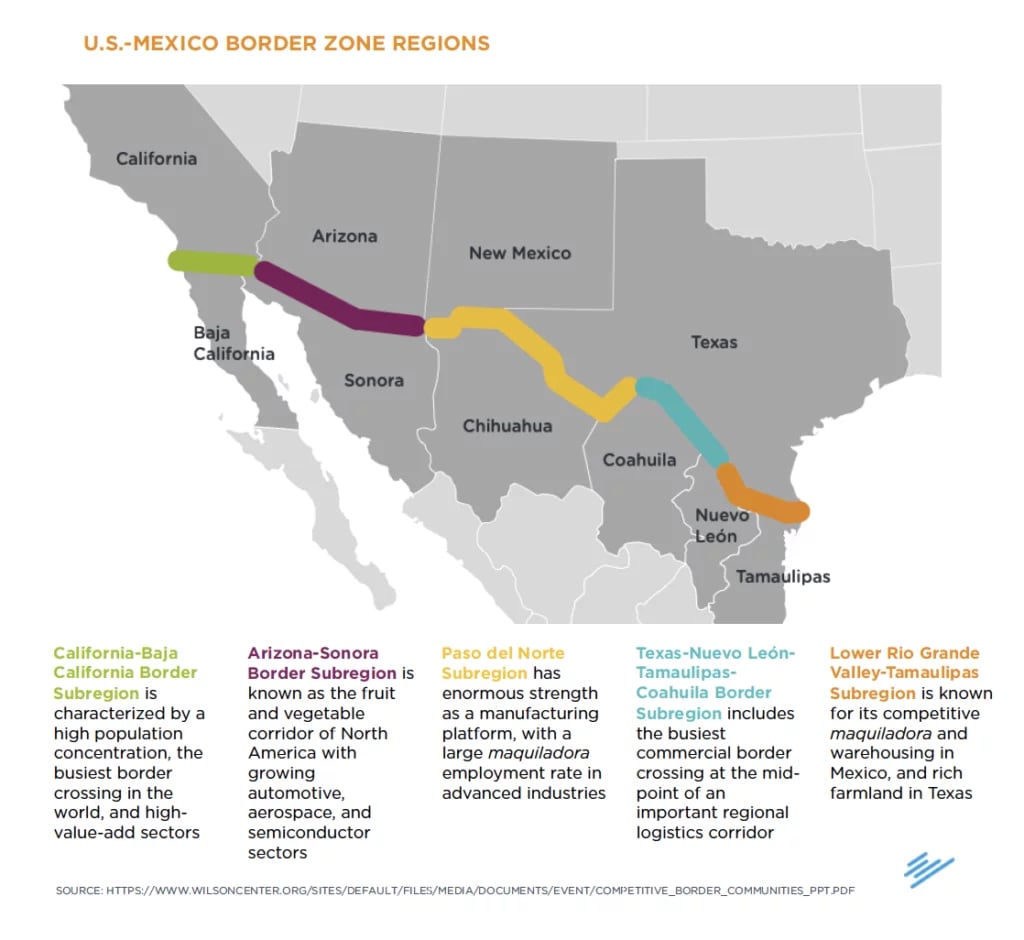
Digital connectivity is becoming as important as physical infrastructure for cross-border trade. Integrated customs systems, advance cargo information, non-intrusive inspection technology, and real-time coordination can improve security while reducing delays for compliant shipments.
Border efficiency has a measurable economic impact. One transportation study estimated that a 10-minute reduction in wait times could support an additional US$26 million in monthly cargo flows into the United States. Mexico also accounted for 15.7% of total U.S. goods exports from January through May 2026, reflecting the depth of the region’s integrated production networks.
U.S.-Mexico Economic Cooperation and Border Modernization
Continued binational coordination is essential to expanding border capacity and aligning security, infrastructure, and trade priorities. The 2021 Bipartisan Infrastructure Law allocated US$3.4 billion for 26 land-port construction and modernization projects across the U.S. northern and southern borders. Mexico separately committed US$1.5 billion between 2022 and 2024 to improve infrastructure on its side of the border.
These investments support more secure and efficient ports of entry, but infrastructure alone is not enough. Staffing, digitalization, inspection technology, relationship, customs coordination, and long-term binational planning will determine whether border capacity keeps pace with North American trade growth.
Insights from Border Manufacturers
Border manufacturers are balancing just-in-time operations with contingency inventory, alternative routes, and more flexible sourcing to improve supply chain resilience.
In 2025, U.S.-Mexico agricultural trade totaled approximately US$74.5 billion, highlighting the depth of cross-border integration.
Congestion, inspections, and enforcement changes continue to affect operations, making inventory planning, logistics visibility, and customs compliance increasingly important.
Nearshoring and Investment in Mexico
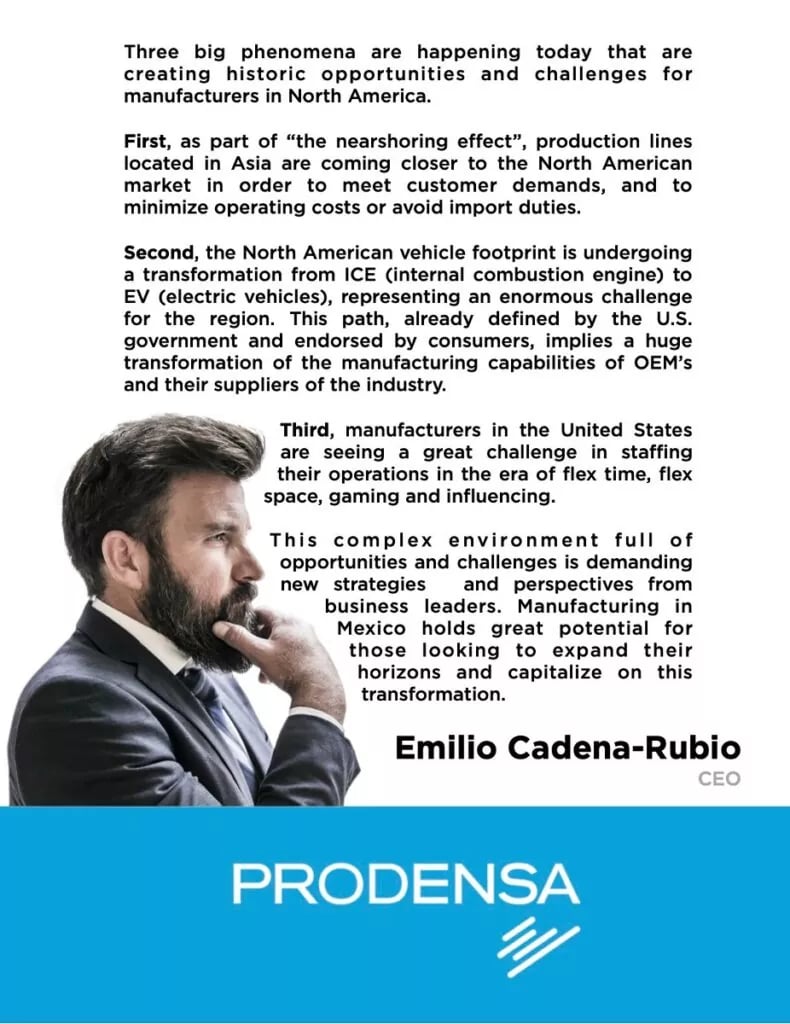
The USMCA, geographic proximity, integrated supplier networks, and established manufacturing capabilities continue to support Mexico’s role in North American nearshoring strategies. However, successful projects increasingly depend on infrastructure, energy, talent, regulatory compliance, and regional sourcing—not labor costs alone.
Mexico received a record US$40.87 billion in foreign direct investment in 2025, an increase of 10.8% from 2024. New investment flows reached US$7.38 billion, more than doubling from the previous year, although companies should distinguish realized investment from announced projects when evaluating the nearshoring market.
Made in the USMCA: Integrated Supply Chains
North American supply chains are deeply interconnected. Intermediate goods traded between countries support 9.5 million jobs and over $1.5 trillion in trade. These supply chains enhance efficiency and competitiveness for Mexico trade partners.
Collaborative US-Mexico Manufacturing Experts
Mexico's workforce is increasingly skilled, with collaboration across engineers, designers, and technical experts from all three USMCA nations. This collaboration fosters innovation and strengthens binational manufacturing operations.
Conclusion: Collaboration Across Borders
The U.S.-Mexico border is more than a boundary—it is a strategic manufacturing and trade corridor. Continued investment in infrastructure, compliance, logistics, and binational cooperation will be essential to strengthening North American supply chains and supporting long-term regional competitiveness.

Cross-Border Manufacturing
A production model in which materials, components, services, and finished goods move between neighboring countries during different stages of manufacturing. Along the U.S.-Mexico border, companies often combine U.S. engineering, technology, and market access with Mexico’s manufacturing capabilities.
Nearshoring
The strategy of relocating manufacturing or sourcing closer to a company’s primary market. Nearshoring to Mexico can help North American companies reduce transportation time, improve supply chain visibility, and respond faster to customer demand.
Land Port of Entry
An official border facility where commercial cargo, vehicles, and travelers are inspected and processed. The capacity, technology, staffing, and infrastructure of U.S.-Mexico ports of entry directly affect cross-border trade efficiency.
Integrated Supply Chain
A coordinated network of suppliers, manufacturers, logistics providers, warehouses, and customers operating across multiple locations. In North America, integrated supply chains often require regional sourcing, customs compliance, traceability, and efficient border operations.

Why is the U.S.-Mexico border important for manufacturing?
The border connects major industrial clusters, suppliers, logistics networks, and consumer markets across North America, making it a strategic corridor for cross-border manufacturing and trade.
What are the main benefits of nearshoring to Mexico?
Mexico offers proximity to the U.S. market, established manufacturing capabilities, integrated supply chains, and access to the USMCA framework.
What challenges should companies consider at the border?
Key challenges include customs compliance, border congestion, infrastructure capacity, workforce availability, and supply chain visibility.
How can manufacturers improve cross-border efficiency?
Companies can strengthen operations through inventory planning, digital logistics tools, alternative crossing strategies, supplier coordination, and strong trade compliance controls.

- The U.S.-Mexico border is a strategic production platform, not simply a point of transit.
- Nearshoring success depends on execution, including infrastructure, talent, suppliers, logistics, and compliance.
- Border efficiency directly affects competitiveness, making customs planning and supply chain visibility essential.
- Companies that integrate regional sourcing, digital tools, and contingency planning will be better positioned to grow within North America.

This blog post summarizes the e-book “The US-Mexico Border Boom: a Look into the Thriving Cross-Border Manufacturing Industry” available for free download.
References
Sources used in the elaboration of this e-book (alphabetical):
-
Atlantic Council. (2022, September 27). The economic impact of a more efficient U.S.-Mexico border: How reducing wait times at land ports of entry would promote commerce, resilience, and job creation. https://www.atlanticcouncil.org/in-depth-research-reports/report/the-economic-impact-of-a-more-efficient-us-mexico-border/
-
Bureau of Transportation Statistics. (2026a, February 20). Border crossing data annual release: 2025. U.S. Department of Transportation. https://www.bts.gov/newsroom/border-crossing-data-annual-release-2025
-
Bureau of Transportation Statistics. (2026b, May 15). Transborder freight data annual report: 2025. U.S. Department of Transportation. https://www.bts.gov/newsroom/transborder-freight-data-annual-report-2025-0
-
González Pandiella, A., & Maravalle, A. (2024). Harnessing nearshoring opportunities in Mexico by boosting productivity and fighting climate change. OECD Economics Department Working Papers, 1799. OECD Publishing. https://doi.org/10.1787/0ca7fc0a-en
-
Instituto Nacional de Estadística y Geografía. (2026, June 22). Programa de la Industria Manufacturera, Maquiladora y de Servicios de Exportación (IMMEX): Indicadores de establecimientos con programa IMMEX (Boletín de indicador 396/26). https://www.inegi.org.mx/contenidos/saladeprensa/boletines/2026/immex/immex2026_06.pdf
-
Organisation for Economic Co-operation and Development. (2026, April 8). Global value chain repositioning. OECD Statistics Briefs. https://doi.org/10.1787/8c97068d-en
-
Office of the United States Trade Representative. (n.d.). Mexico. Retrieved July 15, 2026, from https://ustr.gov/countries-regions/americas/mexico
-
Office of the United States Trade Representative. (2026a, March 18). The United States and Mexico announce next steps in bilateral discussions in advance of the USMCA joint review. https://ustr.gov/about/policy-offices/press-office/press-releases/2026/march/united-states-and-mexico-announce-next-steps-bilateral-discussions-advance-usmca-joint-review
-
Secretaría de Economía. (2026, February 25). México alcanza cifra histórica de inversión extranjera directa en 2025: 40,871 millones de dólares; creció un 10.8% anual. Gobierno de México. https://www.gob.mx/se/prensa/mexico-alcanza-cifra-historica-de-inversion-extranjera-directa-en-2025-40-871-millones-de-dolares-crecio-un-10-8-anual
-
Texas Department of Transportation. (n.d.). International trade and border planning. Retrieved July 15, 2026, from https://www.txdot.gov/projects/planning/international-trade-border-planning.html
-
U.S. Census Bureau. (2026). Top trading partners—May 2026. https://www.census.gov/foreign-trade/statistics/highlights/topyr.html
- U.S. Embassy and Consulates in Mexico. (2022, July 13). President Biden and President López Obrador joint statement. https://mx.usembassy.gov/president-biden-and-president-lopez-obrador-joint-statement/
- U.S. General Services Administration. (2022, February 25). President Biden and U.S. General Services Administration announce major land port projects funded by Bipartisan Infrastructure Law. https://www.gsa.gov/about-gsa/newsroom/news-releases/president-biden-and-us-general-services-administration-announce-major-land-port-projects-funded-by-bipartisan-infrastructure-law-02252022
- U.S. General Services Administration. (2026, April 3). Land ports of entry and the Infrastructure Investment and Jobs Act. https://www.gsa.gov/real-estate/land-ports-of-entry-and-the-infrastructure-investment-and-jobs-ac
- Zahniser, S. (2026, April 1). Between 2019 and 2025, U.S. agricultural exports to Mexico expanded at a compound annual growth rate of 7.9 percent, compared with 6.4 percent for U.S. agricultural imports from Mexico [Chart]. Economic Research Service, U.S. Department of Agriculture. https://www.ers.usda.gov/data-products/chart-gallery/112990