




For multinational groups operating across North America, transfer pricing is one of the most demanding and high-risk tax challenges. Every cross-border intercompany transaction may be subject to scrutiny by the Internal Revenue Service (IRS) in the United States and the Tax Administration Service (SAT) in Mexico.
Although both systems follow the arm’s length principle promoted by the OECD, they differ significantly in how they apply, audit and enforce transfer pricing rules. Understanding these differences is essential to reduce the risk of bilateral adjustments, significant penalties and double taxation.
Economic Substance vs. Legal Form
In the United States, transfer pricing rules are mainly governed by Section 482 of the Internal Revenue Code (IRC). In simple terms, the IRS looks beyond what is written in a contract and focuses on how the transaction actually works in practice—who performs the activities, who takes on the risks, and whether the arrangement makes business sense.
In Mexico, the equivalent rules—mainly found in Articles 76, 179, 180, 181, and 182 of the Income Tax Law (LISR)—take a more formal approach. For the SAT, legal structure and supporting documentation carry significant weight when determining the tax treatment of a transaction. Formal contract terms are not simply supporting evidence; they are a key part of establishing the transaction’s tax validity.
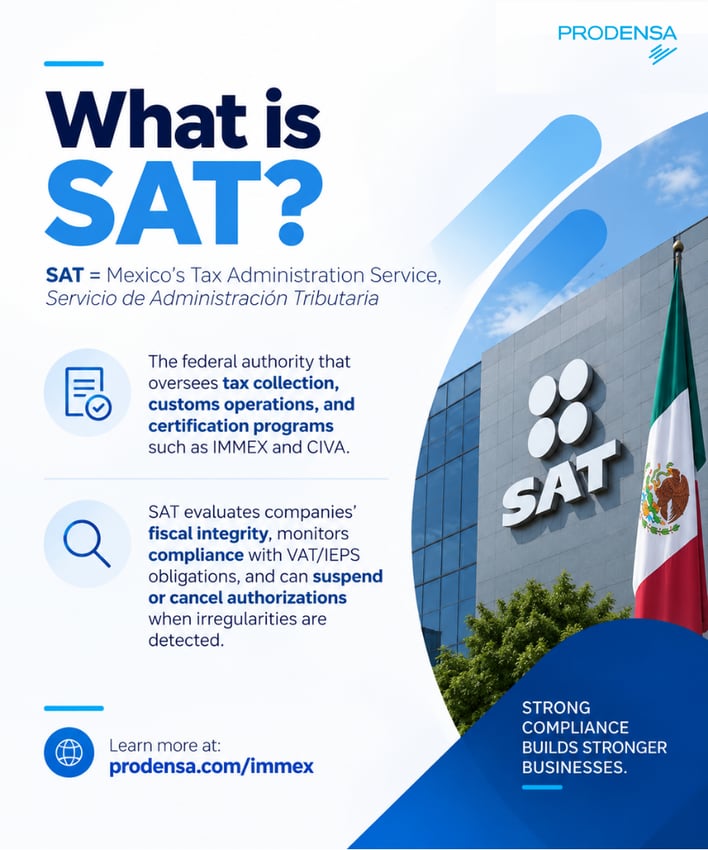
This difference has important practical implications. In the United States, documentation is often used mainly as a defense to reduce potential valuation penalties. In Mexico, proper documentation and compliance can directly determine whether a tax deduction is considered valid.
Method Selection: A Key Difference Between Mexico and the U.S.
The differences are also clear when choosing a transfer pricing method. In Mexico, there is a strict hierarchy that starts with the Comparable Uncontrolled Price (CUP) Method. Other methods—such as Resale Price, Cost Plus, or profit-based methods—can only be used if the taxpayer can technically justify why CUP is not applicable.
In contrast, U.S. rules under Section 482 follow the Best Method Rule, which requires companies to use the method that provides the most reliable arm’s length result based on the available facts and information. There is no fixed hierarchy; the focus is on choosing the method that best fits the transaction.
Another challenge in Mexico is the limited availability of public financial information for local comparable companies. Because of this, the SAT allows the use of foreign comparables—usually from the United States or Canada—as long as the appropriate adjustments are made to reflect Mexican market conditions.
The IMMEX and Maquiladora Regime
The IMMEX program plays an important role in integrating supply chains between Mexico and the United States. To encourage foreign investment, the tax framework provides a key benefit for U.S. holding companies: manufacturing activities carried out by a Mexican maquiladora do not automatically create a Permanent Establishment (PE) in Mexico, as long as the applicable transfer pricing rules are fully met, and Mexico has a double taxation treaty in force.
![TAXES&FINANCES[AD1]](https://www.prodensa.com/hs-fs/hubfs/3%20Service%20Flyers/1%20PROMOTIONAL%20BANNERS/TAXES%26FINANCES%5BAD1%5D.png?width=1584&height=396&name=TAXES%26FINANCES%5BAD1%5D.png)
However, the framework has changed. Mexico’s tax reform eliminated the option to request new unilateral Advance Pricing Agreements (APAs). The last unilateral APAs expired in 2024, and beginning in fiscal year 2025, the safe harbor method became mandatory for determining maquiladora profits.
Common errors in cross-border transactions and operational risks
Transfer pricing reviews between the United States and Mexico are often affected by formal compliance errors that prevent companies from claiming the deductibility of their transactions. Below are some risks and ways to mitigate them.
|
Error or Risk |
Description |
Potential Consequence |
Recommendation |
|
1. Intercompany agreements without a “certain date" |
Assuming a PDF or paper contract is enough. SAT requires private agreements to have a legally verifiable date, such as through a notary, Public Registry, or NOM-151 digital signature. |
SAT may reject the transaction for tax purposes, deny deductions for royalties or interest, and treat those payments as taxable income. |
Use digital signatures with a NOM-151 Certificate of Data Preservation for all inter-company agreements, including those signed abroad. |
|
2. Pro-rata expenses allocated by headquarters |
Allocating indirect headquarters costs using broad formulas, such as a percentage of sales. Mexico generally does not allow deductions for simple pro-rata expense allocations. |
The deduction may be fully rejected if the company cannot demonstrate a direct benefit, the provider’s technical capability, and an objective basis for the allocation. |
Invoice specific services supported by evidence of the actual benefit provided, and avoid allocations based only on margins or total business volume. |
|
3. Foreign exchange exposure without contractual protection |
A Mexican subsidiary with a limited-risk profile absorbs losses caused by peso depreciation against the U.S. dollar. |
SAT may question whether an independent company would have accepted those losses and may adjust taxable profits and impose penalties. |
Include clear price-renegotiation clauses for exchange-rate fluctuations and define when the parent company assumes the currency risk. |
As shown above, the U.S.–Mexico transfer pricing framework is complex, and small details can make the difference between effective compliance and significant tax exposure. The contrast between the IRS’s focus on economic substance and SAT’s emphasis on formal documentation means companies need a strategic approach, strong local expertise, and disciplined record-keeping that anticipates regulatory requirements before an audit begins.
At Prodensa, we understand this challenge because we work with it every day. Since 1985, we have supported more than 1,000 global companies as they expand and operate in Mexico, with more than 70 active IMMEX operations under our management and a presence across 15 offices in Mexico's main industrial corridors.
 Our approach brings together strategic consulting, industrial real estate, and operational startup services under one roof—with one team, one project plan, and one point of accountability from feasibility analysis through full operations.
Don’t leave to chance what can be planned with precision. Schedule a consultation with our transfer pricing and international tax specialists to build a tax structure that supports compliance while strengthening your competitive position in North America.
Need Support with Your Transfer Pricing Study in Mexico?
Understanding the rules is only part of the equation. Prodensa’s Tax team supports companies with the preparation of transfer pricing studies in Mexico, covering related-party transactions such as interest, royalties, technical assistance, purchases and sales of raw materials or finished products, fixed assets, and other intercompany transactions. The study brings together the functional and economic analysis, transaction review, risk assessment, method selection, and supporting documentation needed to evaluate whether related-party transactions are consistent with the arm’s-length principle.

Arm’s Length Principle: The standard used to determine whether transactions between related companies are priced as if they had occurred between independent parties.
Comparable Uncontrolled Price (CUP) Method: A transfer pricing method that compares the price of a related-party transaction with the price charged in a similar transaction between independent companies. In Mexico, this method must generally be considered first.
Best Method Rule: The U.S. approach to transfer pricing method selection, which requires companies to use the method that provides the most reliable arm’s length result based on the available facts and information.
Permanent Establishment (PE): A taxable business presence created by a foreign company in another country. Under the maquiladora framework, transfer pricing compliance is important to avoid creating a PE in Mexico for the foreign entity.
Safe Harbor: The mandatory method used from fiscal year 2025 to determine taxable maquiladora profits, based on the higher amount calculated from operating costs and expenses or the value of assets used in the operation.

What is the main difference between U.S. and Mexican transfer pricing rules?
Both countries follow the arm’s length principle, but the IRS focuses more on the economic substance of a transaction, while SAT places greater emphasis on legal structure and supporting documentation.
How do Mexico and the U.S. differ when choosing a transfer pricing method?
Mexico generally requires companies to consider the Comparable Uncontrolled Price (CUP) Method first. In the U.S., companies follow the Best Method Rule, selecting the method that provides the most reliable result for the transaction.
Why is transfer pricing important for IMMEX and maquiladora operations?
Proper transfer pricing compliance can help prevent a foreign company from creating a Permanent Establishment in Mexico through its maquiladora activities.
How is maquiladora Safe Harbor calculated in Mexico?
Beginning in fiscal year 2025, maquiladoras must use the Safe Harbor method, based on the higher amount between 6.5% of operating costs and expenses and 6.9% of the value of assets used in the operation.
What are some common transfer pricing risks in U.S.–Mexico operations?
Common risks include weak intercompany agreements, unsupported headquarters cost allocations, and foreign exchange losses that are not properly addressed in contracts.

- U.S.–Mexico transfer pricing requires more than one compliance approach. Both countries follow the arm’s length principle, but the IRS focuses more on economic substance while SAT places greater weight on legal form and documentation.
- Method selection can create cross-border differences. Mexico generally starts with the CUP method, while the U.S. applies the Best Method Rule based on the facts and available information.
- IMMEX and maquiladora operations require careful transfer pricing management. Proper compliance is important to preserve the intended tax treatment and reduce Permanent Establishment risk for the foreign entity.
- Documentation can directly affect tax outcomes in Mexico. Weak contracts, unsupported cost allocations or poorly defined foreign exchange risk can lead to denied deductions, tax adjustments, and penalties.
- The strongest approach is proactive and coordinated. Companies should align tax strategy, intercompany agreements, operational evidence, and local compliance before authorities request them.
.png?width=1200&height=178&name=DIVIDER1%20(1).png)
Notice: The content of this blog is developed by Prodensa for informational and educational purposes regarding nearshoring, foreign trade, human capital, and manufacturing in Mexico. Although we strive to keep the information accurate and up to date, laws and regulations may change. This material is not a substitute for specialized professional advice. Prodensa is not responsible for decisions made based on this content without appropriate professional consultation.