


Prodensa executives attended INDEX 2025, where leading voices in the manufacturing sector explored the role of artificial intelligence (AI) as a driver of industrial competitiveness. In this blog, our experts summarize the most relevant insights shared during the session led by Elida Godínez, Director of Data & AI, Automation, and Sustainability at IBM Mexico. This article is part of our ongoing series that cover high-level industry events made into key takeaways from our experts for companies doing business in Mexico and navigating the transition to Industry 4.0.
From Static Tools to Intelligent Orchestrators
One of the most important shifts in industrial AI is the move from reactive assistants to proactive digital agents. While assistants like chatbots simply retrieve existing data when prompted, agents are capable of executing end-to-end tasks across different systems.
In a manufacturing setting, a digital agent can detect low inventory, identify suppliers, review lead times, and trigger a purchase order—all according to predefined parameters. This orchestration capability removes operational silos between HR, operations, and logistics, reducing administrative friction and allowing human teams to focus on strategic validation.
Data-Driven Decisions: The 2028 Business Mandate
IBM presented a compelling forecast: by 2028, AI will manage up to 15% of daily business decisions. In 2024, that figure is close to zero.
This shift means that leading companies will make faster, more accurate decisions, gaining significant advantages in cost, agility, and responsiveness. In a nearshoring environment, the ability to rapidly adapt supply chain decisions is no longer optional—it’s a requirement for profitability.
AI will also contribute up to 3.7% of global GDP by 2030. In manufacturing, its ability to accelerate software development and reduce implementation cycles from months to weeks gives companies a clear competitive edge.
Unlocking the Value of Unstructured Data
Manufacturers generate vast amounts of both structured and unstructured data.
The power of AI lies in integrating both. For example, a company can cross-reference regulatory changes (unstructured) with operational data (structured) to flag compliance risks. Without this integration, companies operate with blind spots that can lead to legal or financial consequences.
Avoiding the Pitfall of Pilot Traps
Many companies adopt AI through small pilot projects. While this reduces initial risk, it often leads to technical debt. Once companies try to scale, they realize their architecture isn't robust enough for broader implementation.
To succeed, AI must be designed for scalability from day one. The business case must focus on real pain points with measurable ROI—reducing waste, lowering downtime, or addressing labor gaps. Without a strategic approach, companies risk sunk costs and stalled innovation.
Enterprise-Grade AI: Security and Governance First
IBM warns against using open or generic AI models for industrial purposes due to serious risks:
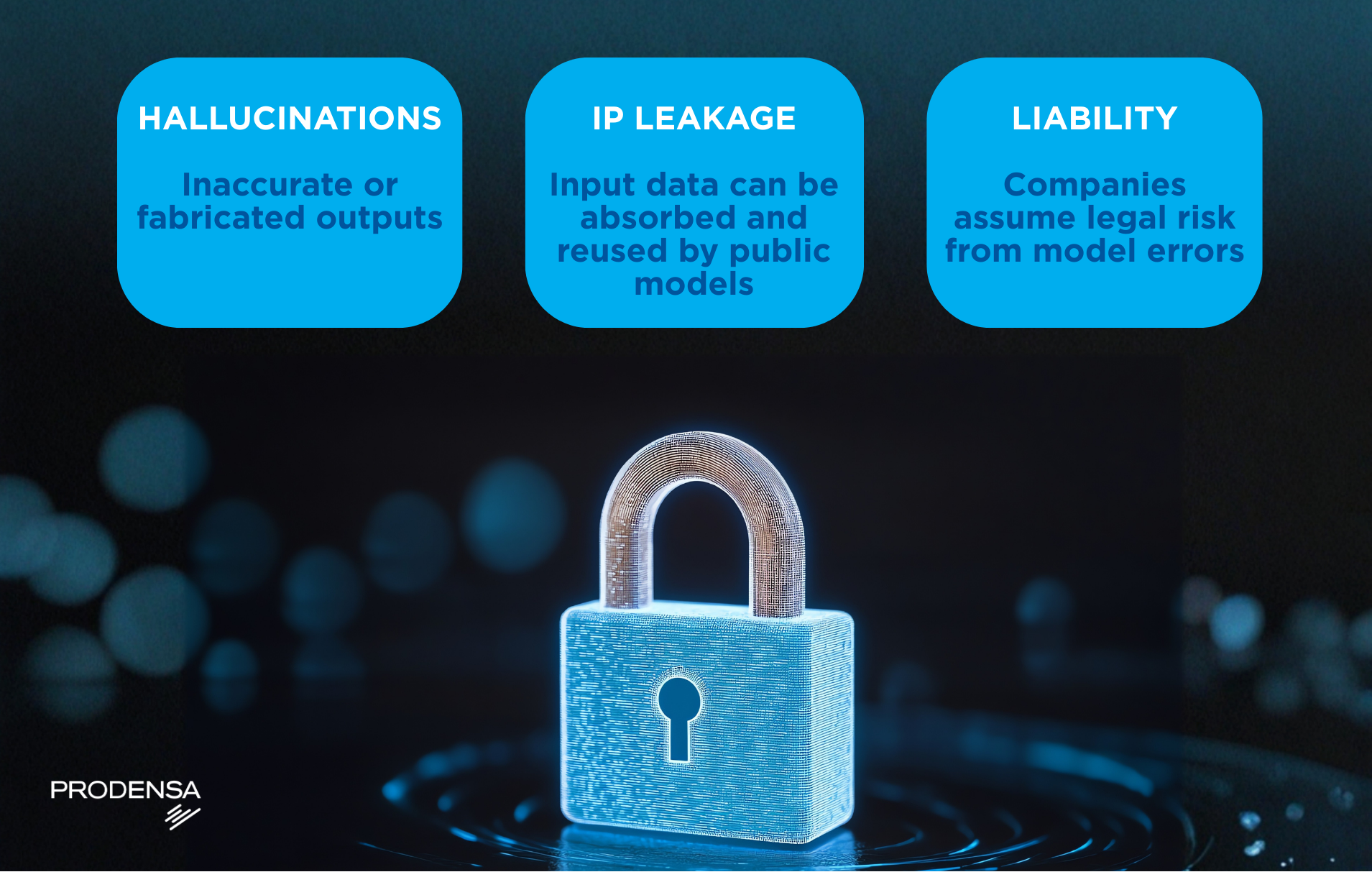
Instead, manufacturers should invest in closed, auditable enterprise AI with:
-
Built-in cybersecurity
-
Data governance protocols
-
Decision traceability for quality audits and compliance
These features ensure that AI can meet the rigorous demands of sectors like automotive, aerospace, and electronics.
Leadership and Talent as Core Enablers
Technological transformation is not just a technical issue; it requires executive-level leadership. CEOs, COOs, and plant managers must understand AI’s capabilities and limits in order to deploy it strategically.
AI enhances, not replaces, human expertise. The final layer of judgment, ethics, and quality assurance must always come from people. Building internal capabilities requires not only hiring new talent but also upskilling existing teams.
 PRODENSA Key Takeaways:
-
AI is a strategic differentiator, not an optional add-on.
-
Data integration is essential for visibility, compliance, and decision-making.
-
Closed enterprise AI protects IP and ensures accountability.
-
Pilot programs must be scalable to avoid wasted investment.
-
Leadership involvement is non-negotiable for successful AI implementation.
-
Mexico’s nearshoring momentum will reward those who act fast and invest in smart infrastructure.
At Prodensa, we help international manufacturers navigate digital transformation in Mexico. Whether you're planning a turnkey operation, exploring shelter services in Mexico, or scaling with an employer of record solution, our team is ready to support your strategic evolution into Industry 4.0.