


As nearshoring reshapes the industrial landscape in North America, there's a growing recognition that critical minerals—like lithium, cobalt, graphite, and rare earth elements—are as vital to regional competitiveness as labor costs or logistics hubs.
While many manufacturers focus on site selection and trade incentives, the availability and security of critical minerals are fast becoming core elements of a successful nearshoring strategy.
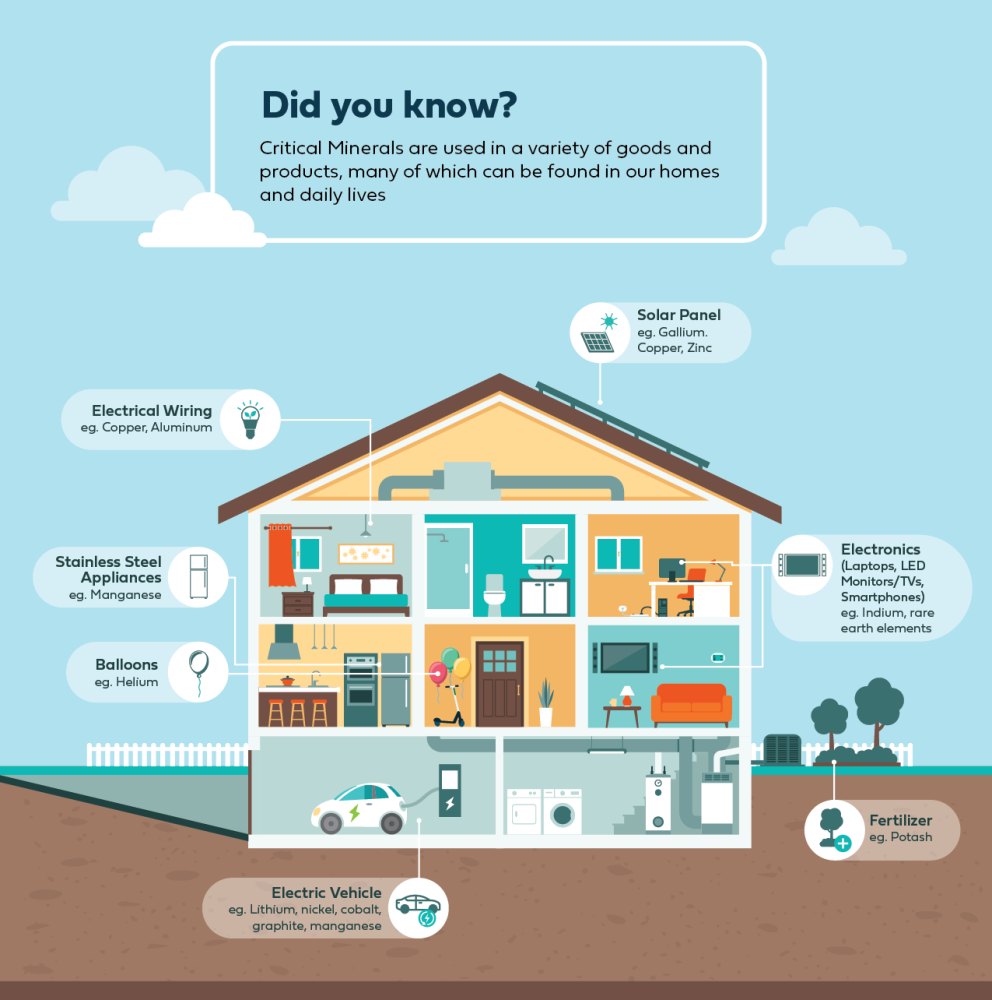
The Strategic Importance of Critical Minerals
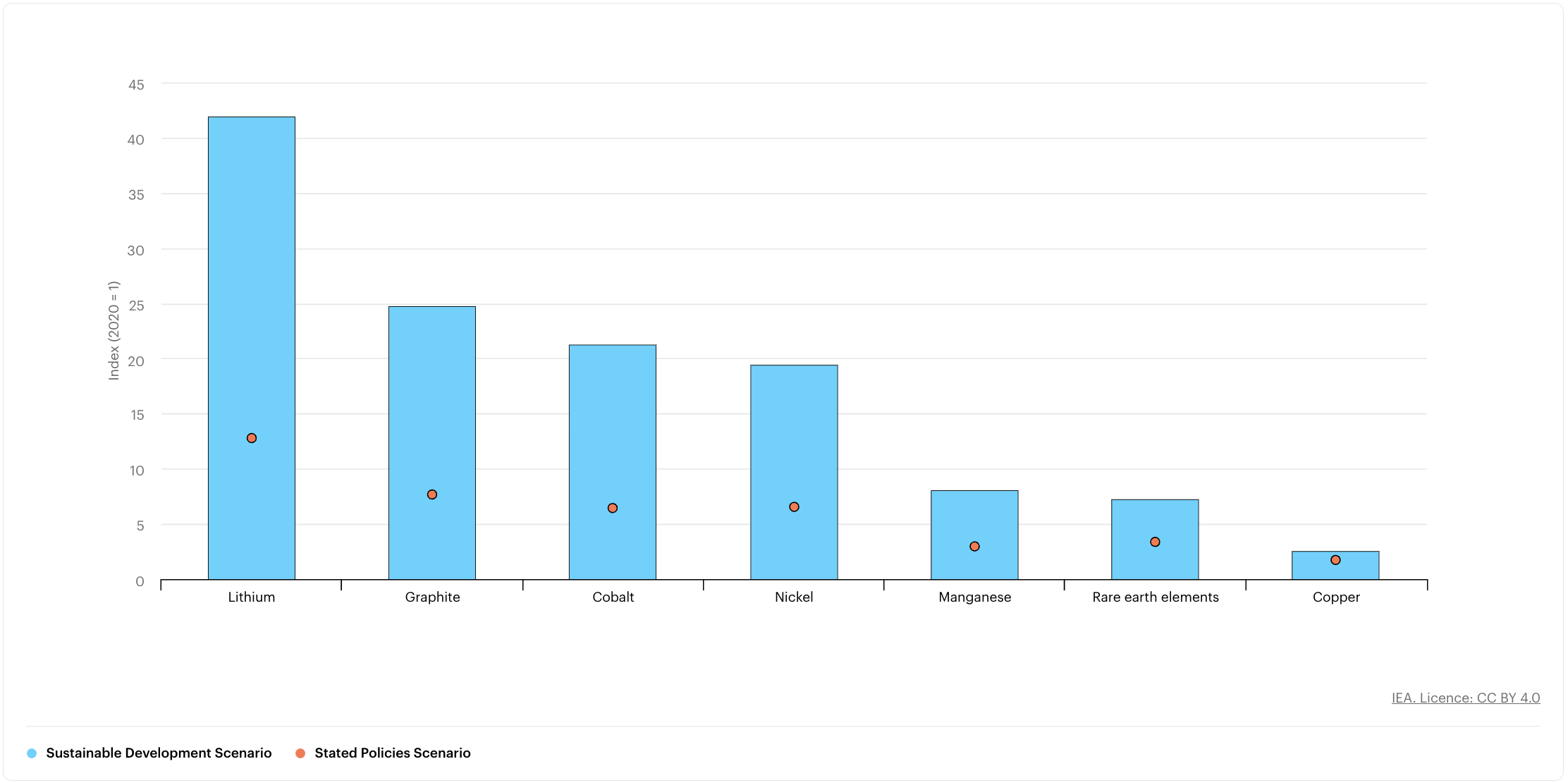
Critical minerals such as lithium, cobalt, nickel, and rare earth elements are fundamental to the production of electric vehicles, renewable energy systems, and semiconductors. The 'criticality' of a mineral changes with time as supply and society's needs shift. The demand for these minerals is projected to increase significantly, with the International Energy Agency noting that the energy sector's overall needs for critical minerals could increase by as much as six times by 2040.
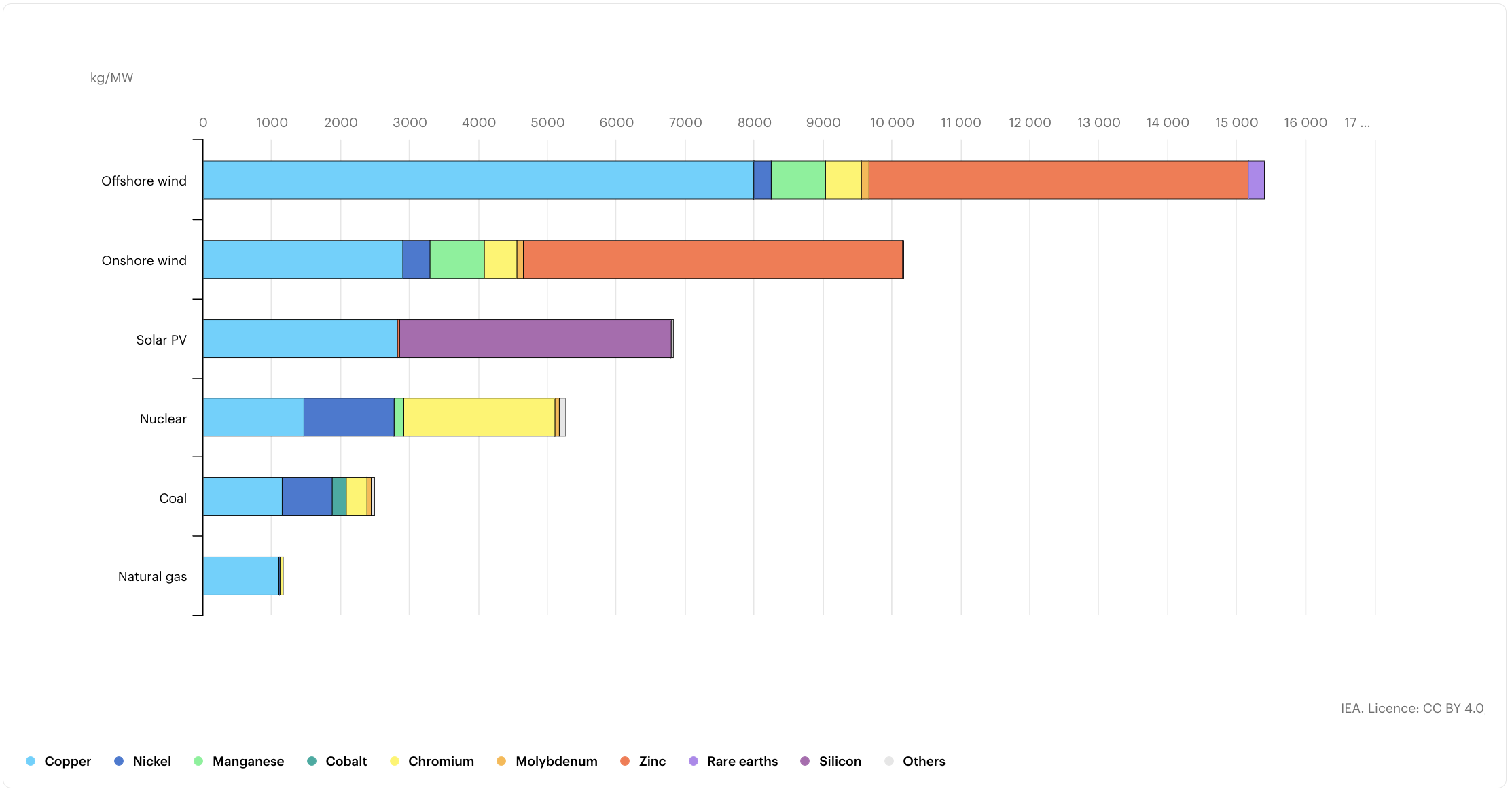
"Critical minerals are the building blocks for the green and digital economy. There is no energy transition without critical minerals: no batteries, no electric cars, no wind turbines and no solar panels. The sun provides raw energy, but electricity flows through copper. Wind turbines need manganese, platinum and rare earth magnets. Nuclear power requires uranium. Electric vehicles require batteries made with lithium, cobalt and nickel and magnets. Indium and tellurium are integral to solar panel manufacturing. It is therefore paramount for countries around the world to establish and maintain resilient critical minerals value chains that adhere to the highest ESG standards." - The Honourable Jonathan Wilkinson, Minister of Natural Resources, Canada
The Center for Strategic and International Studies (CSIS) emphasizes that a resilient semiconductor supply chain is heavily dependent on a stable supply of these critical minerals. Disruptions in mineral supply can have cascading effects on the production of semiconductors and other essential technologies.
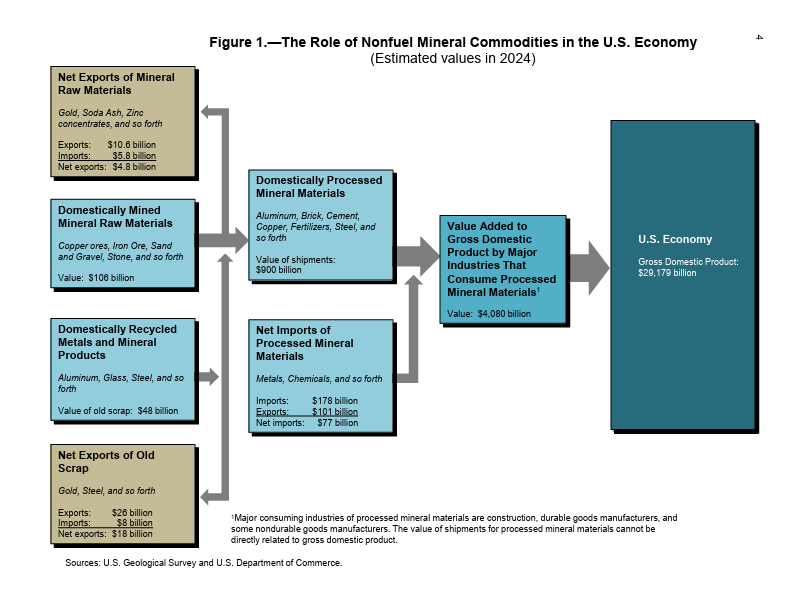
The Role of Non-Fuel Mineral Commodities in the U.S. Economy
Minerals Used in Clean Energy
Growth in Demand for Selected Minerals from Clean Technologies to 2040
U.S. Mineral Dependence [2025]
According to the latest 2025 USGS Mineral Commodity Summaries:
-
$106 billion in nonfuel mineral production occurred in the U.S. in 2024 (up 7.9% from 2023).
-
Raw and recycled domestic materials helped produce mineral materials worth $850 billion.
-
Along with $125 billion of imported processed materials, these inputs fed downstream industries worth $3.82 trillion to the U.S. economy.
-
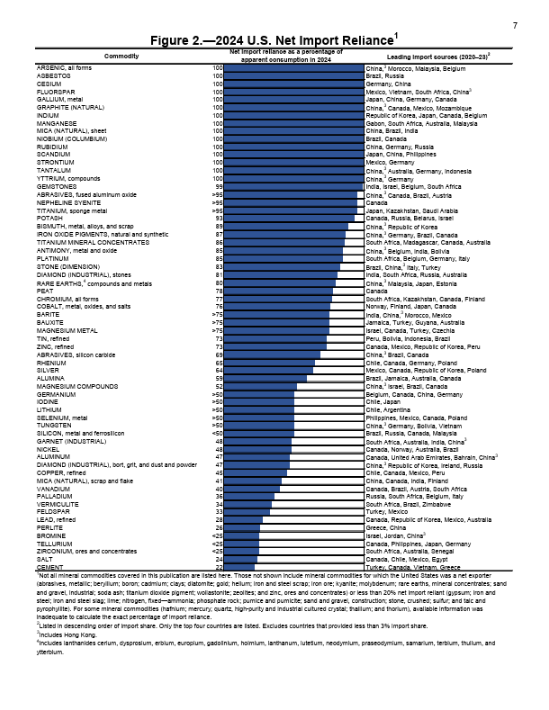
The U.S. remains 100% import reliant for 13 critical minerals and over 50% reliant for an additional 31.
U.S. Net Import Reliance of Critical Minerals, 2024
Leading Import Sources (2020-2023) of Nonfuel Mineral Commodities for which the United States was Greater than 50% Net Import Reliant
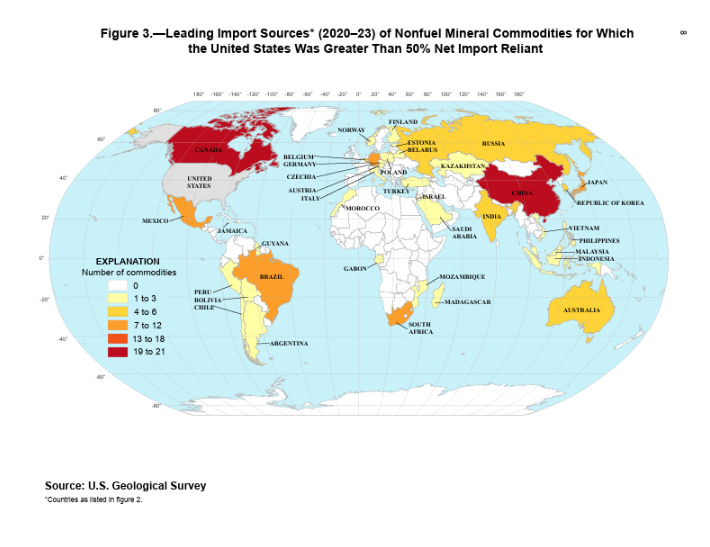
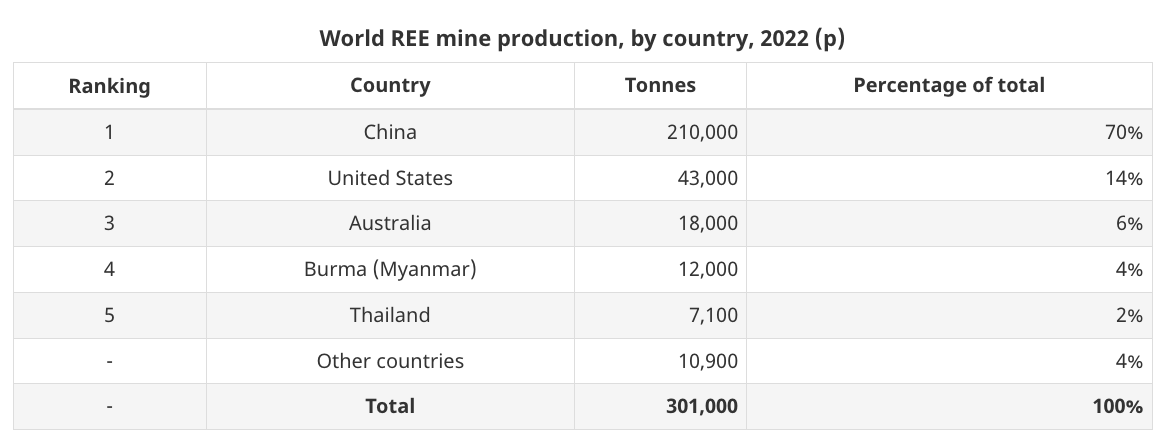
China maintains a dominant position in global critical minerals, particularly within South America’s “lithium triangle” (Argentina, Chile, Bolivia), and has significant stakes in copper, nickel, iron ore, and gold—both for extraction and processing. It also controls 85% of rare earth element (REE) processing and produces nearly 65% of global REE supply, largely from reserves in Inner Mongolia.
This concentration of mineral control directly impacts global manufacturing. For instance, raw material inputs now account for 50–70% of total lithium-ion battery costs, up from 40–50% just five years ago. A doubling in lithium or nickel prices could increase battery costs by 6%, canceling out gains from scale and efficiency.
The U.S. remains at a disadvantage, facing surging demand, limited domestic extraction, and decades of underinvestment. According to the Wilson Center, the key challenges include:
-
Underdeveloped capacity in mining, processing, and workforce.
-
Geopolitical competition, especially against China and the EU.
-
High compliance costs, as Western mining firms must meet stringent ESG, anti-corruption, and transparency standards globally.
These vulnerabilities underscore the urgency of developing secure, regional supply chains—particularly in support of North American nearshoring strategies.
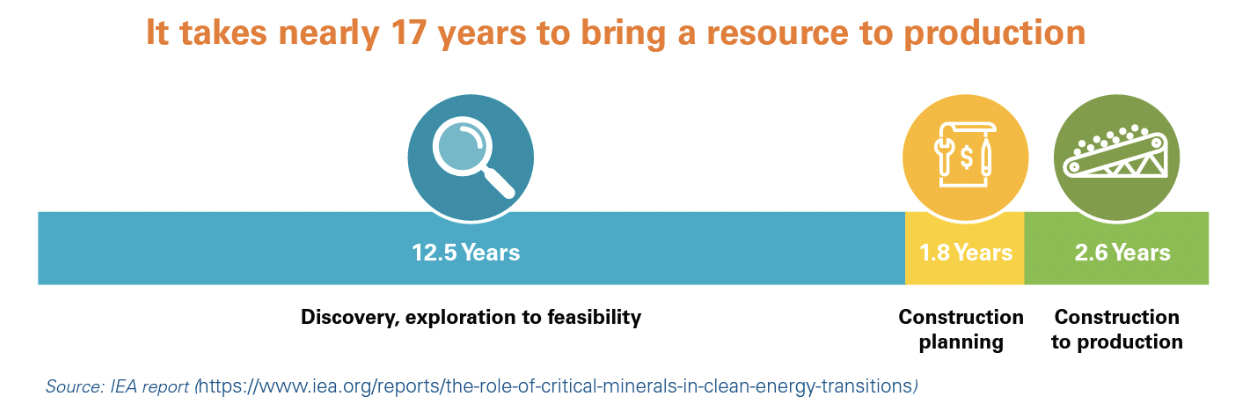
The Nearshoring Advantage: Regionalizing Supply Chain
Regionalizing critical mineral value chains is essential to the resilience and cost efficiency that nearshoring promises. North America must reduce its dependency on distant sources—especially China, which:
-
Controls 85% of rare earth processing capacity.
-
Leads in global lithium investment across South America's “Lithium Triangle.”
-
Dominates midstream processing for cobalt, graphite, and nickel.
A robust North American strategy must not only relocate manufacturing closer to end markets—it must also bring materials sourcing, refining, and recycling into the region.
According to the International Energy Agency, the energy sector’s overall needs for critical minerals could increase by as much as six times by 2040. The North American zero-emission vehicle (ZEV) market alone is estimated to reach $174 billion by 2030, creating more than 220,000 jobs in mining, processing, and manufacturing.
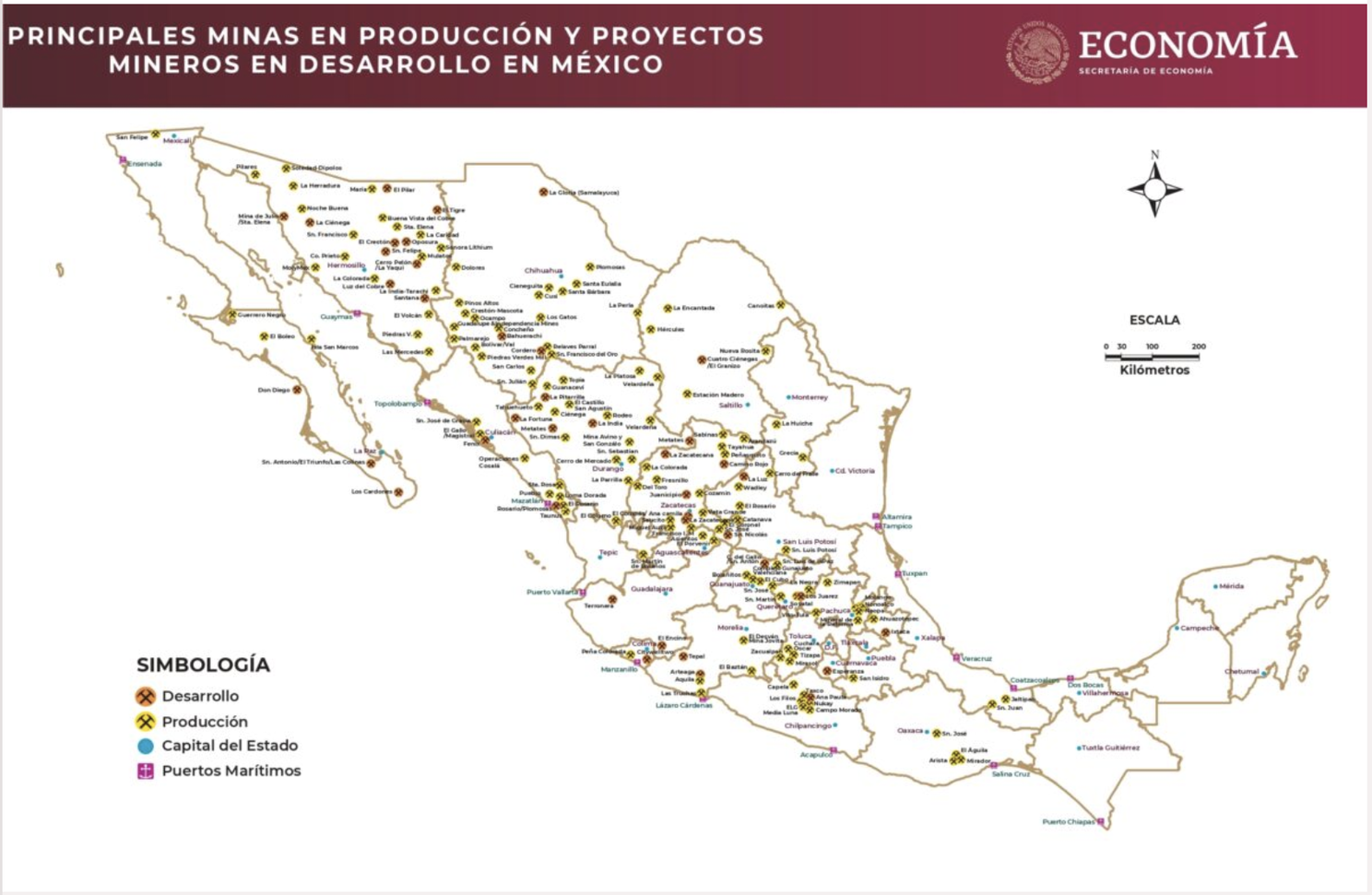
Mexico: Untapped Potential in Critical Minerals
Mexico is emerging as a strategic mineral partner in nearshoring:
-
Among the top 3 suppliers of 14 critical minerals to the U.S.
-
Major exporter of fluorspar, lead, zinc, and gold.
-
Holds significant copper and lithium reserves, with growing exploration underway.
Only 10% of Mexico's territory has been concessioned for mining—leaving enormous untapped potential. Policy uncertainty, including a nationalist stance on lithium, has slowed foreign participation. However, the U.S.-Mexico Electrification Working Group suggests a renewed appetite for binational alignment.
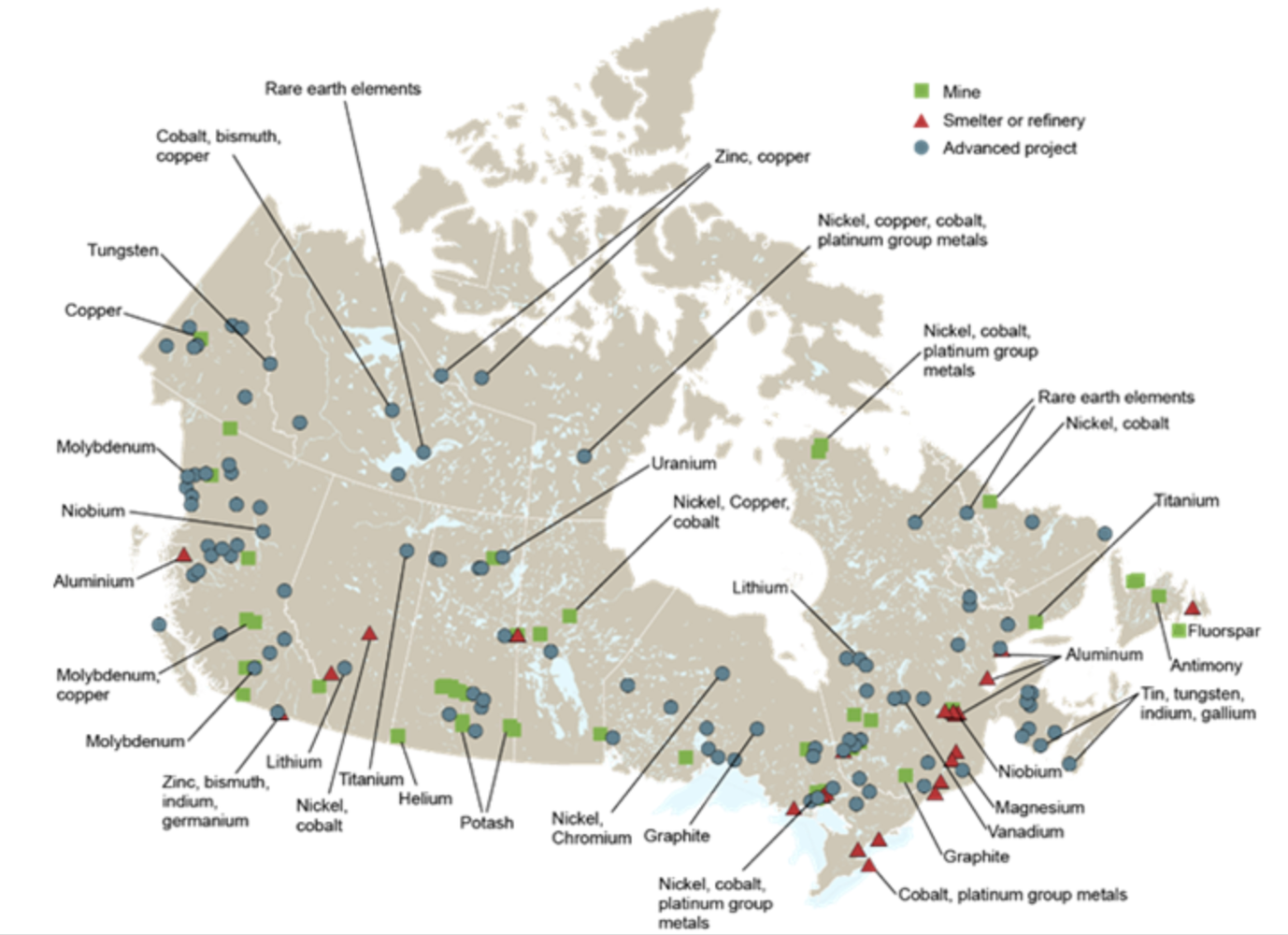
Canada: Building a Sustainable Battery Ecosystem
Canada leads North America in responsible critical mineral development:
-
Has abundant lithium, nickel, cobalt, and graphite.
-
Hosts ESG-compliant mining projects supported by public funding.
-
Attracted $7B+ in investments through the Mines to Mobility initiative.
-
Produces niobium, indium, and rare earths essential to aerospace and semiconductors.
With strong environmental standards and Indigenous partnerships, Canada serves as a model for integrating sustainability into nearshoring-driven resource development.
United States: Capacity in Policy, not Yet Output
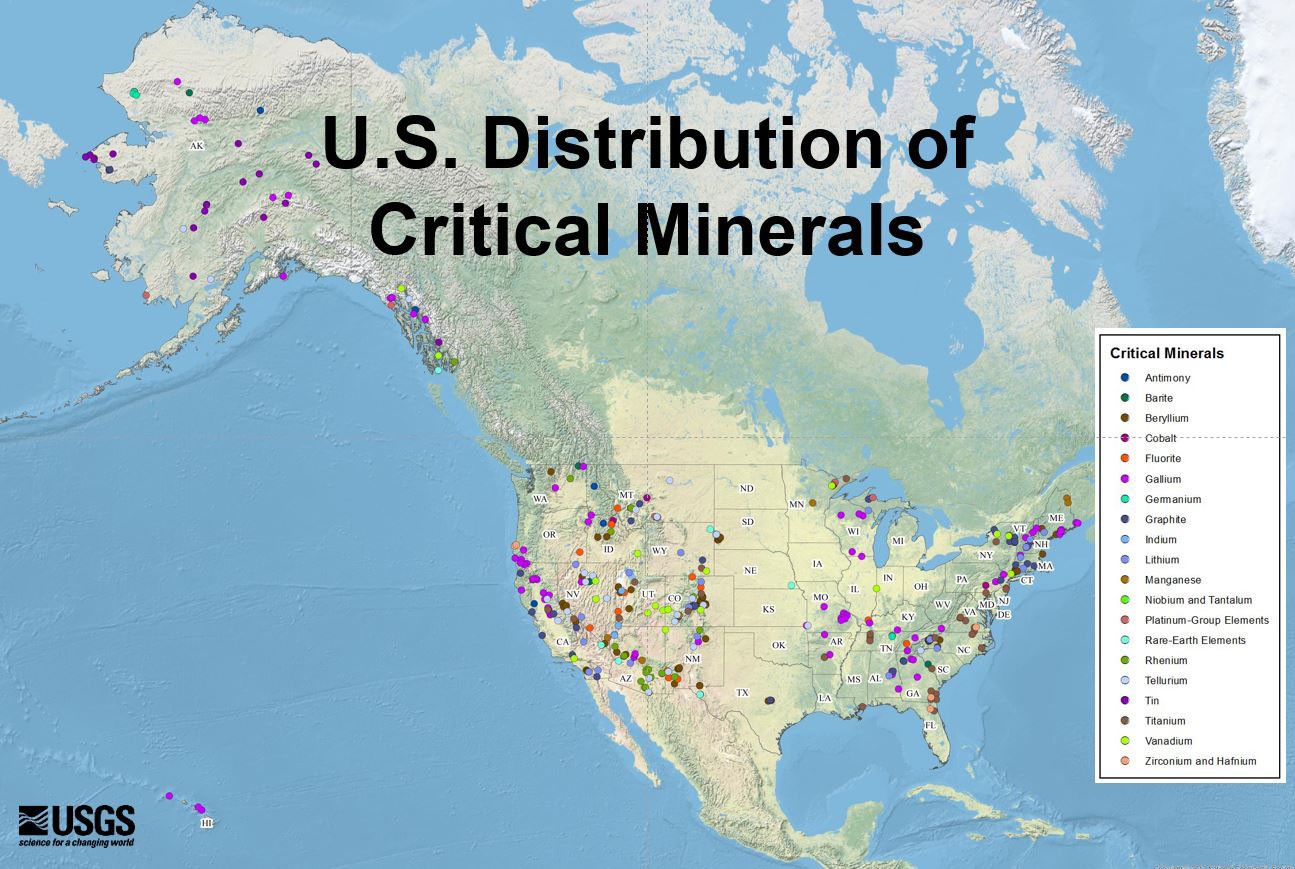
While the U.S. has enormous mineral potential, years of underinvestment have left it exposed. Most critical minerals are still imported, and permitting for new projects remains lengthy. Key developments include:
-
The Inflation Reduction Act (IRA) provides tax credits tied to North American content.
-
The Infrastructure Investment and Jobs Act (IIJA) supports grid modernization and mineral R&D.
-
The CHIPS and Science Act incentivizes U.S. semiconductor and battery investments.
But domestic mining and refining capacity must still catch up. Recycling and material substitution are promising mid-term solutions.
Expanding U.S. Critical Mineral Strategy to Offshore Resources
In April 2025, the White House issued an Executive Order to accelerate development of offshore critical mineral resources within the U.S. Exclusive Economic Zone. The initiative targets seabed deposits rich in nickel, cobalt, copper, rare earths, and more—key inputs for energy and defense sectors.
The order aims to:
-
Streamline permitting for exploration and extraction,
-
Invest in deep-sea technologies and scientific research,
-
Coordinate federal agency efforts, and
-
Strengthen international collaboration to reduce reliance on foreign sources.
This marks a major step in expanding America’s critical mineral strategy beyond land-based reserves.
World Rare Earth Mineral Mine Production, 2022
Why Nearshoring Critical Minerals is on the Table
The future of nearshoring in North America won’t be defined by factory footprints alone—it will be shaped by what lies upstream, underground, and often overlooked.
Securing a competitive and resilient supply chain for critical minerals is as much a human and governance challenge as it is a technical one. Nearly half of U.S. mining engineers are expected to retire by 2029, highlighting the urgent need to invest in workforce development. Legislative efforts like the Mining Schools Act and broader public-private initiatives aim to close this gap and retain strategic knowledge at home.
At the same time, Western mining firms must navigate high ESG standards, from environmental compliance to transparency and anti-corruption, which raise operating costs compared to state-subsidized competitors like China—but also build long-term trust and market credibility.
For companies nearshoring to Mexico, Canada, or investing in the U.S., critical minerals are no longer a background concern. They now factor into:
-
Cost modeling and total landed cost
-
Resilience and inventory strategies
-
USMCA compliance and rules of origin
-
Site selection and investment planning
Whether producing EVs, semiconductors, or clean energy infrastructure, North American manufacturers must look beyond the assembly line—to the source of the materials powering their future.
In a world increasingly focused on regional self-sufficiency, nearshoring success will depend on building secure, domestic, and integrated critical mineral ecosystems. The groundwork for tomorrow’s manufacturing strength begins today—deep in the ground, and even deeper in strategy.

Sources:
Critical Minerals in Canada - Canadian Critical Minerals Strategy
USGS Mineral Commodity Summaries 2025
The Role of Critical Minerals in Clean Energy Transitions – IEA
Critical Minerals Market Review 2023 – IEA
The Role of Nearshoring in Shoring Up Supply Chains – Wilson Quarterly
Mineral Demands for Resilient Semiconductor Supply Chains – CSIS
Critical Minerals in Latin America – U.S. Republican Policy Committee
Invest in Mining to Overcome China’s Dominance – My Journal Courier