

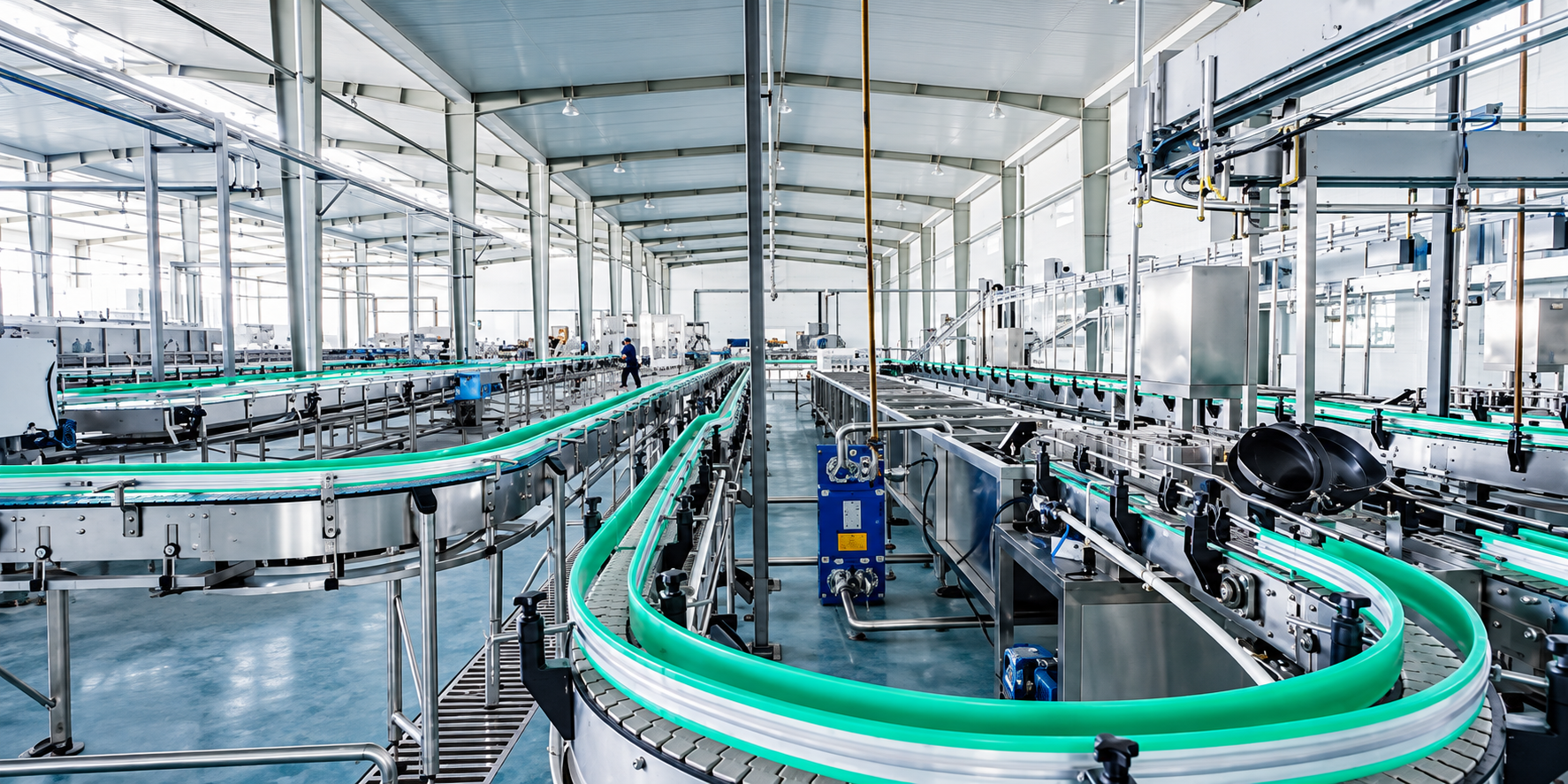


For an international company looking to establish manufacturing or logistics operations in Mexico, finding an industrial building with a good location, competitive rent, and access to major transportation routes does not necessarily mean the facility is ready to operate. If the property requires upgrades to physical security, fire protection systems or environmental infrastructure, the initial savings can quickly turn into additional costs that affect both the project budget and timeline.
That is why facility selection should go beyond available space and lease price. Companies should also evaluate supply chain security requirements, environmental conditions, infrastructure, and the specific operational needs of the business.
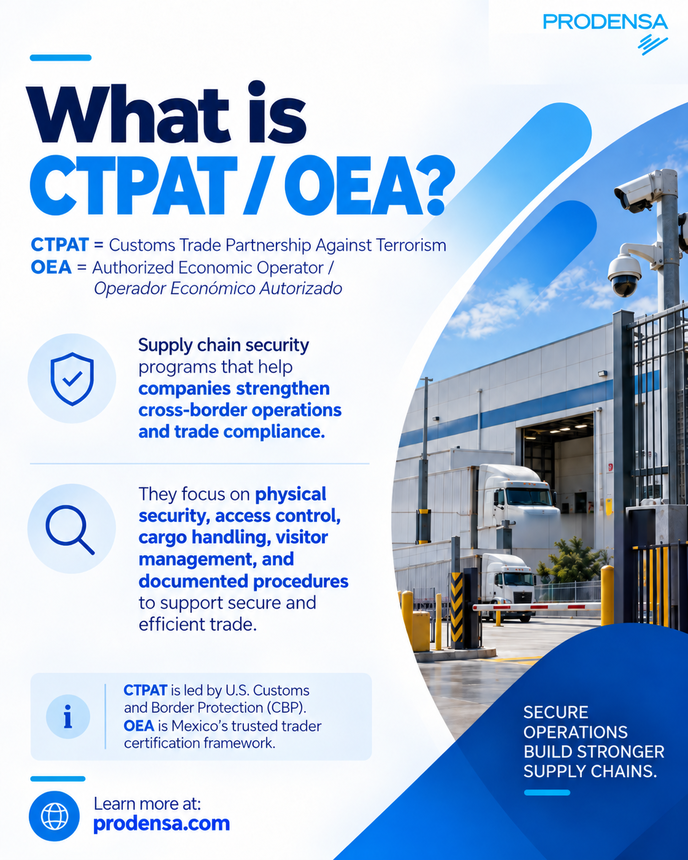
This evaluation is especially important for companies looking to align their operations with trade security programs such as the Customs Trade Partnership Against Terrorism (CTPAT) in the United States and Mexico’s Authorized Economic Operator (OEA) program. Both are focused on supply chain security, although each has its own criteria and processes.
Before signing a lease, investors should ask more than whether the property meets their current needs. They should also consider how much it will cost to adapt the facility to meet operational requirements and support future growth.
Five Things to Evaluate Before Choosing an Industrial Facility
A comprehensive site assessment can help identify physical limitations, investment needs and potential regulatory obstacles before making a financial commitment. Companies should focus on five key areas:
-
1) Physical Security
The facility’s perimeter, entrances and exits, exterior lighting, surveillance systems, and visitor controls should be reviewed from the first site visit.
It is also important to confirm whether there is enough space for trailer parking and secure storage, receiving operations, and container inspections. In facilities with shared yards, for example, controlling access and keeping cargo separated from unauthorized personnel can be more difficult.
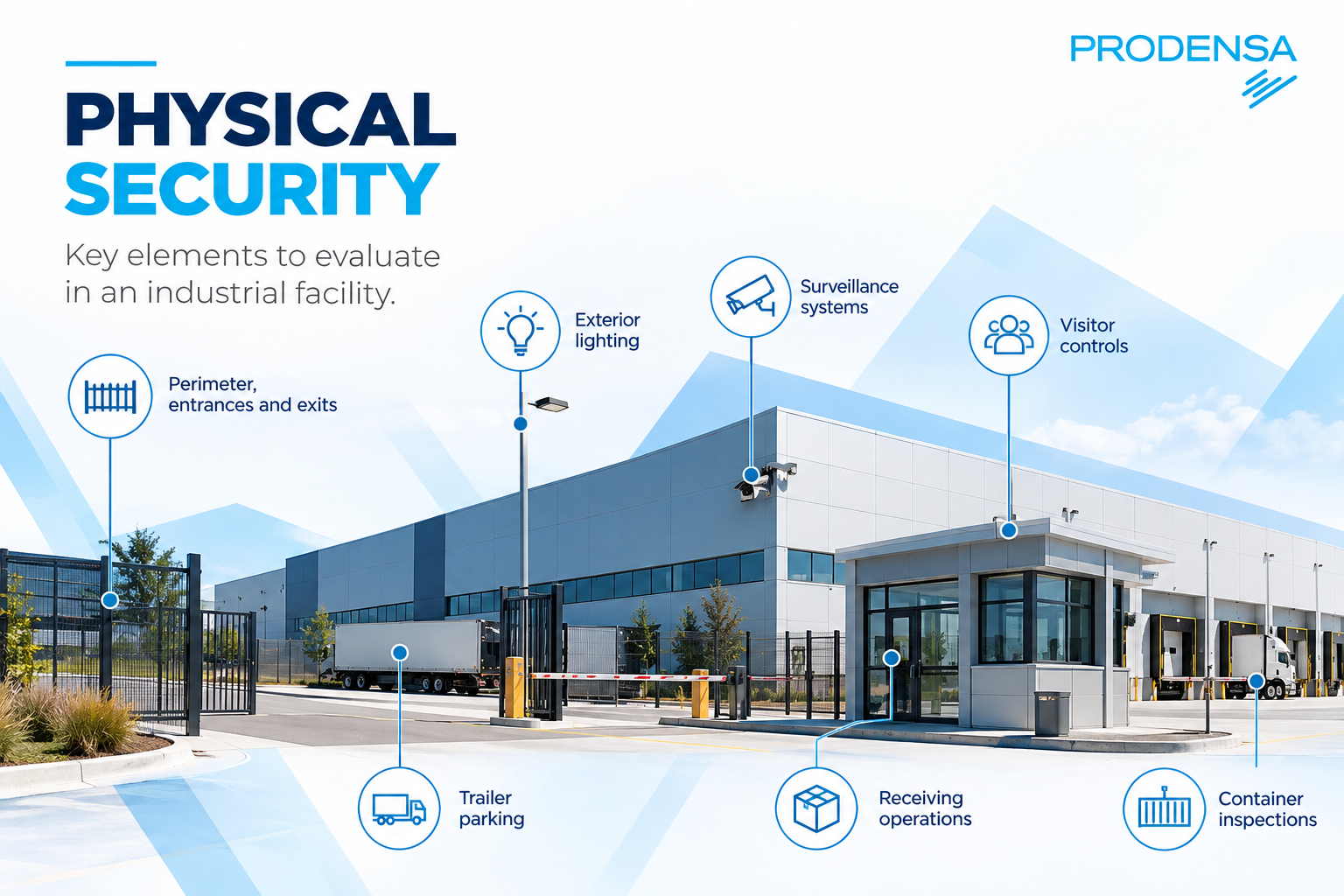
Gaps in these areas may require additional fencing, security booths, cameras, wiring or access modifications. Beyond the cost, these improvements may also depend on the landlord’s approval.
-
2) Operational Flow and Space Layout
The facility layout should support the actual movement of employees, suppliers, carriers, raw materials, and finished goods.
During the assessment, companies should review the number and location of loading docks, trailer maneuvering space, loading and unloading areas, and the separation between pedestrians and heavy vehicles.
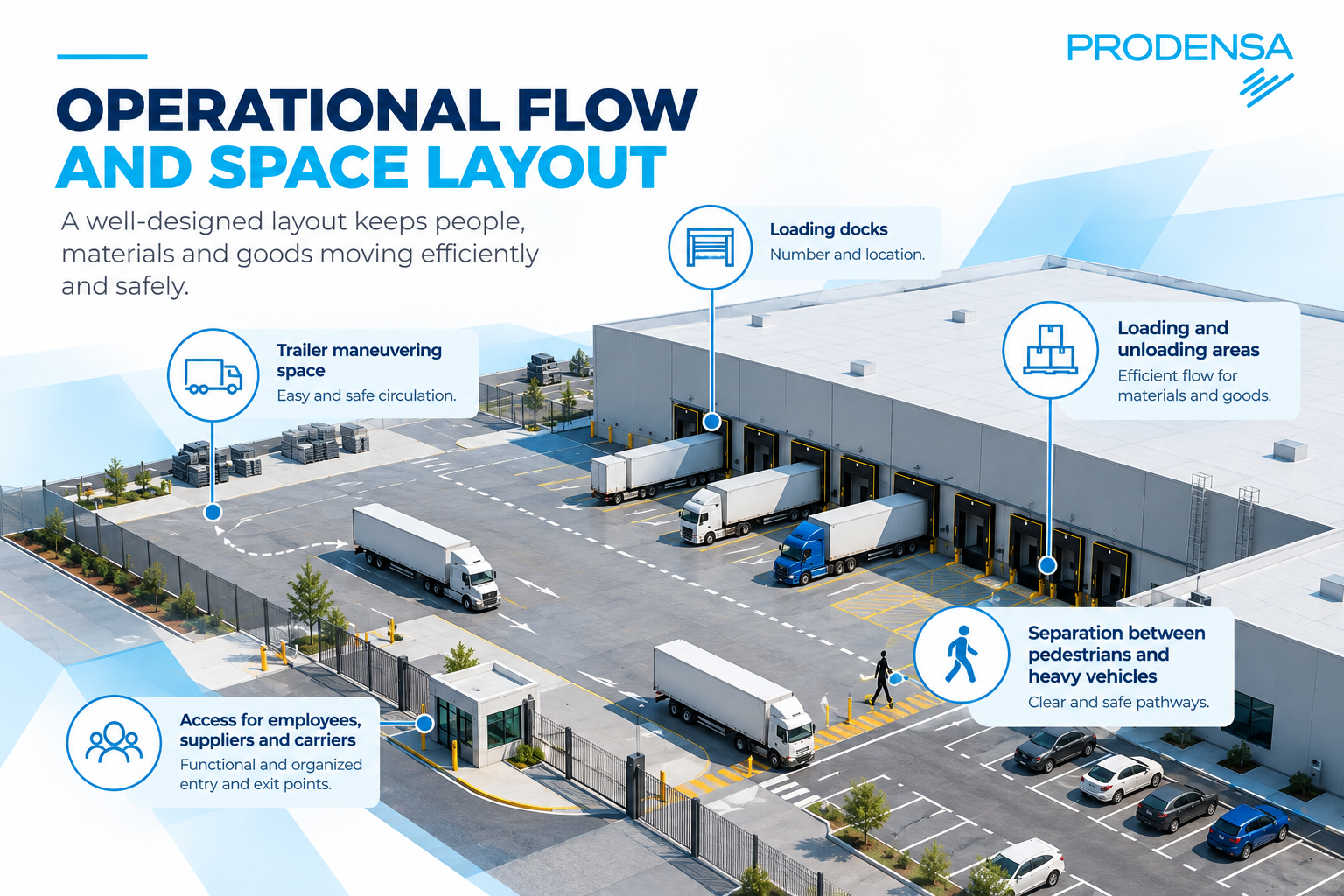
A building may offer enough square footage but still be inefficient if workers and trucks must share the same circulation routes or if there is not enough space to store goods safely.
-
3) Environment, Health & Safety (EHS)
Industrial safety and environmental conditions can directly affect how much time and investment a company will need before operations can begin.
Key areas to review include the capacity of fire protection systems, evacuation routes, hazardous material storage, ventilation, and waste-handling areas.
It is also important to confirm water availability, the facility’s ability to handle industrial wastewater, and whether emission-control systems can be installed if required by the operation.
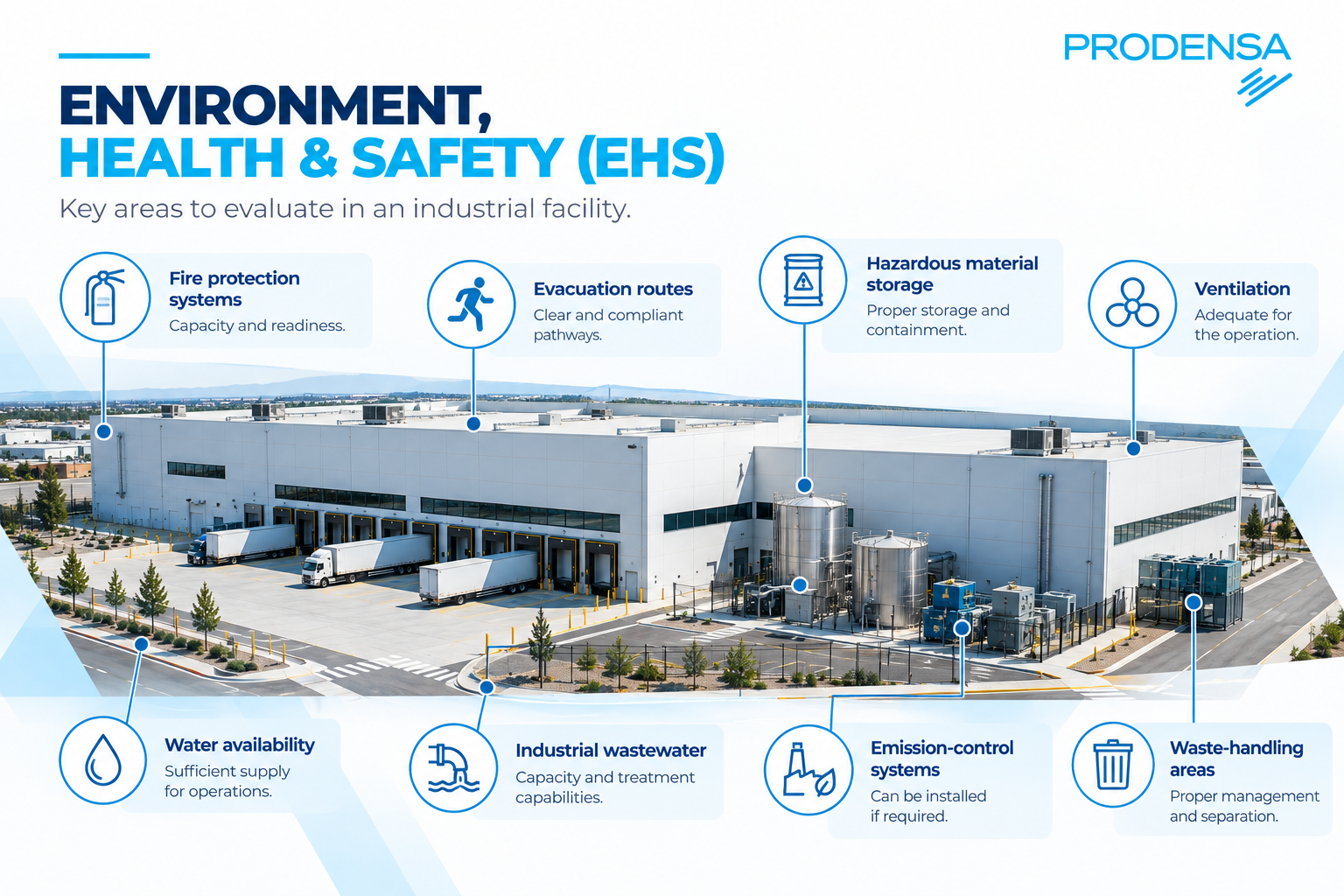
These conditions should be evaluated against the specific needs of the project and applicable legal requirements. A building that works well for finished-goods storage, for example, may require significant modifications to support a manufacturing process involving chemicals or specialized fire protection.
-
4) Environmental Infrastructure and Permits
The availability of utilities does not always mean the infrastructure is sufficient for a new operation.
Before selecting a property, companies should review water and power capacity, industrial wastewater conditions, waste-management requirements and any potential permitting needs related to emissions or other environmental matters.
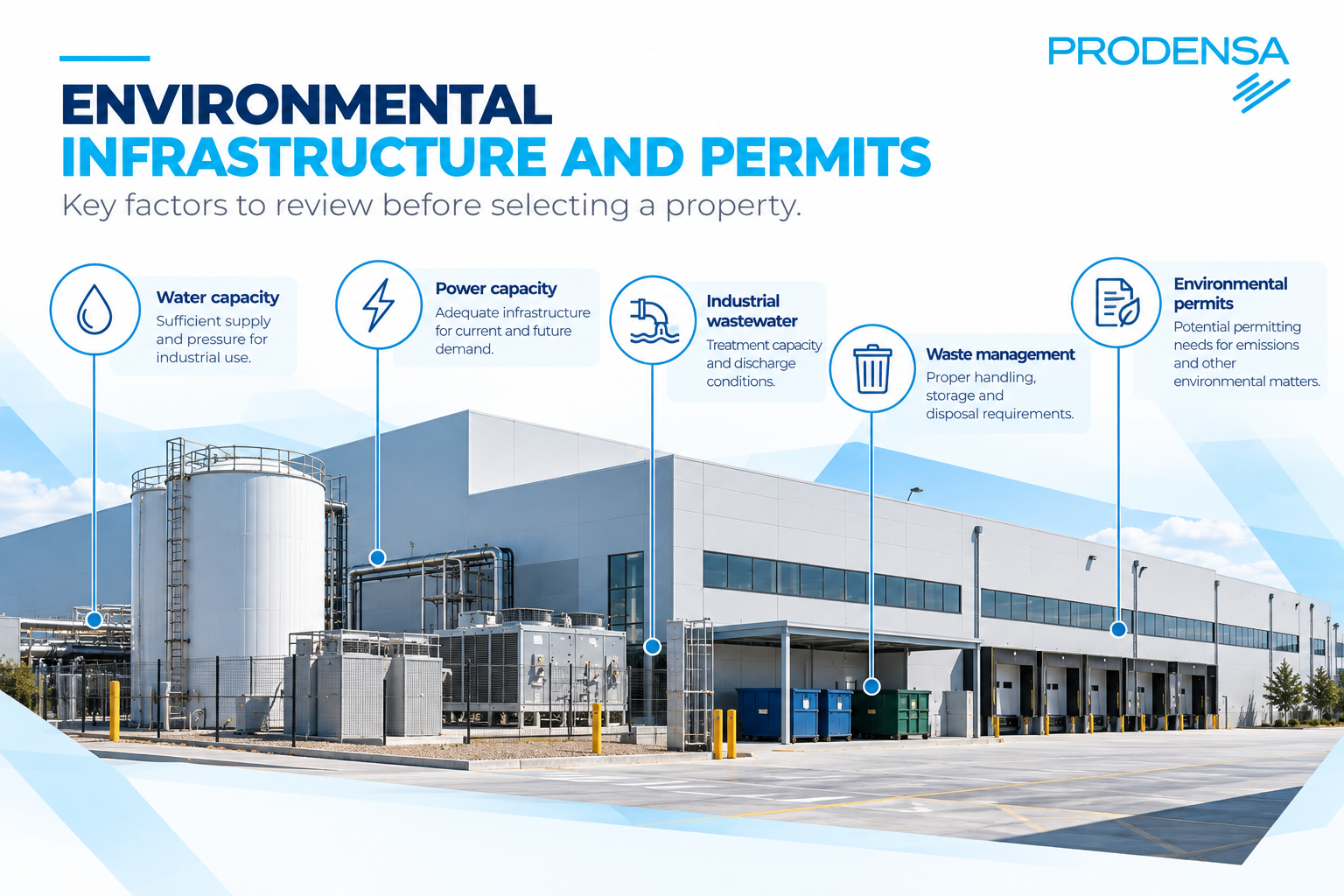
Where relevant, the site’s environmental history should also be reviewed, along with civil protection and workplace safety requirements.
The goal is not to complete every permit before choosing a facility, but to identify any conditions that could require additional studies, investment or approvals and understand how they could affect the project timeline.
-
5) Adaptability and Expansion Capacity
The assessment should consider not only the initial operation, but also how the facility may need to adapt as the company grows.
Clear height, floor load capacity, utility availability and the ability to expand production lines or storage areas can all limit equipment installation and future growth.
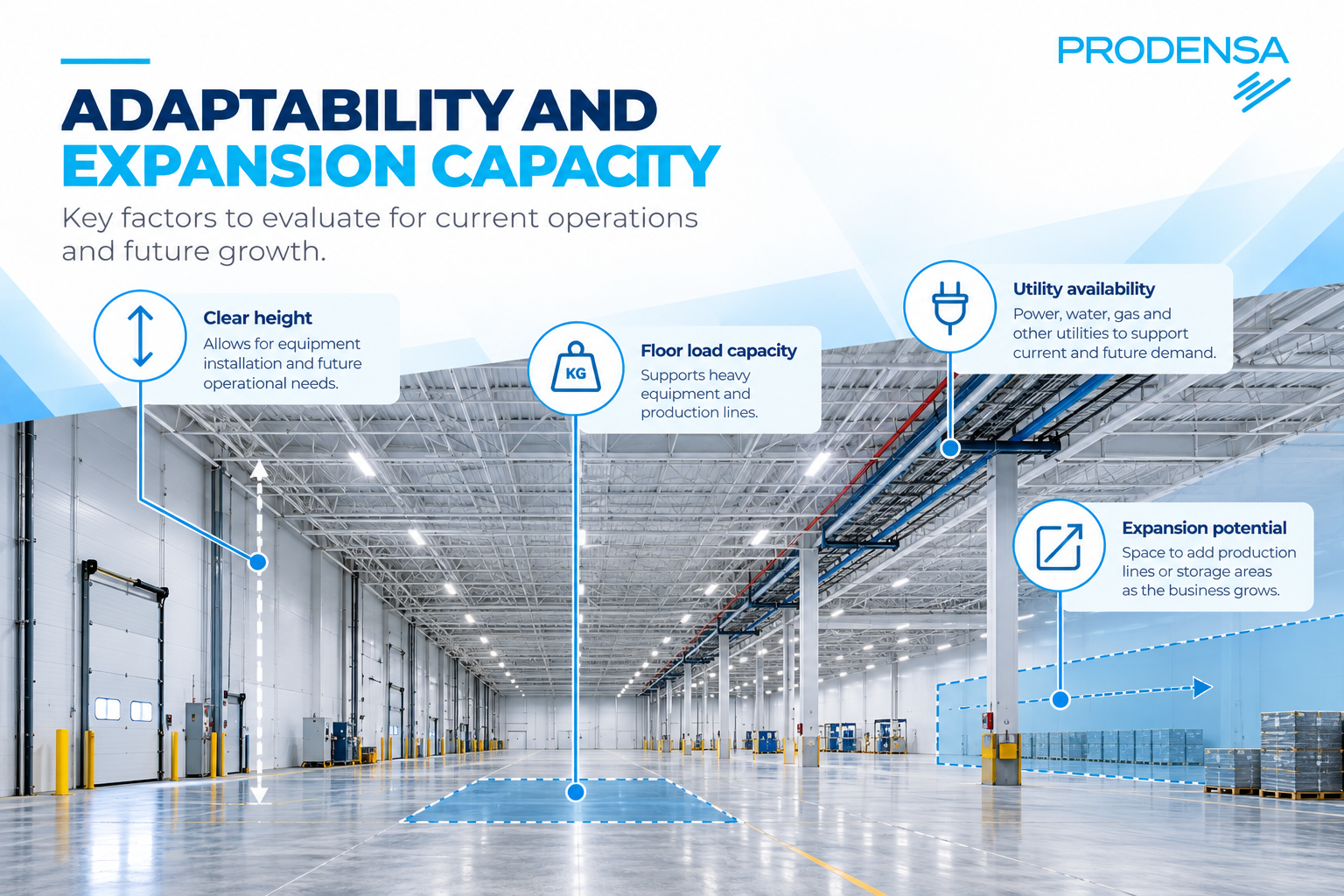
It is also important to review lease provisions related to structural modifications, drilling, additional installations, and exterior work. A modification may be technically feasible, but still impossible if the lease terms or property conditions do not allow it.
CTPAT/OEA: When Readiness Starts with the Facility
CTPAT and OEA are part of international trade security and facilitation programs. For companies operating in cross-border supply chains, evaluating the physical conditions of a facility during the site selection process can help identify potential gaps before operations begin.
-
In the case of CTPAT, administered by U.S. Customs and Border Protection (CBP), physical security is one of the areas considered under the criteria applicable to each type of participant.
-
In Mexico, the OEA program operates within the customs authority’s certification framework and has its own specific requirements.
Facility readiness should include elements such as perimeter control, access management, surveillance of loading areas, visitor and contractor management and the protection of goods during handling.
However, having cameras or a security booth does not automatically mean a facility meets CTPAT or OEA requirements. The assessment should also consider the procedures, responsibilities, and documented controls that apply to the company and its specific participation category.
Reviewing the property before signing helps determine what infrastructure is already in place, what upgrades may be required and which improvements could be negotiated with the landlord before making a commitment.
Conducting this review internally can be complex, since it requires coordination among real estate, engineering, security and trade compliance teams, each with different priorities. Working with specialists experienced in site selection and operations in Mexico can help bring those requirements together into a single, more comprehensive evaluation.
The Lowest Rent Is Not Always the Lowest Cost
The difference between the lease price and the actual cost of getting a facility ready for operations can be significant. To illustrate this, the following example compares two hypothetical 100,000-square-foot industrial properties:
|
Concept |
Facility A: Lower Rent |
Facility B: Better Equipped |
|
Annual rent per sq. ft. |
US $ 6.50 |
US $ 7.50 |
|
Annual base rent |
US $ 650,000 |
US $ 750,000 |
|
Initial compliance upgrades |
US $ 675,000 |
US $ 15,000 |
|
Annual amortization of upgrades over 5 years |
US $ 135,000 |
US $ 3,000 |
|
Estimated effective annual operating cost |
US $ 785,000 |
US $ 753,000 |
|
Effective annual cost per square ft. |
US $ 7.85 |
US $ 7.53 |
Source: Illustrative scenario only; not based on market quotations. The comparison considers base rent and the five-year amortization of required upgrades. It does not represent the full range of potential occupancy costs.
In this scenario, Facility A offers $100,000 lower annual rent, but requires $675,000 in initial upgrades. These investments include perimeter fencing, a security booth, video surveillance, fire protection systems, hazardous waste storage and modifications to the maneuvering yard.
Facility B, although more expensive to lease, requires only $15,000 in upgrades. When the initial improvement costs are spread over five years, Facility A reaches an estimated effective annual cost of $785,000, compared with $753,000 for Facility B.
That represents a $32,000 annual advantage for Facility B, despite its higher base rent.
This example shows why a site decision should not be based only on the price per square foot. To determine which property is truly more cost-effective, companies should consider the total cost of adaptation, lease conditions, operating expenses, and risks that could delay the start of operations.
Identifying one of these conditions does not automatically mean the property should be rejected. It means the technical, financial, and contractual impact should be evaluated before making a commitment.
In some cases, some of the possible solutions may be:
-
To negotiate improvements with the landlord.
-
Adjust the facility layout-
-
Allocate a specific upgrade budget.
-
In other cases, the required cost or time may make another location a better option.
Site Selection Requires a Multidisciplinary Team
Evaluating an industrial property should not be left only to real estate and finance teams. The decision also affects the areas responsible for operating, maintaining, and overseeing the facility.
That is why companies should involve representatives from operations, engineering, EHS, trade compliance, human resources, and project management from the beginning of the site selection process.
|
Area |
What It Evaluates in Site Selection |
Compliance Focus |
|
Real Estate & Finance |
Commercial negotiation, lease terms, landlord support, and TCO model |
Avoid cost overruns and ensure financial viability |
|
Operations & Engineering |
Workflow, loading docks, floor capacity, and utilities such as power, gas, and water |
Long-term operational efficiency and equipment integration |
|
EHS |
Fire protection , hazardous waste, environmental permits, and local regulations |
Operating permits and worker protection |
|
Corporate Security |
CTPAT/OEA physical criteria, CCTV, perimeter security, guard booth, and visitor control |
Reduce cargo theft risk and support international certifications |
|
Trade Compliance |
Customs inspection areas, ISO 17712 seal storage, and alignment with IMMEX and VAT requirements |
Efficient customs clearance and import benefits |
|
Human Resources |
Labor market, public transportation, commuting safety and nearby amenities |
Attract talent, reduce turnover, and improve employee commuting safety |
|
Project Management |
Facility upgrade timelines, supplier coordination, construction permits, and startup schedule |
Meet launch timelines and control execution risks |
Source: Prodensa analysis. Working with a partner that brings these disciplines together under a single project—such as Prodensa’s integrated teams—helps unify the requirements of each area into one coordinated site selection process.
Evaluate Before You Sign, Not After Operations Begin
An industrial facility should be evaluated based on more than its location, size and rent. Its ability to meet security, EHS and operational requirements can directly affect the project’s budget, timeline and overall feasibility.
Integrating these factors into the site selection process makes it possible to identify required upgrades, estimate costs, anticipate permitting needs and negotiate responsibilities before signing the lease.
Through its site selection, facility assessment, and EHS advisory services, Prodensa helps companies incorporate these criteria into the evaluation of industrial properties in Mexico. Its multidisciplinary approach allows each facility to be assessed from the project’s commercial, technical, and operational requirements.
Is the facility truly ready for the operation you plan to install, or does it simply look like a good real estate opportunity? Answering that question before signing can make the difference between a well-planned expansion and a project that begins with avoidable costs and delays.

CTPAT: The Customs Trade Partnership Against Terrorism, a U.S. Customs and Border Protection program focused on strengthening supply chain security.
OEA: Mexico’s Authorized Economic Operator program, which recognizes companies that meet specific customs and supply chain security requirements.
EHS: Environment, Health & Safety. It covers areas such as fire protection, hazardous materials, waste management, environmental compliance, and worker safety.
TCO — Total Cost of Ownership: A way to evaluate a facility based on its full cost, including rent, required upgrades, operating expenses, and other investments—not just the lease price.

What should companies evaluate before leasing an industrial facility in Mexico?
Beyond location and rent, companies should review security, EHS conditions, utilities, operational flow, permitting needs, and expansion capacity.
Why is CTPAT/OEA readiness important during site selection?
Because facility conditions such as access control, perimeter security, surveillance, cargo handling, and visitor management can affect the upgrades needed before operations begin.
Can a lower-rent facility end up costing more?
Yes. A property with a lower lease rate may require significant investments in security, fire protection, environmental infrastructure, or operational modifications, increasing the total cost.
Who should be involved in the site selection process?
A multidisciplinary team should include real estate, finance, operations, engineering, EHS, security, trade compliance, HR, and project management to evaluate the property from all relevant perspectives.

- The lowest rent is not always the lowest-cost option. Required upgrades, permitting needs, and startup delays can significantly change the real cost of a facility.
- Site selection should include compliance from the beginning. Security, EHS, trade compliance, and operational requirements should be evaluated before signing the lease.
- Facility readiness can affect the project timeline. Identifying gaps early gives companies more time to budget improvements and negotiate responsibilities with the landlord.
- A multidisciplinary evaluation reduces risk. Bringing real estate, engineering, EHS, security, trade compliance, HR, and project management into the process provides a more complete view of each property.
- The key question is not only “Is this building available?” but “Is it ready for our operation?”
.png?width=1200&height=178&name=DIVIDER1%20(1).png)
Notice: The content of this blog is developed by Prodensa for informational and educational purposes regarding nearshoring, foreign trade, human capital, and manufacturing in Mexico. Although we strive to keep the information accurate and up to date, laws and regulations may change. This material is not a substitute for specialized professional advice. Prodensa is not responsible for decisions made based on this content without appropriate professional consultation.