


Company formation in Mexico is not finished until your new entity has an RFC. You cannot issue invoices, open a bank account, hire employees, register as an importer or apply for the IMMEX program. And getting it is only the start. Mexico's tax authority, the SAT, monitors compliance continuously, and in 2026 it gained new powers to suspend invoicing, deny registrations and cancel tax IDs.
This guide explains what the RFC is, how foreign-owned companies obtain one, what it unlocks, and what it takes to keep it in good standing. It is part of our complete guide to manufacturing in Mexico.
What is the RFC?
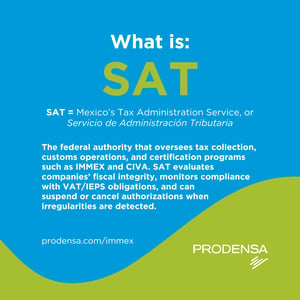
The RFC (Registro Federal de Contribuyentes, or Federal Taxpayer Registry) is Mexico's tax identification number. The SAT (Servicio de Administración Tributaria) assigns it to every individual and legal entity with economic activity in Mexico.
It works much like the business registration or tax number your company holds in its home country, but it does far more day-to-day work. Every invoice, payroll receipt, bank account and customs declaration in Mexico is tied to it, making it the backbone of doing business in Mexico.
- Companies (personas morales) receive a 12-character RFC, built from the company name's initials, its incorporation date and a check code.
- Individuals (personas físicas) receive a 13-character RFC, built from their name and date of birth.
Alongside the RFC, you will hear about several related tools and documents:
| Term | What it is | Why it matters |
| Constancia de Situación Fiscal | The official certificate of your tax registration | Customers, banks and suppliers ask for it constantly; invoices must match it exactly |
| e.firma | The company's advanced electronic signature | Required to file returns, sign SAT procedures and request other certificates |
| CSD (Certificado de Sello Digital) | The digital seal used to stamp electronic invoices | Without an active CSD, you cannot invoice |
| CFDI | Mexico's mandatory electronic invoice | The only valid proof of a sale or expense for tax purposes |
| Buzón Tributario | Your official tax mailbox on the SAT portal | The SAT sends legally binding notices here, with short response deadlines |
Who needs an RFC?
If you are starting a business in Mexico, plan for at least two RFCs: one for the company and one for the person who represents it before the SAT.
- Your Mexican entity. Any company incorporated in Mexico, typically an S.A. de C.V. or S. de R.L. de C.V. subsidiary, must register.
- Your legal representative. The person holding the company's power of attorney must have a personal RFC before they can register the company or obtain its e.firma. If that person is a foreign national, they first need Mexican immigration status that allows them to work, usually a temporary or permanent resident card. A manager who has just arrived on a visitor permit generally cannot complete this step.
- Foreign shareholders. A foreign parent company that is not otherwise required to register can be listed with a generic RFC designated by the SAT for foreign residents. The incorporation deed must still identify every shareholder's RFC.
- Expatriate staff on Mexican payroll. Employees paid in Mexico need their own RFC for payroll and withholding.
Do you need your own entity right away? Under a shelter (albergue) model, an established Mexican IMMEX company provides the legal and tax infrastructure while you run production. You start operating without registering your own RFC first, and many companies use it to start production sooner, then migrate to their own entity once the operation is proven.
How to obtain an RFC: step-by-step
The clock starts at entity incorporation: a new Mexican company must register with the SAT within the month after its incorporation deed is signed.
- Prepare the parent company's documents. Corporate records, board resolutions, and powers of attorney issued abroad must be apostilled (or legalized, depending on the issuing country) and translated into Spanish by a court-certified translator. Start this first; it is usually the longest lead-time item.
- Secure the legal representative's status. Confirm your representative has valid Mexican immigration status, a CURP (population registry key) and a personal RFC and e.firma. If you plan to appoint someone from headquarters, start their immigration process in parallel with incorporation.
- Incorporate before a Mexican notary. The deed must list each shareholder's valid RFC (or the generic foreign-resident RFC), or the company must submit a separate written statement with them.
- Register the company in the RFC. Most notaries are connected to the SAT's system and can file the registration directly at incorporation. Otherwise, the representative pre-registers online and completes the process at a SAT office by appointment, bringing:
- The certified incorporation deed
- The power of attorney for the legal representative
- The representative's official ID and RFC
- Proof of the company's tax address in Mexico
- Obtain the company's e.firma. The legal representative requests it in person at the SAT. The e.firma is what lets the company file returns and complete procedures online.
- Request the CSD and set up invoicing. With the e.firma, the company requests its digital seal certificate and connects it to an authorized invoicing provider (PAC).
- Activate the tax mailbox and download your Constancia. Register at least one email address and phone number for SAT notices, and keep your Constancia de Situación Fiscal on hand for customers and banks.
Where does timing matter most? SAT appointment availability, apostille and translation turnaround, the representative's immigration status, and the SAT's verification of the tax address. An address the SAT cannot locate (a virtual office, or an industrial park lot still under construction) can stall the process or later restrict invoicing.
What RFC unlocks
The RFC is the gateway credential for nearly every step of running a business in Mexico:
- Invoicing and getting paid. You can issue CFDI electronic invoices, and your Mexican customers can deduct what they pay you. Large customers will not onboard a supplier without a valid RFC and Constancia.
- Banking. Mexican banks require the RFC, e.firma and Constancia to open corporate accounts, along with extensive ownership and beneficial-owner information.
- Hiring. You can register as an employer with IMSS (social security) and INFONAVIT (housing fund) and run compliant payroll.
- Importing. You can enroll in the Importers Registry (Padrón de Importadores), required to clear goods through Mexican customs.
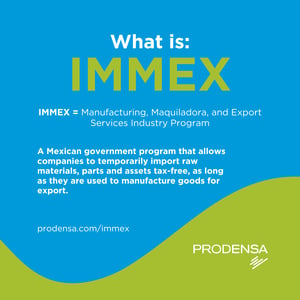
- IMMEX. To qualify for IMMEX, a company must be registered with the SAT, have a tax address the authority has verified, and hold a positive compliance opinion. IMMEX lets you temporarily import raw materials and equipment for export production without paying import duties up front.
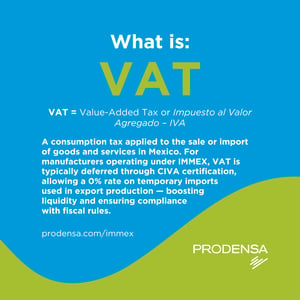
- VAT/IEPS certification. With a clean compliance record, IMMEX companies can obtain certification that turns the 16% VAT on temporary imports into a credit instead of a cash outlay, a significant working-capital benefit.
Common Terms to Know

Staying compliant: ongoing obligations
The RFC is not a one-time registration. The SAT cross-checks invoices, bank deposits, payroll and customs data in near real time, so gaps surface quickly.
Recurring filings
- Monthly provisional income tax (ISR) and VAT (IVA) returns, plus payroll withholding
- Monthly electronic accounting (chart of accounts and trial balance)
- The DIOT, an informative report of transactions with suppliers
- The annual corporate tax return
- For IMMEX companies, the annual operations report to the Ministry of Economy and inventory controls that meet SAT requirements (Annex 24)
Keeping your registration current
- File change notices with the SAT when the tax address, economic activities, legal representative or shareholders change.
- Keep the tax address verifiable. The SAT can visit it, and an address it cannot locate is grounds for restricting your digital seal.
- Renew the e.firma and CSD before they expire.
- Make sure every invoice you receive and issue shows names, RFCs and postal codes that match the Constancia exactly. Under CFDI 4.0, mismatches make invoices invalid.
Monitoring and responding
- Check the tax mailbox regularly. SAT notices there are legally served, and some response windows are now as short as five business days.
- Give someone in Mexico the authority to respond. If every reply needs headquarters approval across time zones and translation, deadlines can pass before a decision is made.
- Keep your opinión de cumplimiento (compliance opinion under Article 32-D of the Federal Tax Code) positive. Customers, government agencies, IMMEX authorities and certification reviewers all check it.
- Screen suppliers against the SAT's published list of companies presumed to issue invoices for nonexistent operations (the Article 69-B list) before you pay them.
- Document intercompany transactions. Purchases, services and loans with your parent or affiliates need transfer pricing support and properly issued invoices; these flows draw close scrutiny.
What changed in 2026
The Federal Tax Code reform published on November 7, 2025, and in force since January 1, 2026, gives the SAT faster and broader tools against simulated operations. For foreign investors, four changes stand out:
- Registration can be denied based on who owns you. The SAT can now refuse to register a company in the RFC if any shareholder, partner or member of its organizational structure has been linked to issuing invoices for nonexistent operations. Vet local partners, co-investors and nominee shareholders before incorporation, not after.
- Invoicing can be frozen during an investigation. When the SAT opens a review for suspected false invoices, it can suspend the company's ability to issue CFDI from the moment the audit order is served until it issues a ruling.
- Less time to respond. A new express audit (Article 49 Bis) gives companies just five business days to prove that invoices the SAT presumes false reflect real transactions.
- Clearer grounds to suspend or cancel an RFC. Article 27 now lists specific cases in which the SAT may suspend or cancel a registration, part of an effort to purge inactive and misused tax IDs from the registry.
The practical takeaway: in 2026, compliance gaps that once led to a fine and a negotiation can now stop a company from invoicing within days.
Consequences of non-compliance
In Mexico, tax problems rarely stay contained. Because invoicing, customs and IMMEX all depend on your RFC status, one missed obligation can cascade into an operational shutdown.
| Consequence | Typical trigger | Business impact |
| Fines and surcharges | Late or missing returns, late change notices | Direct cost, plus inflation adjustments and interest |
|
Digital seal (CSD) restricted or cancelled |
Unlocatable tax address, unfiled returns, mismatched income | You cannot issue invoices, so you cannot bill customers or ship with valid paperwork |
| RFC suspended or cancelled | Grounds now listed in Article 27 | The company effectively loses its tax identity |
| Negative compliance opinion | Any outstanding filing or unpaid tax | Lost customer contracts, blocked government procedures and certifications |
| IMMEX or VAT/IEPS certification suspended | Missed inventory-control or reporting obligations | Duties and VAT due at the border on every import, a sudden cash-flow hit |
| Listed as an issuer or user of false invoices | Buying from or operating like a shell company | Expenses disallowed, reputational damage, potential criminal liability |
Common mistakes foreign-owned companies make
- Appointing a legal representative who cannot act yet. Naming an executive from headquarters before their Mexican residency is approved leaves the company unable to register or obtain its e.firma.
- Leaving document legalization to the last minute. Apostilles and certified translations of parent-company documents routinely take weeks. Start them before you book the notary.
- Using an address the SAT cannot verify. Virtual offices, shared addresses and plant sites still under construction often fail the SAT's location checks.
- Running compliance from abroad. SAT notices arrive in Spanish, through the tax mailbox, with short deadlines. Without a local owner who reads them and has authority to act, deadlines are missed.
- Not vetting local suppliers and partners. Paying a supplier on the SAT's 69-B list can cost you the deduction, and since 2026, a tainted shareholder can block your registration outright.
- Under-documenting intercompany flows. Large volumes of purchases, services and fees with the parent company without transfer pricing support and correct invoices invite audits.
- Treating the RFC as a one-time setup. Registration is the first step; staying in good standing is a monthly discipline.
 How Prodensa helps
Getting an RFC is straightforward on paper. In practice, it sits at the intersection of corporate law, immigration, tax and foreign trade, and the order of steps matters.
Prodensa has guided international manufacturers through company formation in Mexico, plant start-up and ongoing operations for decades. We help you:
- Choose the right model, whether your own entity from day one or a faster start under a shelter structure
- Coordinate incorporation, document legalization, the legal representative's immigration status and RFC registration as one plan
- Apply for IMMEX and VAT/IEPS certification, and keep both in good standing
- Manage ongoing tax and trade compliance with a local team that monitors your tax mailbox, deadlines and compliance opinion
Planning operations in Mexico?
Talk to our team about the fastest compliant path to your first shipment.