

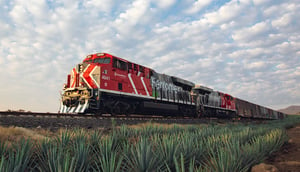
Mexico’s industrial map is being reshaped not only by new manufacturing investment, but also by the infrastructure that supports it. As rail projects expand across key regions, connectivity is becoming a more relevant consideration for companies evaluating where to locate plants, distribution centers, and high-volume operations.
For manufacturers, however, being close to a rail line is only part of the equation. The real value depends on access to operational capacity, intermodal terminals, last-mile connections, and reliable links to ports, border crossings, suppliers and customers.
As these projects move forward, rail connectivity is becoming an increasingly important variable in Site Selection—and one that can directly influence logistics costs, operational flexibility, and long-term competitiveness.
Why Rail Connectivity Is Becoming a Site Selection Factor in Mexico
The expansion of Mexico’s rail corridors, supported by a projected public investment of MXN 700 billion and more than 2,500 kilometers of track, is reshaping the country’s logistics map. For companies evaluating new manufacturing plants or distribution centers, rail connectivity, last-mile access, and proximity to intermodal terminals are becoming increasingly important factors in industrial location decisions.
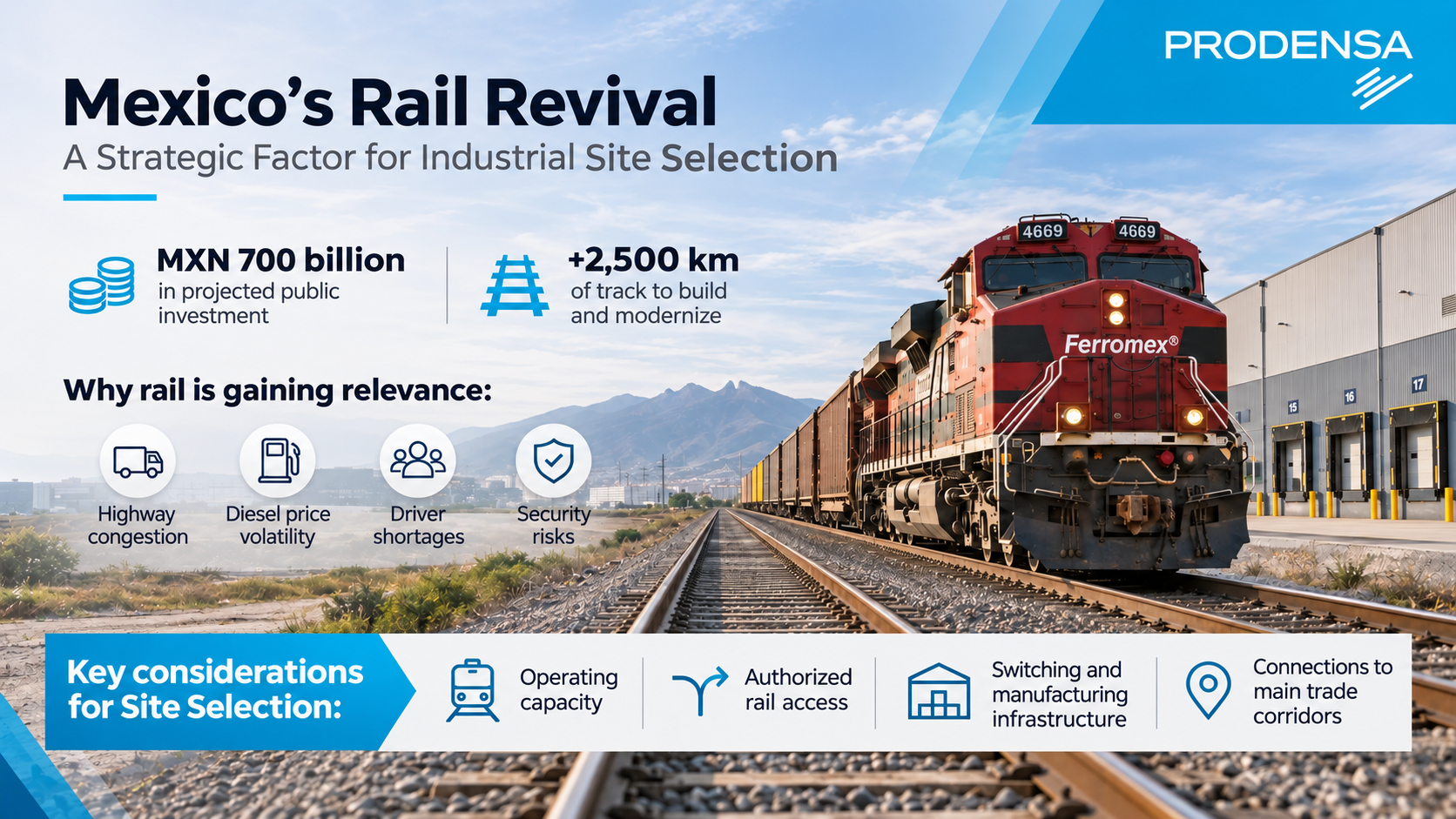
Selecting a manufacturing location in Mexico no longer depends solely on proximity to the United States, workforce availability or land costs. Rail connectivity is gaining greater relevance in investment decisions, particularly for companies that need to move large volumes of raw materials, components, and finished goods.
Several challenges are prompting companies to reassess their logistics strategies:
- Congestion on major highways
- Volatility in diesel costs
- Shortages of truck drivers
- Security risks associated with road transportation
In this environment, rail offers an alternative for reducing transportation costs and diversifying supply routes.
This shift coincides with a federal rail expansion program that contemplates an estimated MXN 700 billion in investment to build and modernize more than 2,500 kilometers of track. However, this figure represents a projected level of investment and infrastructure development, not funds that have been fully deployed or kilometers of track that have already been completed.
For companies involved in Site Selection processes, this transformation introduces a new evaluation factor. Identifying a site located near a rail line is not enough. Companies must also confirm the availability of operating capacity, authorized rail access, switching and maneuvering infrastructure, and efficient connections to the country’s main trade corridors
How Mexico’s Rail Network Evolved from Privatization to New Public Investment
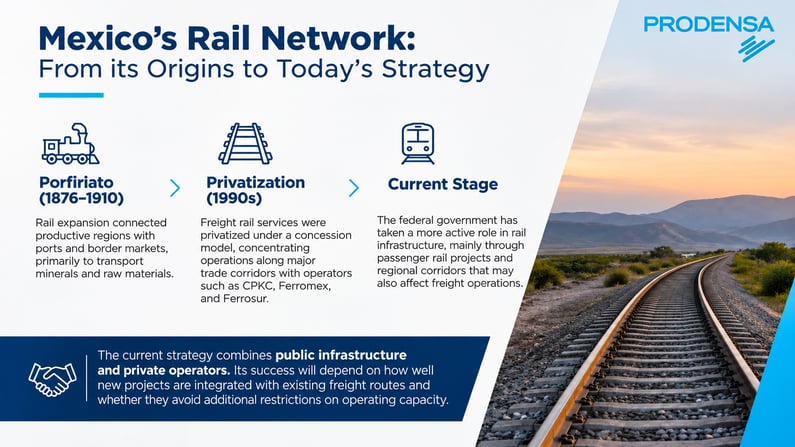
Mexico’s rail network has evolved through several stages. During the Porfiriato (1876–1910), rail expansion connected productive regions with ports and border markets, primarily transporting minerals and raw materials. Following restructuring and the privatization of freight services in the 1990s, a concession-based model concentrated operations along major trade corridors, consolidating operators such as Canadian Pacific Kansas City (CPKC), Ferromex, and Ferrosur.
Today, the federal government has taken a more active role in rail infrastructure planning, particularly through passenger rail projects and regional corridors that may also affect freight operations. The current strategy combines public infrastructure with private operators. For industry, its success will depend on how effectively new projects integrate with existing freight routes without restricting operating schedules or network capacity.
Rail vs. Trucking: What Manufacturers Should Consider
-
Competitive Advantages Over Trucking
The renewed importance of rail as a pillar of industrial transportation reflects measurable operational, financial and environmental efficiencies in both cross-border logistics and domestic freight movements.
|
Operating Criterion |
Trucking (Truck / Trailer) |
Rail (Freight / Intermodal) |
|
Cost per ton-kilometer |
High; highly sensitive to diesel price volatility and highway tolls |
Up to 30%–40% lower on routes exceeding 500 km |
|
Hauling capacity |
Limited to 1 or 2 trailers, approximately 20–40 net tons |
A unit train can carry the equivalent of approximately 250–300 freight trucks |
|
Exposure to risk and security issues |
Vulnerable to highway theft, roadblocks, and traffic accidents |
More controlled operating environments, lower theft rates, and continuous tracking |
|
Workforce availability |
Shortage of qualified drivers in Mexico and the United States |
More centralized operations, requiring fewer personnel per ton transported |
|
Sustainability (decarbonization) |
Higher CO₂ emissions per ton-kilometer transported |
Up to 75% reduction in operational carbon footprint |
These advantages are not absolute. Rail performs best over long distances and with high freight volumes, while trucking remains competitive for shorter routes and high-frequency deliveries. Site Selection decisions should therefore consider the freight mix, the effective distance to ports or border crossings, and the availability of intermodal terminals.
-
Why Multimodal Integration Matters for Manufacturers
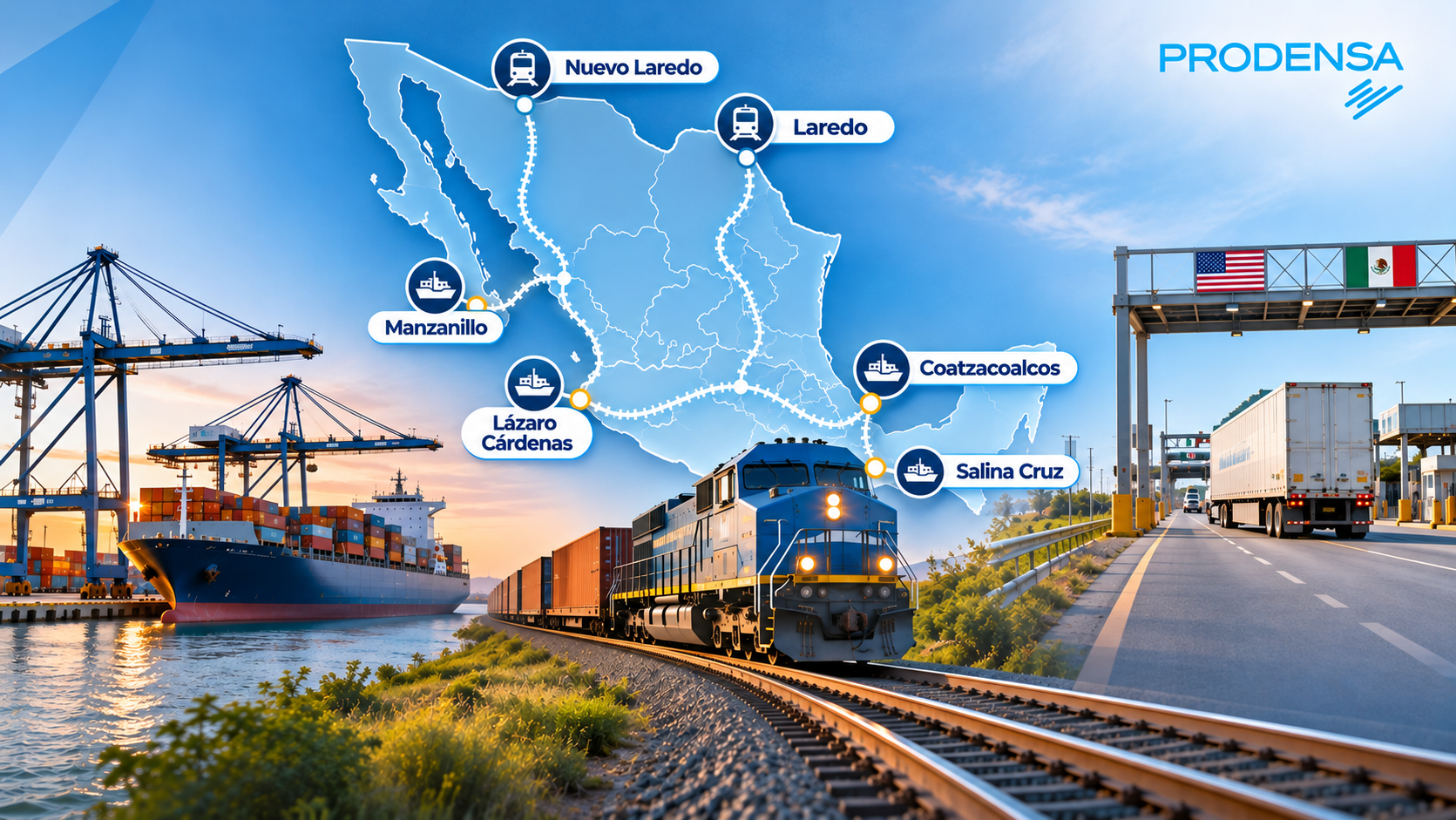
Multimodal integration is another central factor. Rail connections with ports such as Manzanillo, Lázaro Cárdenas, Salina Cruz, and Coatzacoalcos make it possible to coordinate import and export routes. Along Mexico’s northern border, the rail crossings at Nuevo Laredo and Laredo are critical to trade with the United States.
For a manufacturing company, access to a nearby intermodal terminal can facilitate both the receipt of inputs and the distribution of finished goods. However, the benefit should be measured against transit times between the plant and the terminal, as well as any additional transfer costs.
-
Why Last-Mile Rail Access Matters for Industrial Sites
One of the most common mistakes in industrial site selection is assuming that proximity to a rail line automatically guarantees access to rail service.
Effective connectivity requires a rail spur, a branch line connecting the main track directly to an industrial park or site. Construction depends on rail concessionaire approval, topography, curve-radius requirements, rail load capacity, and available switching and maneuvering yards.
Without these elements, industrial projects may face additional costs and delays of 12 to 18 months before becoming operational. For expansion teams, a site with an operational or previously certified rail connection may offer greater certainty than one simply located alongside an existing rail line.
Four Rail Corridors Reshaping Industrial Site Selection in Mexico
For an effective manufacturing site selection analysis, Mexico’s rail network in 2026 can be viewed through four key geographic-industrial corridors.
Mexico’s rail expansion is creating new industrial opportunities across three key regions:
- Southeast Mexico
- The Bajío
- Northern Mexico
To assess their industrial impact, it is essential to distinguish between completed infrastructure, projects under construction, and developments still in the planning stages.
-
Interoceanic Corridor: Connecting Mexico’s Pacific and Gulf Coasts
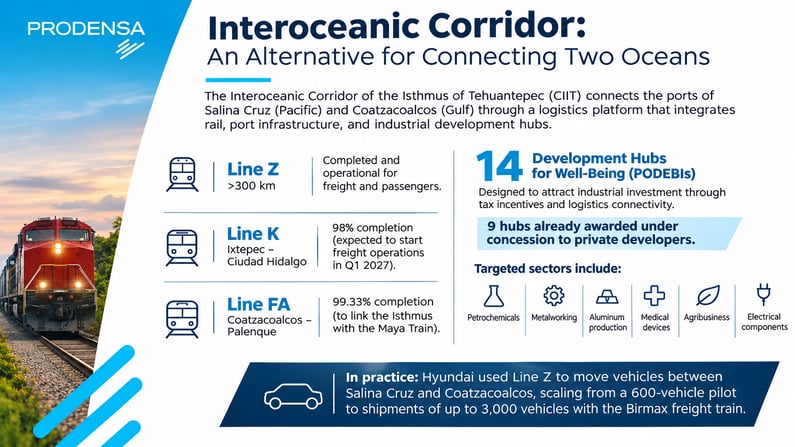
The Interoceanic Corridor of the Isthmus of Tehuantepec (CIIT) aims to connect the ports of Salina Cruz, Oaxaca, and Coatzacoalcos, Veracruz, through an integrated logistics platform combining rail transportation, port infrastructure, and industrial development hubs.
The corridor includes three key rail lines:
- Line Z: Extends over 300 kilometers and is fully operational for both freight and passenger transportation.
- Line K: Connects Ixtepec with Ciudad Hidalgo, near the Guatemala border. Reported at 98% completion by late 2026, with commercial freight operations projected for Q1 2027.
- Line FA: Connects Coatzacoalcos with Palenque, with a reported 99.33% completion rate, providing a link between the Isthmus and the Maya Train network
The CIIT includes 14 Development Hubs for Well-Being (PODEBIs), designed to attract industrial investment through tax incentives and logistics connectivity. Target sectors include petrochemicals, metalworking, aluminum production, medical devices, agribusiness, and electrical components. According to the information provided, nine hubs had been awarded to private developers. Demonstrating the corridor’s potential, Hyundai used Line Z to transport vehicles between Salina Cruz and Coatzacoalcos, scaling from a 600-vehicle pilot to shipments of up to 3,000 vehicles aboard the Birmax freight train.
For companies considering southeastern Mexico, the CIIT offers a potential alternative for connecting ports with international markets. However, investment decisions should consider actual rail service availability, port infrastructure, and each industrial hub’s development status.
-
The Maya Freight Train: A New Logistics Network for Southeastern Mexico
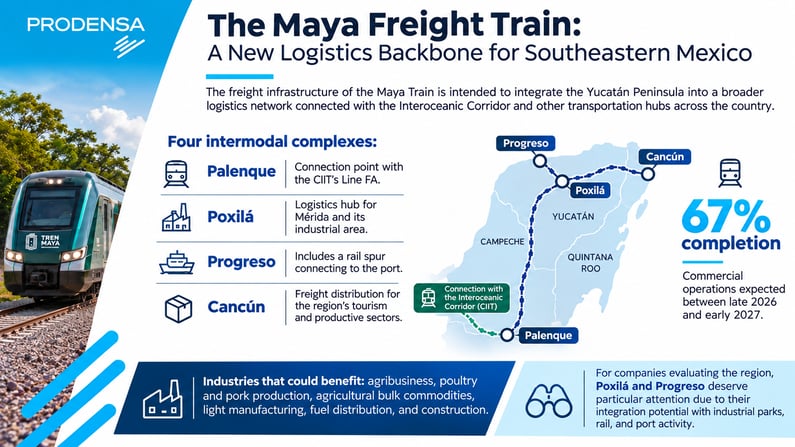
The Maya Train’s freight infrastructure aims to integrate the Yucatán Peninsula into a broader logistics network connected to the Interoceanic Corridor (CIIT) and other transportation hubs across Mexico.
The project includes four intermodal complexes designed for rail classification, storage, and switching operations:
- Palenque: Connection point with the CIIT’s Line FA.
- Poxilá: Planned logistics hub serving Mérida and its industrial area.
- Progreso: Includes a planned rail spur connecting to the port.
- Cancún: Focused on freight distribution for tourism and regional industries.
Freight infrastructure has a reported completion rate of 67%, with commercial operations projected between late 2026 and early 2027. This reflects progress reported for the indicated period, not fully operational infrastructure.
Potential beneficiaries include agribusiness, poultry and pork production, agricultural bulk commodities, light manufacturing, fuel distribution, and construction.
For companies evaluating the region, Poxilá and Progreso offer particular potential to integrate industrial parks, rail transportation, and port activity. However, operating schedules, tariffs, and actual freight capacity should be verified before incorporating these services into logistics projections.
-
The Bajío-Central Corridor: Mexico City–Querétaro Rail and the Passenger Network’s Impact on Freight
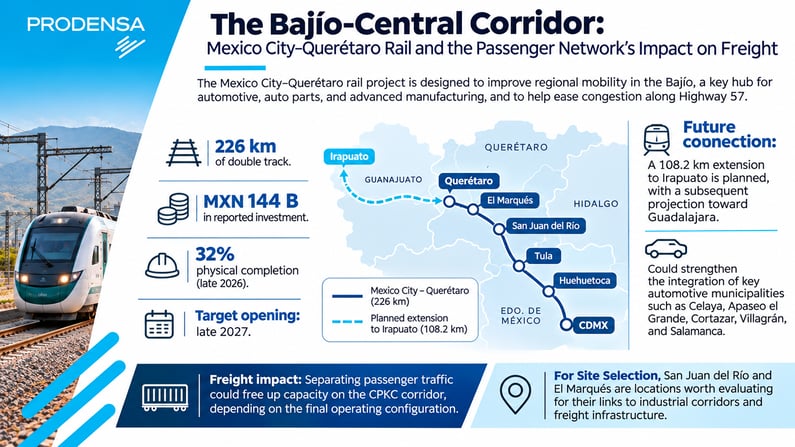
The Bajío region is a major hub for automotive, auto parts, and advanced manufacturing. The Mexico City–Querétaro rail project aims to address growing mobility demands and congestion along Highway 57.
Key project details include:
- Infrastructure: 226 kilometers of double track.
- Investment: MXN 144 billion.
- Progress: 32% physical completion reported by late 2026, with inauguration targeted for late 2027.
- Stations: Huehuetoca, Tula, San Juan del Río, El Marqués, and Querétaro.
Although designed for passenger transportation, the project could indirectly benefit freight logistics. Separating passenger and freight traffic may free up capacity along the CPKC corridor, depending on the final operating configuration. Intermediate cities could also gain industrial relevance through improved connections to labor markets and transportation corridors.
The planned 108.2-kilometer extension toward Irapuato, followed by a proposed connection to Guadalajara, could strengthen integration among automotive manufacturing municipalities, including Celaya, Apaseo el Grande, Cortazar, Villagrán, and Salamanca.
For industrial site selection, San Juan del Río and El Marqués merit consideration due to their proximity to established industrial corridors and freight infrastructure. However, passenger rail connectivity should not be confused with operational freight access when evaluating a manufacturing location.
-
The Northern Border Corridor: Saltillo–Nuevo Laredo and the USMCA Connection
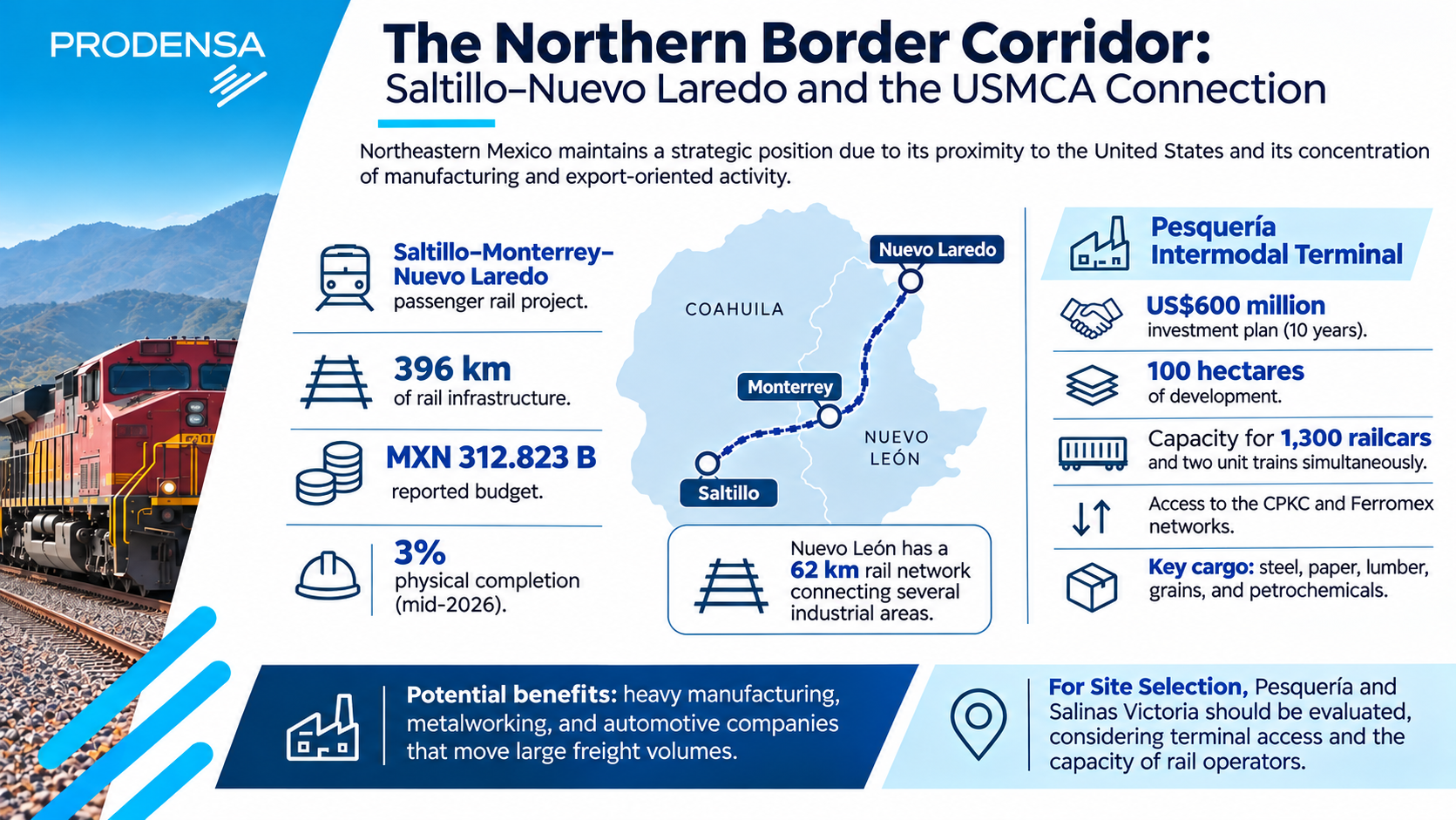
Northeastern Mexico remains a strategic manufacturing and export hub due to its proximity to the United States. The Saltillo–Monterrey–Nuevo Laredo passenger rail project includes:
- Infrastructure: 396 kilometers of passenger rail.
- Investment: MXN 312.823 billion.
- Progress: 3% physical completion as of mid-2026, indicating an early-stage project rather than an operational connection.
Meanwhile, Nuevo León has a 62-kilometer rail network connecting industrial areas across metropolitan Monterrey. In Pesquería, Bulkmatic de México announced a US$600 million investment over ten years to develop an intermodal terminal with:
- Area: 100 hectares.
- Storage capacity: 1,300 railcars, with space for two unit trains simultaneously.
- Connectivity: Planned access to CPKC and Ferromex networks.
- Cargo: Steel, paper, lumber, grains, and petrochemicals.
This infrastructure could benefit heavy manufacturing, metalworking, and automotive companies transporting large freight volumes. For industrial site selection, Pesquería and Salinas Victoria merit consideration, although each site's suitability depends on operational terminal access and available rail capacity.
-
Comparing Mexico’s Four Key Rail Corridors
The four corridors below illustrate how rail development is progressing across different regions of Mexico, each with distinct levels of completion, intermodal connectivity, and industrial potential. Comparing them side by side helps identify where rail infrastructure may have the greatest impact on future Site Selection decisions.
|
Geographic Corridor |
Length / Physical Progress (2026) |
Key Intermodal Integration |
Priority Industrial Sectors |
|
Interoceanic Corridor (CIIT) |
Line Z operational; Line K 98% complete |
Ports of Salina Cruz and Coatzacoalcos; 14 PODEBIs |
Petrochemicals, aluminum, automotive, agribusiness |
|
Maya Freight Train |
67% overall progress on freight infrastructure |
Rail yards in Palenque, Poxilá, Progreso, and Cancún |
Food and agribusiness, bulk commodities, fuels, construction |
|
Bajío-Central Corridor (Mexico City–Querétaro Train) |
226 km; 32% complete |
Stations in Huehuetoca, Tula, San Juan del Río, El Marqués, and Querétaro |
Automotive, advanced manufacturing, aerospace, medical devices |
|
Northern Border Corridor (Saltillo–Nuevo Laredo) |
396 km; 3% complete |
Pesquería hub with Bulkmatic and dual CPKC/Ferromex access; 62 km of rail lines in Monterrey |
Metalworking, automotive, steel, home appliances |
Who Is Funding Mexico’s Rail Expansion?
The federal rail expansion program projects an estimated MXN 700 billion investment across more than 2,500 kilometers of track, covering multiple construction and modernization projects. This figure represents planned investment, not actual spending in 2026.
However, the 2026 Federal Expenditure Budget proposal reported a 32.6% reduction in rail project funding compared with the previous fiscal year, potentially reflecting transitions between construction phases, right-of-way clearance, and project preparation.
For industrial investors, this gap highlights the importance of evaluating projects individually, focusing on:
- Execution timelines: When infrastructure will realistically be completed.
- Operational availability: Which rail segments will become accessible.
- Network capacity: Whether the infrastructure can support actual freight requirements.
The key consideration is not just announced investment, but when and how that infrastructure will become operational.
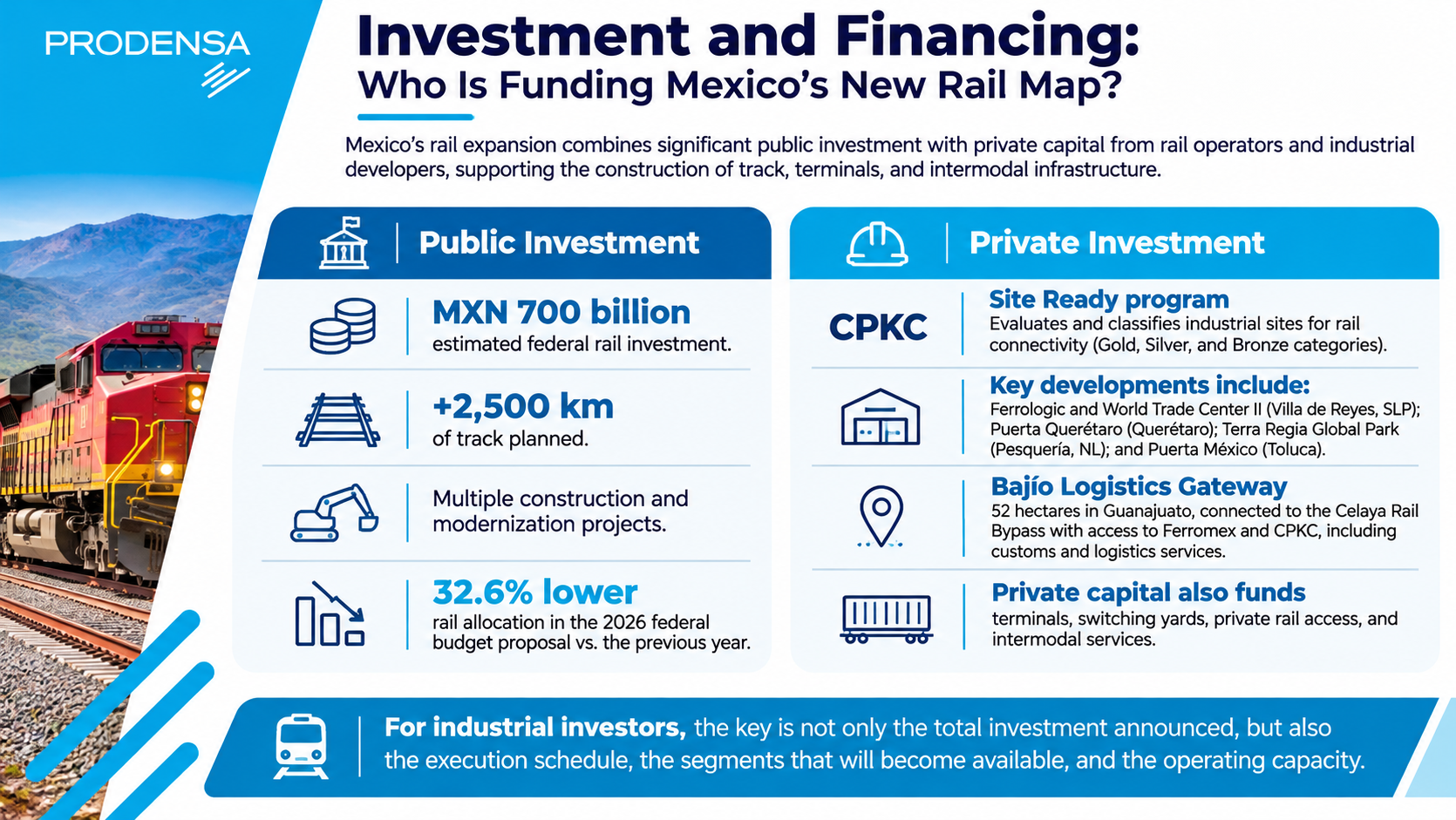
Private investment is also expanding Mexico’s logistics infrastructure. CPKC’s Site Ready program, developed with engineering firm Burns & McDonnell, evaluates industrial sites with potential rail connections using Gold, Silver, and Bronze classifications based on technical, environmental, topographic, and utility readiness.
Developments referenced under this framework include:
- San Luis Potosí: Ferrologic and World Trade Center II in Villa de Reyes.
- Querétaro: Puerta Querétaro.
- Nuevo León: Terra Regia Global Park in Pesquería.
- Toluca: Puerta México.
Another example is Bajío Logistics Gateway, a 52-hectare development in Guanajuato connected to the Celaya Rail Bypass, with access to both Ferromex and CPKC networks. The project offers customs services and logistics capabilities for industries including automotive, agribusiness, and steel.
These projects show that rail development does not depend exclusively on public investment. The construction of terminals, switching yards, private rail access, and intermodal services also requires capital from developers and logistics operators.
Key Challenges and Bottlenecks in Mexico’s Rail Network
As rail infrastructure expands across Mexico, its potential benefits must be weighed against the operational constraints that can affect reliability, capacity and project timelines. For Site Selection teams, understanding these bottlenecks is essential before treating rail access as a competitive advantage.
How to Evaluate a Rail-Connected Industrial Site in Mexico
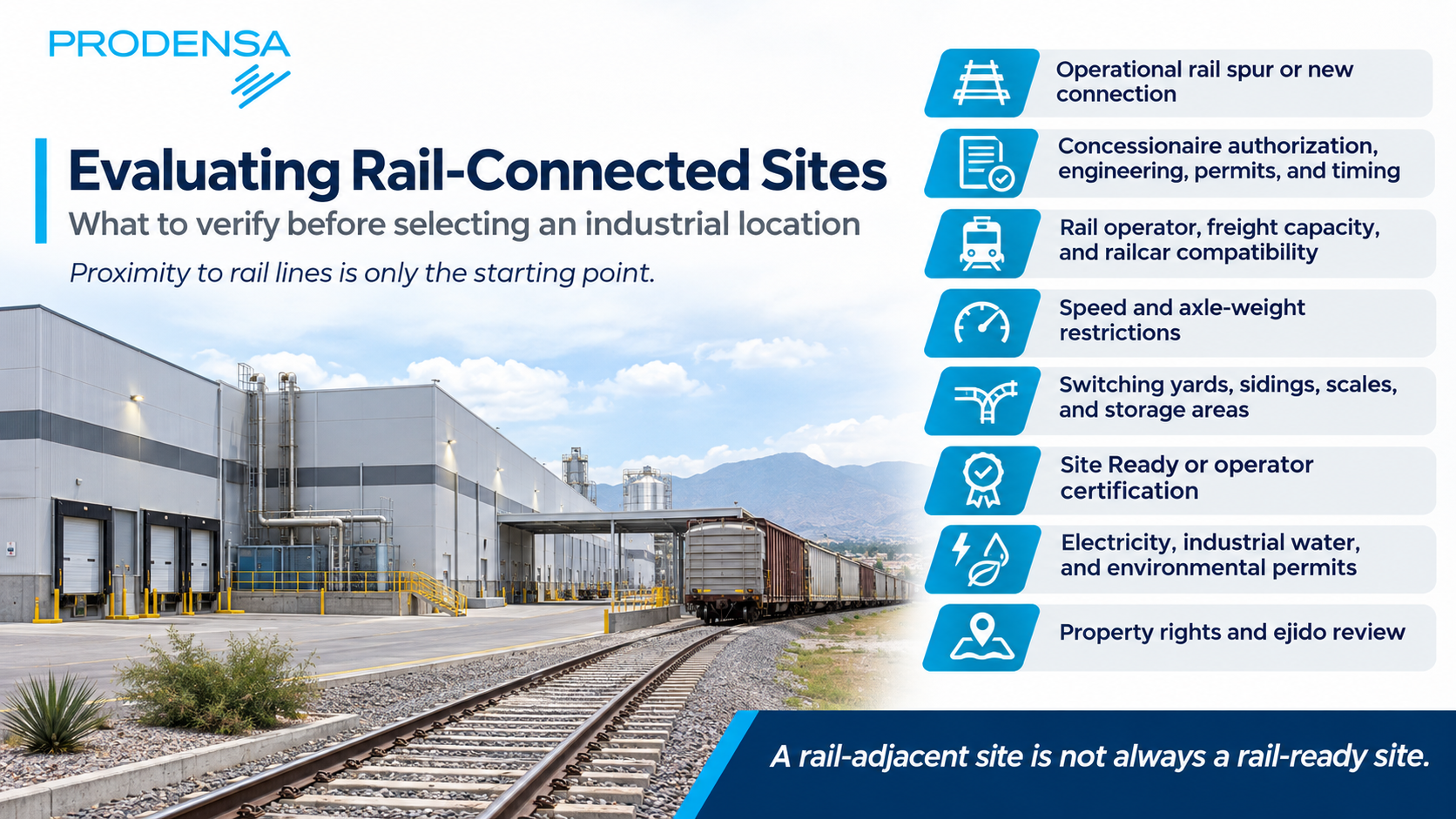
For companies establishing a manufacturing plant, distribution center, or heavy industrial operation, proximity to rail lines is only the starting point. The priority is determining whether a site has an operational rail spur or requires a new connection, which involves concessionaire authorization, engineering costs, permits, and construction timelines.
Beyond physical access, companies should evaluate several operational factors:
- Rail operator and capacity: Who controls the line, available freight capacity, compatible railcars, and speed or axle-weight restrictions.
- Supporting infrastructure: Availability of switching yards, sidings, scales, and storage areas to accommodate trains without disrupting production.
- Technical readiness: Certifications such as CPKC's Site Ready program, which can indicate prior technical evaluations but must be assessed against project-specific requirements.
These considerations determine whether rail infrastructure can support the company's actual transportation needs. Access to a main rail line does not necessarily guarantee operational connectivity, particularly when space for train reception and switching is limited.
Finally, rail feasibility should be assessed alongside electricity and industrial water availability, environmental permits, and property legal certainty. Reviewing potential ejido land origins and ownership rights is especially important to prevent legal complications during industrial development.
Rail Is Gaining Weight in Industrial Investment Decisions
Mexico’s rail expansion is creating opportunities to optimize supply chains and diversify transportation routes. Projects such as the CIIT, Maya Freight Train, Bajío rail developments, and northeastern Mexico’s intermodal terminals offer different advantages depending on industry, freight volumes, and destination markets. However, their value depends less on kilometers built or investment announced than on operational factors:
- Available freight capacity and competitive rates.
- Reliable transit times and connections to suppliers and customers.
For manufacturers, Site Selection analysis should integrate rail connectivity from the earliest stages, considering:
- Last-mile access and rail operator capacity.
- Intermodal infrastructure and available services.
- Legal certainty and operational feasibility.
These factors allow companies to compare locations beyond land prices, focusing on the total logistics cost of operating from each site.
For Prodensa, incorporating these variables into industrial location assessments provides companies with a more complete view of the risks and opportunities associated with each region. Rail connectivity alone does not guarantee a plant’s competitiveness, but it can become a meaningful advantage when supported by operational infrastructure and a logistics strategy aligned with the needs of the business.

-
Rail Spur: A short rail connection that links a main rail line directly to an industrial park, manufacturing facility, or logistics site. Having a rail line nearby does not necessarily mean a property has operational rail access.
-
Intermodal Terminal: A logistics facility where freight can be transferred between transportation modes, such as rail and truck. These terminals can help manufacturers connect plants with ports, border crossings, and major distribution corridors.
-
Last-Mile Rail Access: The infrastructure required to move freight from the main rail network to its final industrial destination. This can include rail spurs, switching yards, sidings, and other supporting infrastructure.
-
Site Ready: A site-evaluation program used by rail operators such as CPKC to identify industrial properties that have undergone technical, environmental, topographic, and infrastructure assessments for potential rail-served development.

Does being close to a rail line mean a site is rail-ready?
Not necessarily. Companies still need to confirm whether the property has an operational rail spur, authorized access, sufficient switching space, and available capacity from the rail operator.
When does rail make sense compared with trucking?
Rail tends to be more attractive for high-volume freight moving over longer distances. The decision depends on shipment frequency, cargo type, distance to ports or border crossings, and access to intermodal infrastructure.
Which regions in Mexico are gaining relevance because of rail investment?
The Interoceanic Corridor, southeastern Mexico, the Bajío, and northeastern Mexico are seeing new rail and intermodal projects that could influence future industrial location decisions.
What should manufacturers verify before choosing a rail-connected site?
Key factors include last-mile access, operator capacity, railcar compatibility, switching infrastructure, utilities, environmental permits, property rights, and the actual timeline for planned rail projects to become operational.

-
Rail connectivity should be evaluated as part of Site Selection. Proximity to a rail line alone does not guarantee operational access; capacity, last-mile infrastructure, operator availability, and intermodal connections all matter.
-
A rail-adjacent site is not always a rail-ready site. Companies should verify whether an operational spur exists, whether additional construction is required, and how long permits and concessionaire approvals may take.
-
The value of rail depends on the company’s logistics profile. Freight volume, shipment frequency, cargo type, distance to ports or border crossings, and available rail capacity determine whether rail can create a meaningful advantage.
-
Planned infrastructure can change the competitiveness of a location. New rail corridors, intermodal terminals, and passenger projects may create opportunities, but companies should distinguish between announced projects, infrastructure under construction, and services that are already operational.
-
A Site Selection decision is also a total logistics cost decision. Evaluating rail access together with highways, utilities, workforce, suppliers, security, and legal certainty provides a more complete picture of a location’s long-term competitiveness.

Notice: The content of this blog is developed by Prodensa for informational and educational purposes regarding nearshoring, foreign trade, human capital, and manufacturing in Mexico. Although we strive to keep the information accurate and up to date, laws and regulations may change. This material is not a substitute for specialized professional advice. Prodensa is not responsible for decisions made based on this content without appropriate professional consultation.