


Mexico’s labor environment has changed significantly since 2019. New rules affecting collective bargaining, union representation, outsourcing, remote work, employee benefits, workplace conditions, and working hours have reshaped how manufacturers manage their workforce and plan operating costs.
For companies operating or expanding in Mexico, understanding these reforms is essential to maintaining compliance, protecting business continuity, and building a competitive labor strategy. This guide provides an easy-to-read overview of the most important labor updates and their practical implications for manufacturers.
2019: A New Labor Framework for Mexico
Mexico’s 2019 labor reform introduced one of the most significant changes to the country’s employment system in decades. Its objective was to strengthen worker representation, improve collective bargaining transparency, and modernize the resolution of labor disputes.
Key changes included:
- Personal, free, direct, and secret voting in union decisions
- Greater transparency in collective bargaining agreements
- New procedures for union representation and contract approval
- The transition from Conciliation and Arbitration Boards to labor courts
- The creation of independent labor conciliation and registration institutions
For manufacturers, the reform increased the importance of maintaining accurate labor documentation, understanding workforce sentiment, training supervisors, and developing a proactive labor-relations strategy. Companies could no longer treat union and collective bargaining matters only as administrative responsibilities; they became an important part of operational continuity and compliance.
Mexican Employment Law

2020: USMCA Raises the Importance of Labor Compliance
When the USMCA entered into force in 2020, labor compliance became more closely connected to North American trade and manufacturing competitiveness.
The agreement reinforced expectations related to freedom of association, collective bargaining, worker representation, and the effective enforcement of labor rights. It also introduced mechanisms that can review labor-rights concerns at individual facilities involved in regional trade.
For manufacturers, this increased the importance of:
- Maintaining transparent collective bargaining practices
- Understanding employee and union concerns
- Training HR teams and plant leadership
- Documenting labor processes consistently
- Identifying potential workplace issues before they escalate
Labor relations are no longer only an internal HR matter. They can affect reputation, customer relationships, export operations, and overall business continuity.

2021: Outsourcing Reform and REPSE Requirements
Mexico’s 2021 outsourcing reform significantly changed how companies hire personnel and contract specialized services.
The reform generally prohibited the subcontracting of personnel while allowing companies to engage specialized service providers for activities that are not part of their main corporate purpose or primary economic activity. Qualifying providers must register with the Registry of Specialized Services or Works Providers, commonly known as REPSE.
For manufacturers, the reform required a closer review of:
- Contractor and service-provider relationships
- REPSE registration and renewal status
- Service agreements and supporting documentation
- Tax, labor, and social security compliance
- Activities performed by external personnel inside the facility
Companies must regularly verify that specialized service providers remain compliant. Weak documentation or improperly structured arrangements can create labor, tax, and operational risks for both the provider and the contracting company.
Read more from Prodensa´s HR Director, Alvaro Garcia.

2021: Telework Becomes a Regulated Employment Model
Mexico’s telework reform established specific employer responsibilities for employees who perform more than 40% of their work remotely.
The requirements may apply to administrative, engineering, finance, customer service, and other eligible positions within manufacturing organizations, even when production employees continue working on-site.
Employers must consider:
- Written telework terms and internal policies
- Equipment and technology required to perform the job
- Payment or reimbursement of certain work-related services
- Data protection and information security
- Occupational health and safety requirements
- Employees’ right to disconnect outside working hours
Manufacturers should clearly distinguish between occasional remote work and formal telework arrangements. Employment contracts, policies, payroll practices, and safety procedures should reflect how each position is actually performed. Competitive wages in North America will drive manufacturing competitiveness against other regions of the world, fueled by collaboration between Canada, United States and Mexico in knowledge transfer, technology and advanced manufacturing capabilities, and energy reform, among others.

2023: Paid Vacation and Telework Standards Expand Employer Obligations
Mexico’s Dignified Vacation reform increased the minimum paid vacation entitlement from six to twelve working days after an employee’s first year of service, with additional days based on seniority.
For manufacturers, the change required updates to:
- Vacation policies and employment contracts
- Payroll and vacation-premium calculations
- Shift coverage and production planning
- Headcount and workforce-cost projections
That same year, NOM-037 established workplace health and safety requirements for formal telework arrangements. Companies with eligible remote employees must maintain appropriate policies, documentation, risk assessments, and working conditions.
Together, these changes reinforced the need to align employee benefits and flexible-work practices with broader workforce planning.
“There are so many things needed to make it work”, mentions Alejandro, “but in order to make (North American trade) a win-win-win scenario there needs to respect for the different countries, to respect those differences and at the same time learn to do more with those differences and try to make them into a competitive advantage compared to other regions”.
Alejandro Mendoza
COO & Partner

Regional Productivity Driving Competitiveness
The Mexican Labor Law, as an adoption of the USMCA labor value content rules will “motivate a more productive environment and better working conditions for employees” in Mexico, mentions Emilio Cadena, CEO of Prodensa. Regional productivity in manufacturing, such as the response of the industry to consumer trends and demands, fosters “regional competitiveness as the most important thing for companies to grow and for consumers to (be able to) have these types of products” he states. This regional or collective competitiveness is driven by the productivity of manufacturing, to be able to “bring products to market within the price, and with the quality and speed that the customer expects”.
Emilio Cadena
President & CEO
.png?width=2000&height=600&name=emilio-cadena-ceo-prodensa-premium-reputation-shelter-services-mexico%20(2).png)
2024–2025: Workplace Conditions Gain Greater Attention
North American mobility of products and services is increasing more important in a globalized world, driving the competitiveness of the region with collaboration. The labor value content rule proposed in the USMCA “was a well-designed strategy proposed by the U.S. and Mexico, then adopted by Canada… to bring other products from other parts of the world into North America and localize the supply chains in the U.S., Canada and Mexico” states Emilio Cadena.
Mexico continued updating employer obligations related to workplace conditions. The reform commonly known as the “Chair Law” requires employers to provide sufficient seating with backrests and allow periodic rest when the nature of the work permits it.
For manufacturers, this may require reviewing:
- Workstations and production areas
- Rest practices during shifts
- Internal workplace policies
- Ergonomic and occupational-risk assessments
- Supervisor training and enforcement
The impact may vary depending on the employee’s role and production process. Manufacturers should evaluate each work area individually and document how seating and rest requirements are addressed without compromising operational safety
North American Trade: Exports
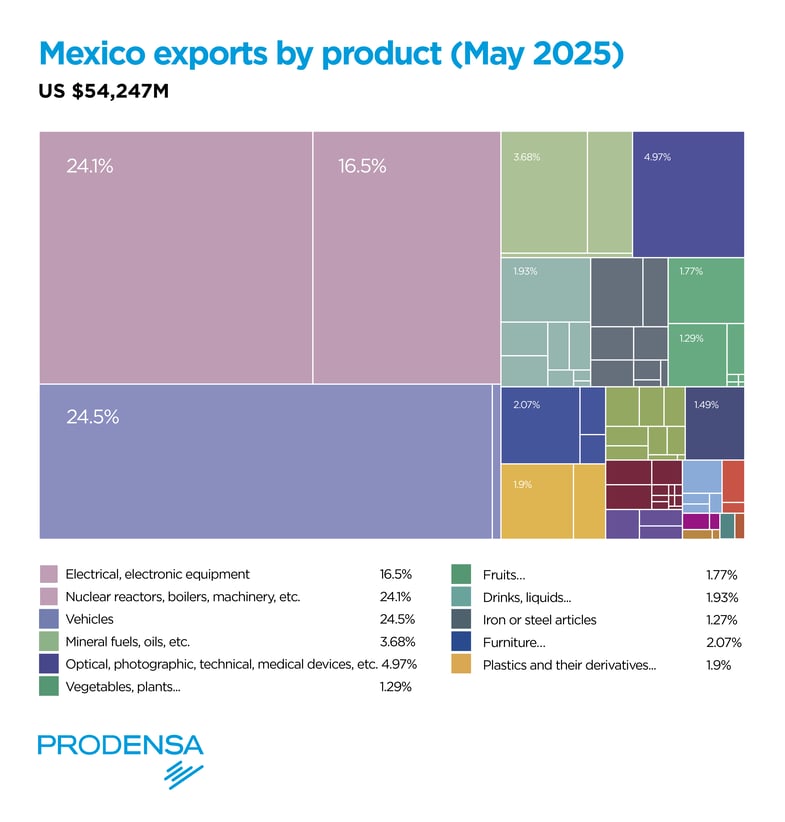
Mexico’s export economy continues to depend heavily on manufacturing. In 2025, manufacturing exports recorded cumulative growth of 6.47%, while nearly 84% of Mexico’s non-oil exports were destined for the United States.
As manufacturers increase production and serve growing North American demand, labor readiness becomes increasingly important. Companies need a workforce strategy that supports:
- Production growth and changing customer demand
- Compliant and efficient shift structures
- Workforce recruitment and retention
- Stable labor and union relations
- Productivity, training, and automation initiatives
Mexico’s export growth creates significant opportunities, but manufacturers must ensure that their labor practices, operating models, and workforce costs evolve alongside the regulatory environment.
2026: Mexico Begins the Transition to a 40-Hour Workweek
Mexico’s labor framework now establishes a gradual transition from a 48-hour to a 40-hour workweek. For manufacturers, the impact goes beyond reducing weekly hours and may require changes to shift structures, staffing levels, overtime, payroll, and production planning.
Companies should begin evaluating:
- Current shift schedules and coverage
- Potential headcount requirements
- Overtime costs and limits
- Productivity and automation opportunities
- Transportation and meal services
- Employment policies and collective agreements
The impact will vary by operation. Manufacturers should model different scenarios and prepare their workforce strategy before each stage of the transition becomes applicable.
How Prodensa Supports Manufacturers
Labor reform affects more than HR compliance. Changes to working hours, outsourcing, collective bargaining, employee benefits, workplace conditions, and remote work can also influence production planning, payroll, supplier relationships, and operating costs.
Prodensa helps manufacturers evaluate these impacts and translate regulatory changes into practical actions. Our support may include:
- Labor compliance and risk assessments
- Collective bargaining and union relations
- REPSE and specialized-services reviews
- Workforce and shift-planning strategies
- Policy, contract, and documentation updates
- Training for HR teams and operational leaders
By connecting labor requirements with real manufacturing conditions, companies can reduce uncertainty, protect business continuity, and prepare their operations for future changes.
EXPLORE LABOR RELATIONS ADVISORY
Labor Reform and the Employer-of-Choice Strategy
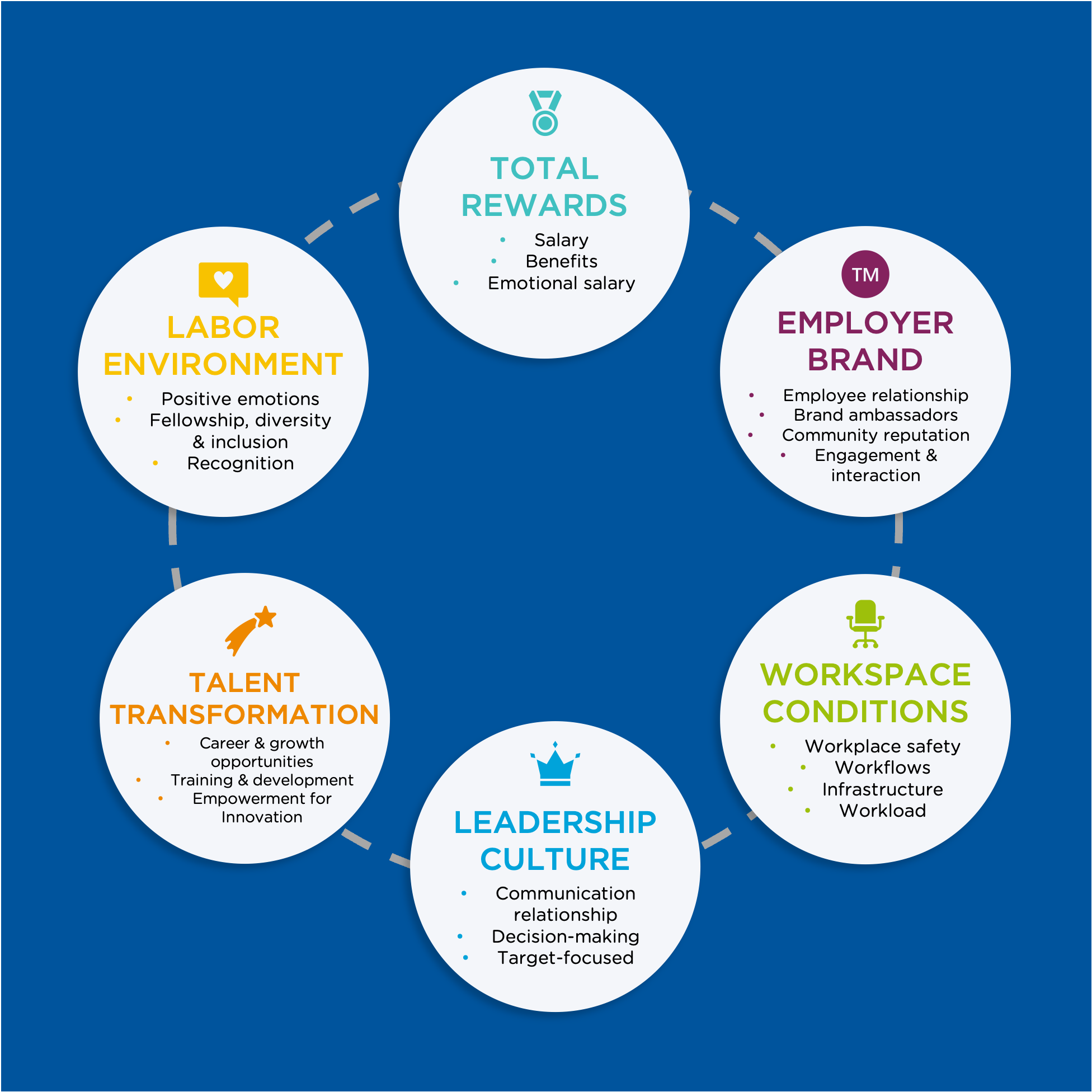
Compliance is only the starting point. Manufacturers must also consider how labor reforms affect the employee experience, workforce stability, and their ability to attract and retain talent.
Becoming an employer of choice in Mexico requires companies to:
- Maintain open communication with employees and union representatives
- Review compensation, benefits, schedules, and workplace conditions
- Train supervisors to manage labor issues consistently
- Invest in employee development and career growth
- Understand workforce concerns before they affect retention or productivity
Companies that connect compliance with a strong employee strategy are better positioned to build trust, reduce turnover, and support long-term operational performance.

Collective Bargaining
The process through which employers and worker representatives negotiate employment conditions, including wages, benefits, schedules, and workplace policies.
REPSE
Mexico’s Registry of Specialized Services or Works Providers. Companies that provide qualifying specialized services must maintain an active registration and comply with labor, tax, and social security requirements.
Telework
An employment arrangement in which more than 40% of an employee’s activities are performed remotely. Formal telework arrangements may require specific policies, equipment, documentation, and occupational health measures.
Employer of Choice
A company recognized for providing competitive working conditions, strong leadership, development opportunities, and a positive employee experience that supports attraction and retention.
Labor Readiness
A company’s ability to adapt its workforce strategy, policies, schedules, costs, and documentation to new labor requirements without disrupting operations.

Which labor reforms have most affected manufacturers in Mexico since 2019?
The most significant changes include new collective bargaining and union-voting rules, the outsourcing reform and REPSE requirements, telework regulation, expanded paid vacation, workplace-condition requirements, and the transition toward a shorter workweek.
How should manufacturers prepare for labor reform updates?
Companies should review employment contracts, internal policies, shift structures, payroll calculations, collective agreements, service providers, and compliance documentation. HR, legal, finance, and operations teams should evaluate the impact together.
What should companies verify when hiring specialized service providers?
Companies should confirm that the service is legally considered specialized, verify the provider’s REPSE status, maintain complete contracts and documentation, and monitor labor, tax, and social security compliance throughout the relationship.
How can labor reforms affect manufacturing costs?
Changes may influence payroll, overtime, benefits, headcount, shift coverage, transportation, recruitment, training, and contractor costs. Manufacturers should model different scenarios instead of evaluating each reform only as a legal requirement.
Why are labor relations important for business continuity?
Clear communication with employees and union representatives helps companies identify concerns early, reduce workplace disruption, and maintain stable operations. Labor relations may also affect reputation, customer confidence, and trade compliance.
How can manufacturers remain competitive as labor requirements evolve?
Compliance should be combined with productivity, automation, workforce planning, supervisor training, employee development, and retention initiatives. Companies that adapt early are better positioned to manage costs and remain an employer of choice.

- Labor reform should be evaluated as an operational issue, not only as an HR or legal requirement.
- Manufacturers should assess how each change affects shifts, headcount, payroll, contractors, productivity, and business continuity.
- Compliance is stronger when HR, legal, finance, and operations teams work from the same implementation plan.
- Stable labor relations require ongoing communication with employees, supervisors, and union representatives—not only a response when issues arise.
- Companies that prepare early can turn labor compliance into stronger workforce planning, employee retention, and long-term competitiveness.