


At the 2025 North Capital Forum, Emilio Cadena, CEO of Prodensa, joined other company executives and regional experts to explore not only the macroeconomic factors behind North American integration, but also the role of public perception in nearshoring success. This blog is part of a broader editorial series sharing key insights from the event—curated specifically for business leaders navigating manufacturing, investment, and supply chain decisions across the region.

Public Sentiment on Stage: USMCA ambassadors and data experts explore how North Americans feel about trade, opportunity, and regional cooperation in 2025—highlighting why public perception matters for nearshoring and economic strategy.
How Public Sentiment Shapes Nearshoring and Manufacturing Investment Strategies
While manufacturing executives often rely on hard data to drive decisions—units produced, costs reduced, dollars invested—this panel asked a provocative question: What if the soft data matters just as much?
Dan Foy, Principal of Global Analytics at Gallup, presented findings from Gallup’s World Poll, which interviews people in more than 140 countries. According to Foy, public opinion data—especially on personal well-being, optimism, and perceived job opportunities—is one of the strongest predictors of long-term economic stability, labor force engagement, and even investment risk.
Economic Optimism Across Borders: Mexico Gains Momentum
Gallup classifies survey participants as "thriving," "struggling," or "suffering," based on how they view their life now and in five years. Surprisingly, the U.S., Canada, and Mexico all hover around 55% in the "thriving" category. But the trajectories tell a different story:
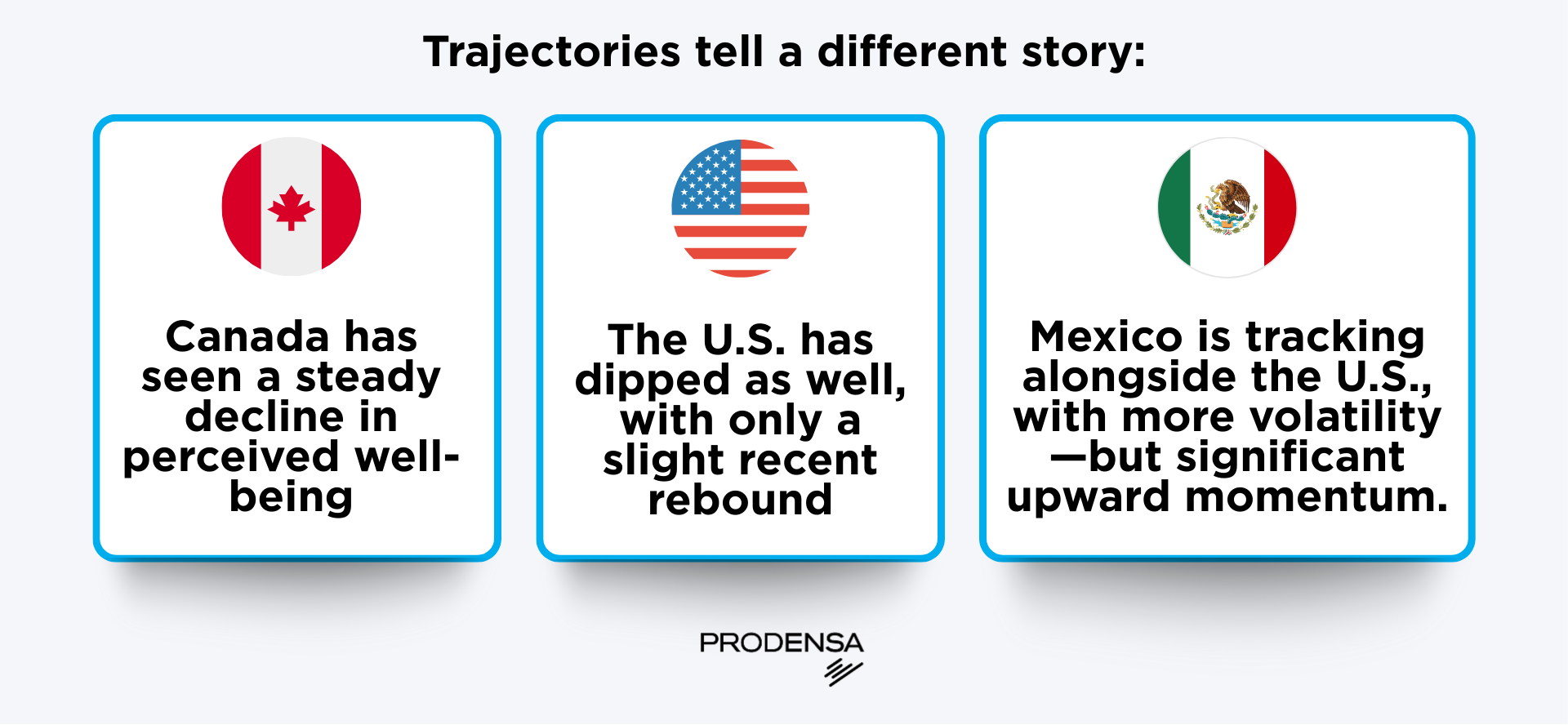
This trend signals rising optimism in Mexico, especially among working-age populations. For nearshoring and manufacturing leaders, this translates to a more engaged, hopeful, and productive labor force.
Public Perception of Local Economies: Why Investors Are Watching Mexico
When asked about their local economy and standard of living, Mexicans report consistent improvements. In fact, Gallup data shows that Mexico is outpacing the U.S. and Canada in terms of positive perception growth.
For investors looking at turnkey operations or shelter services in Mexico, this sentiment shift matters. Optimistic populations tend to fuel domestic consumption, attract international capital, and support long-term workforce retention.
Job Market Sentiment: Mexico Outperforms Expectations
Gallup asked respondents: "Is now a good time to find a job where you live?"
-
Canada showed a steep drop in positive responses post-COVID.
-
The U.S. and Mexico remained more stable.
Today, both countries are roughly equal in this perception. The implication for manufacturing companies doing business in Mexico is clear: local populations believe opportunity is growing, which can aid recruitment and retention.
Political Polarization and the U.S. Economic Outlook
The most striking data came from the U.S., where extreme political polarization is shaping public perception of the economy.
-2.png?width=484&height=672&name=Blog%20images%20(1)-2.png)
For international manufacturers, this polarization signals a volatile policy environment. Regulatory changes and trade barriers could fluctuate with each administration—making strategic planning more complex for companies operating in North America.
U.S. vs. China: A Shift in Regional Influence
Gallup data shows that approval of U.S. leadership declined under Trump and rose again under Biden. Yet, China's favorability has quietly risen in both Mexico and Canada. Today, in hypothetical polling, China would win more public approval than the U.S. in both countries.
This has significant implications for nearshoring. While the U.S. aims to reduce dependency on China, local public sentiment does not reflect strong opposition to Chinese influence. In fact, Canadians and Mexicans appear pragmatic about working with both partners.
Prodensa's Perspective: Why Soft Data Matters in Manufacturing Strategy
At Prodensa, we believe manufacturing strategy must be grounded in both hard and soft data. The emotional and social climate—what people feel about their future, their country, and their leaders—shapes everything from political risk to supply chain resiliency.
Helping companies establish operations in Mexico isn't just about site selection and EOR services. It's about creating high-impact manufacturing ecosystems that improve local livelihoods and anchor long-term investment.
In a region shaped by shifting alliances and public perception, having a trusted partner on the ground who understands both business logistics and cultural context is more critical than ever.
 PRODENSA Key Takeaways:
-
Public opinion data is a leading indicator for economic stability and investment risk.
-
Mexico is experiencing rising optimism in local economic and labor sentiment—a key driver for nearshoring strategies.
-
U.S. political polarization increases uncertainty in regulatory and trade environments.
-
Approval of Chinese leadership is rising in Canada and Mexico, reflecting pragmatic public views on global trade.
-
Perception drives investment: Companies need a partner who understands the intersection of policy, people, and productivity.